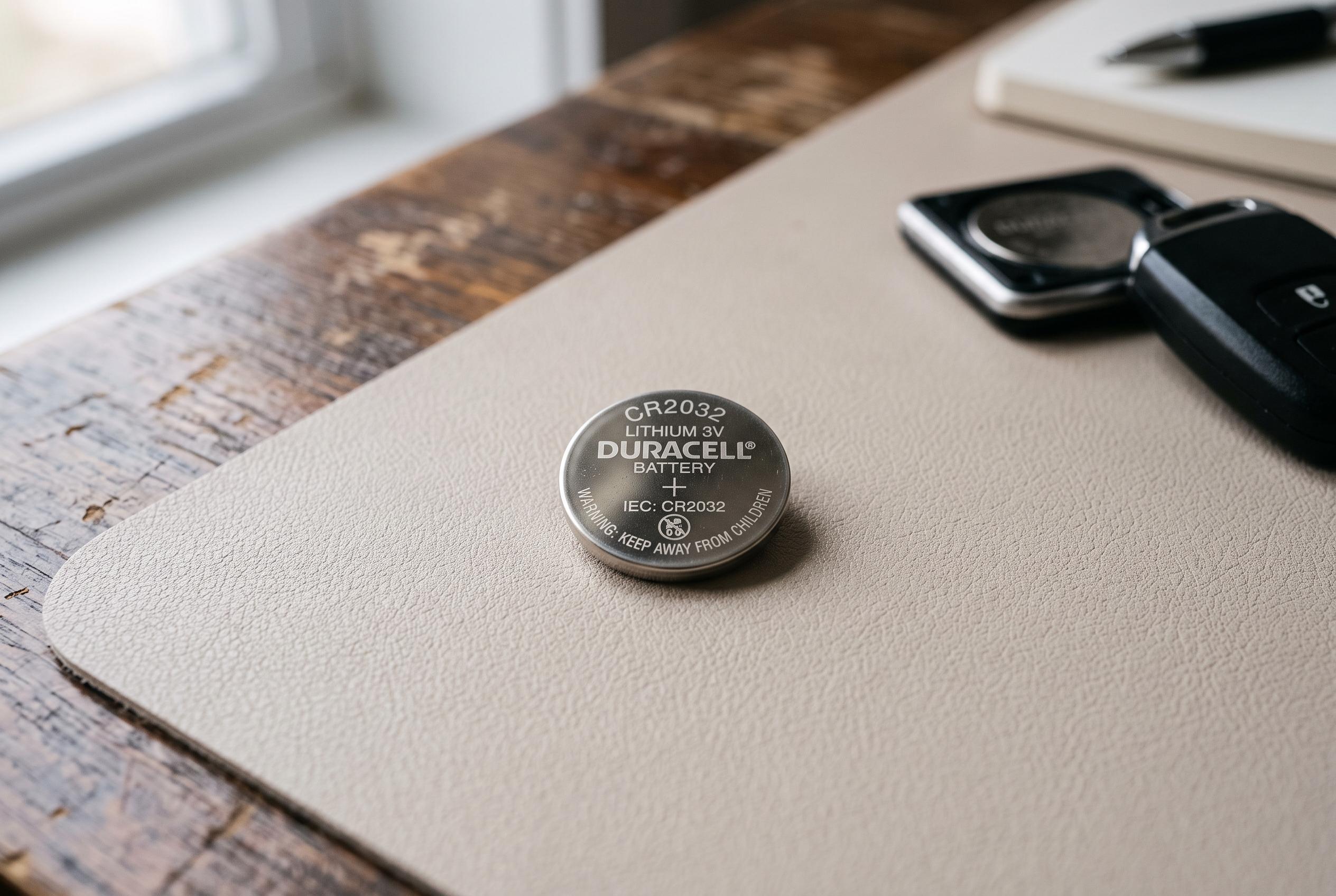

The widely used CR2032 coin cell battery, essential for many low-power devices, is set to undergo new safety and lifespan standards, promising safer handling and enhanced durability amidst growing awareness of ingestion hazards.
The CR2032 is one of the most familiar coin cells in consumer electronics, though many people only notice it when a key fob, scale or motherboard clock stops working. According to Designbeep’s guide, it is a 20mm-wide, 3.2mm-thick lithium button battery that delivers 3 volts and is widely used because it is compact, stable and easy to replace.
The chemistry is part of its appeal. The “CR” label identifies a lithium manganese dioxide cell, while the numbers refer to its size. Battery specialist guides say the format is standardised, which is why equivalents such as DL2032 and ECR2032 are generally interchangeable when the dimensions and voltage match. Rechargeable lookalikes exist, but they are not direct substitutes for standard CR2032 cells.
Its most common uses are low-power devices that need steady, long-term supply. These include car key fobs, computer motherboards, watches, bathroom scales, thermometers, fitness trackers and small medical devices. Several battery guides note that lifespan depends heavily on how much current the device draws. In low-drain equipment such as motherboard CMOS circuits, a CR2032 can last 3 to 10 years. In more demanding devices, life can fall to around a year or two.
Storage life is another advantage. Industry guides commonly put shelf life at up to 10 years when the battery is kept in cool, dry conditions and away from metal objects that could cause a short circuit. That makes it practical to keep spare batteries at home, provided they are bought from reputable sellers and checked for freshness.
Replacing one is usually straightforward. The key steps are to confirm the correct size, open the battery compartment, note the orientation of the old cell and fit the new one the same way round. The positive side must face the correct direction or the device will not work. The process normally takes only a minute or two.
Safety matters most when children are in the house. Coin cells are a serious swallowing hazard and can cause severe internal injury if ingested. Batteries should be stored securely, devices should be kept out of reach where possible and any suspected ingestion should be treated as a medical emergency. Standard CR2032 cells should never be recharged, and used batteries should be recycled or disposed of in line with local rules.
Disclaimer: This content is intended for informational purposes only. Readers are advised to exercise their own judgement, conduct due diligence, or consult a qualified expert before acting on any information provided.