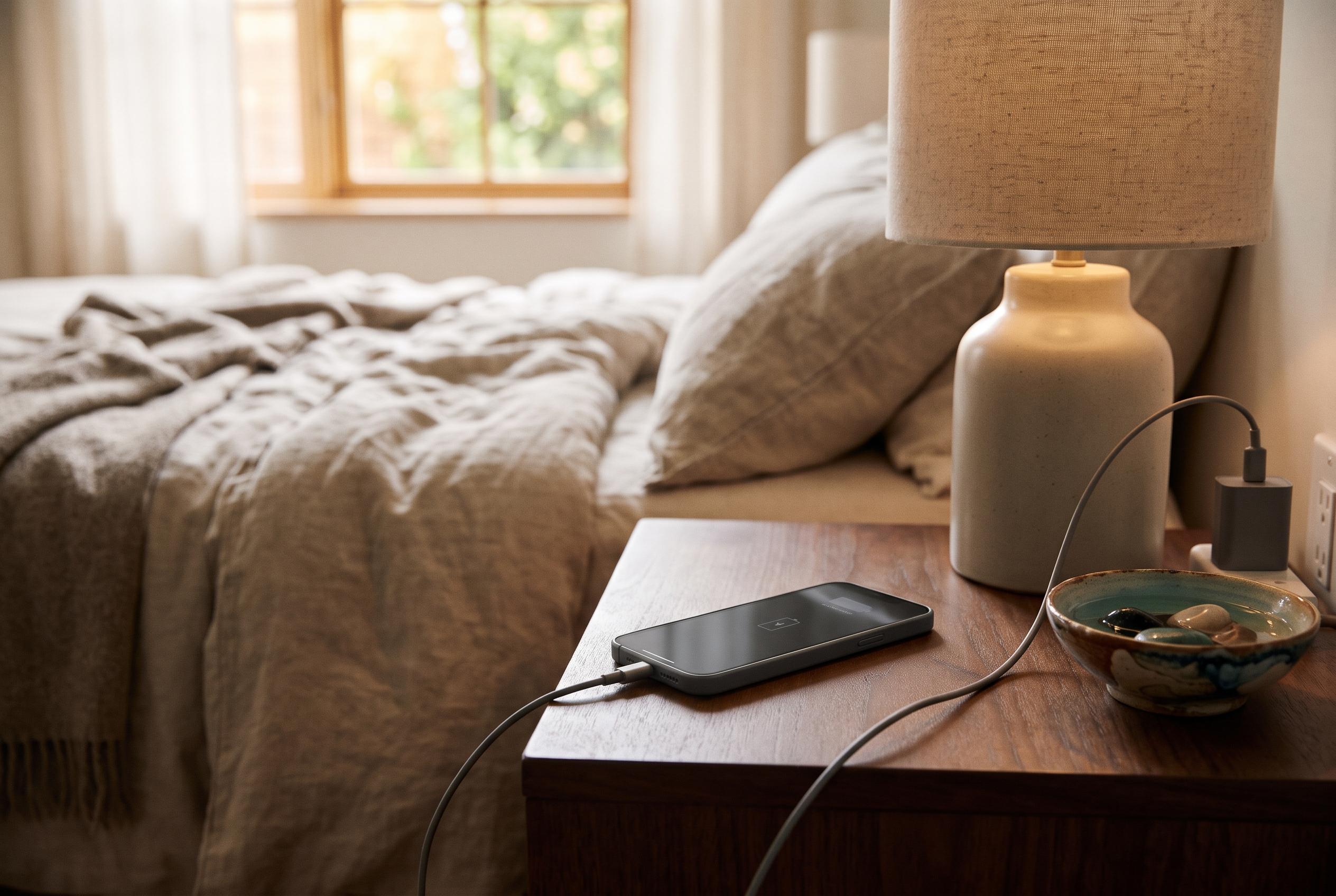

Experts warn that charging a phone under bedding, near water or inside a hot car can damage its battery and, in rare cases, create a fire hazard.
Charging a phone is routine, but the location matters more than many users realise. Safety specialists and manufacturers say the biggest risks are heat build-up, water exposure and poor ventilation, all of which can shorten battery life or, in rare cases, create a fire hazard. According to guidance cited by the Good Housekeeping Institute and Apple, the safest approach is to charge on a hard, flat surface in an open area rather than on soft furnishings or in cramped spaces.
One of the most common mistakes is leaving a phone under a pillow or blanket while it is plugged in. Apple warns against sleeping on a device, charger or wireless pad, or covering them with bedding or clothing, because trapped heat has nowhere to escape. That can cause discomfort at best and burns or fire risk at worst. A bedside table or dresser is a better option, provided the area remains clear and ventilated.
The bathroom is another poor place to charge a handset, even if the immediate shock risk is limited by ground-fault protection on modern outlets. Dan DiClerico, director of the Home Improvement & Outdoor Lab at the Good Housekeeping Institute, said the greater danger is water damage if a phone is splashed or dropped near a sink or bath. If a quick top-up is needed before leaving home, experts recommend charging in a drier room instead.
Heat is also a serious issue in parked cars. Apple says iPhones are designed to work within a specific ambient temperature range, and a vehicle left in the sun can quickly exceed it. When a phone overheats, charging may slow or stop until the device cools down, and repeated exposure can reduce battery life over time. Tom’s Guide and Asurion both advise keeping phones out of direct sunlight, lowering screen brightness and avoiding hot environments where possible. If a phone is already wet, guidance from iTechGuides is clear that it should not be charged until it has been dried properly.
Experts also say the charger itself matters. Apple and Anker both recommend using the cable and adapter supplied with the device, or a certified replacement that meets safety standards. That advice is especially relevant when a phone is charging overnight or while you are not watching it. TechRadar notes that modern smartphones can handle being charged to 100%, but prolonged time at full charge may accelerate long-term battery wear, which is why some specialists suggest keeping the battery between 20% and 80% when practical.
Disclaimer: This content is intended for informational purposes only. Readers are advised to exercise their own judgement, conduct due diligence, or consult a qualified expert before acting on any information provided.