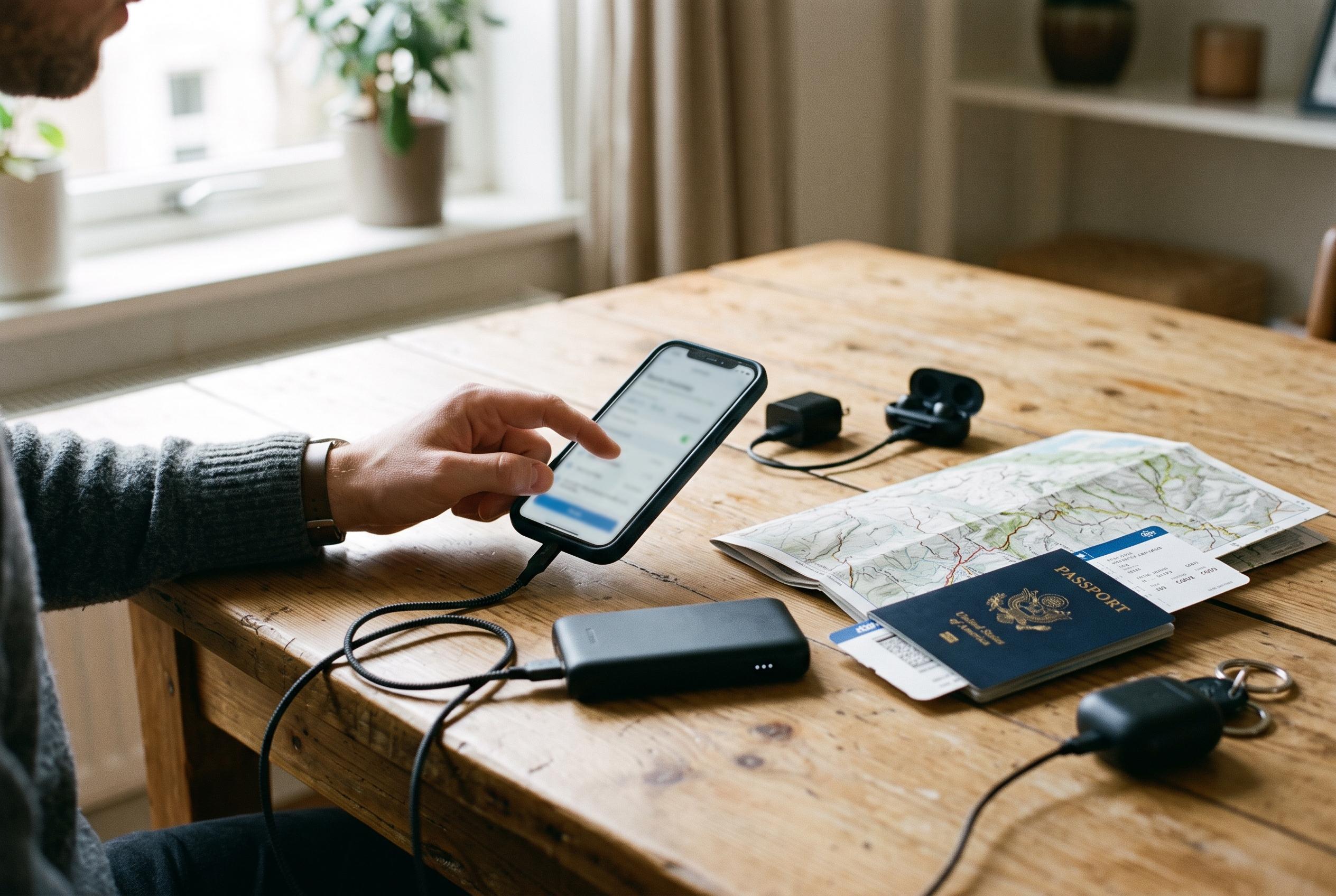

Arranging an eSIM, downloading maps and saving key documents before departure can help travellers avoid costly data fees, dead batteries and connectivity failures overseas.
Roaming charges can turn an ordinary trip into an expensive mistake, which is why the smartest phone setup happens before departure. Travel guidance from The Travelique and Cellt.net both points to the same practical conclusion: the cheapest way to stay connected is usually to plan your data use in advance, rather than rely on airport solutions or surprise carrier fees after landing. For many travellers, the modern answer is an eSIM, which can be arranged before take-off and used alongside a home number for calls and verification texts.
That first step matters because it shapes the rest of the journey. Travel specialists say an eSIM is often the most economical choice on trips lasting more than a couple of days, particularly when compared with roaming add-ons or the effort of buying a local SIM on arrival. Some newer services are trying to make the process even simpler: Opera has added a built-in eSIM to its Android browser with a free 3GB allowance for three days in 47 destinations, while Instabridge and Roamless both market flexible global plans aimed at frequent travellers who want to avoid buying a fresh package for every country.
Connectivity, however, is only one part of the problem. Offline maps remain one of the most useful travel precautions because they work when mobile data fails, battery life drops or signal disappears underground or in rural areas. Travel guidance from GetGlod recommends downloading maps, guides and phrasebooks before leaving, and keeping essential booking details and passport scans stored locally on the device. That approach also reduces dependence on cloud access at the very moment data may be unavailable or too costly to use.
The same logic applies to documents. Screenshots of hotel confirmations, insurance details, boarding passes and passport pages can save time at airports, train stations and border crossings, especially when a traveller needs to show information in a local script. Offline storage is not a luxury here; it is a backup against weak signal, dead batteries and awkward delays. The point is not to replace paper entirely, but to make sure the most important details remain available in more than one form.
Power management deserves the same preparation. A universal adapter and a reliable power bank are basic travel kit, but their value depends on how they are packed and used. Public guidance on air travel consistently warns that power banks belong in hand luggage, not checked baggage, and travellers should be cautious about bargain chargers of uncertain quality. A phone that runs out of charge abroad is more than inconvenient; it can cut off maps, boarding passes, payment tools and emergency access at once.
Security and software choices complete the picture. A locked screen, two-factor authentication and a careful approach to public Wi-Fi reduce the risk of losing access to banking or identity services in transit. At the same time, most travellers need only a small set of apps: one for local transport, one translation app with offline language packs and one currency converter they trust. In parallel, some tasks still require advance paperwork, including passport renewal checks, visa applications and country-specific entry forms, which should be handled before the last minute and saved both digitally and, where necessary, on paper.
Disclaimer: This content is intended for informational purposes only. Readers are advised to exercise their own judgement, conduct due diligence, or consult a qualified expert before acting on any information provided.