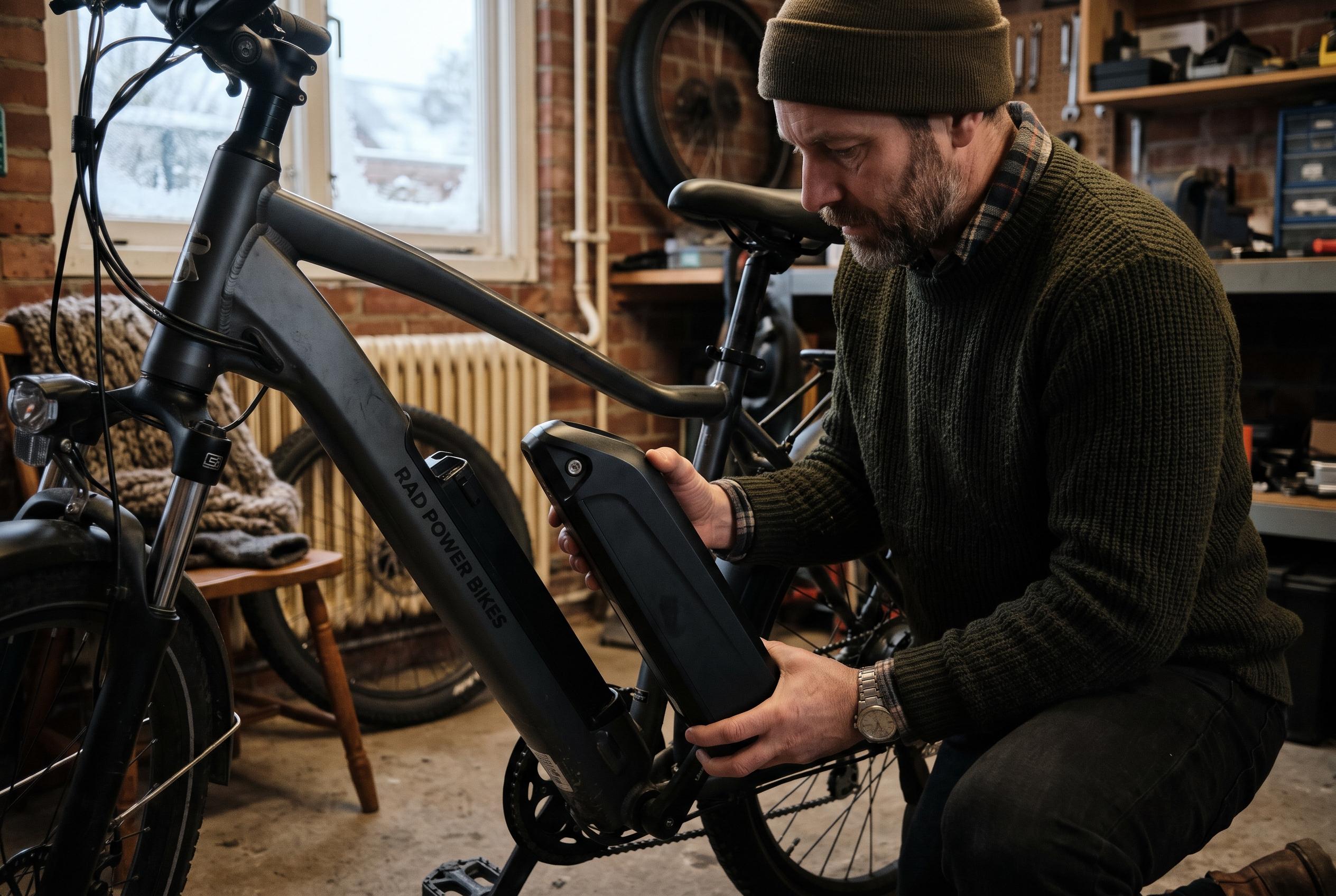

Keeping an e-bike battery partly charged, warm before charging and checked through the winter can help prevent capacity loss, damage and safety risks.
Winter storage can make a marked difference to the lifespan and reliability of an electric bike battery. Himiway’s winter storage guide says the core principles are straightforward: keep the battery partly charged, store it somewhere cool and dry, avoid charging it when it is freezing cold, and check it periodically rather than leaving it untouched for months.
For most lithium-ion packs, the safest winter charge level is somewhere in the middle of the range, not at either extreme. The guide notes that roughly 40% to 60% is a common target, although manufacturers differ: Bosch recommends 30% to 60%, Shimano says about 70%, and Himiway itself advises 50% to 80% for long-term storage. The reason is simple. Leaving a battery at full charge for extended periods can accelerate chemical ageing, while storing it nearly empty risks self-discharge pushing it into a damaging low-voltage state.
Temperature matters just as much as charge level. Himiway recommends keeping stored batteries in a stable environment of roughly 10C to 20C, with some of its own guidance extending that range slightly. Bosch and Shimano publish similar indoor storage ranges. The aim is to avoid repeated swings between cold and warm conditions, which can encourage condensation and add stress to the cells. A dry garage, basement or utility area may be suitable if it stays within the battery maker’s specified limits.
One rule is particularly important: do not charge a conventional lithium-ion eBike battery while it is below freezing. Himiway explains that cold cells can undergo lithium plating during charging, which may permanently reduce capacity and increase internal resistance. The safest approach, if a battery has been left in a cold garage, is to let it warm naturally in a dry room before connecting the charger. It should not be warmed with a heater, hair dryer or other improvised heat source.
Preparation before storage should be careful but uncomplicated. Himiway advises riders to inspect the battery housing for cracks, swelling, leaks or moisture, clean the exterior with a soft cloth, and make sure the contacts and charging port are dry. If the battery is removable, it should be taken off the bike and stored separately. If it is integrated and not designed for easy removal, the whole bicycle should be kept according to the manufacturer’s instructions.
Fire safety remains part of the storage decision. Himiway says the battery should be kept away from heaters, direct sunlight, combustible materials and escape routes, in a place with ventilation and a working smoke detector. The U.S. Fire Administration also advises keeping lithium-ion batteries away from flammable items and not charging them below freezing. The guide further notes that a charger should not remain connected all winter, even if it has automatic shut-off, because storage and charging are not the same thing.
Periodic checks are still necessary during the winter months. Himiway suggests a monthly inspection routine, though the exact recharging interval should always follow the battery maker’s instructions. A quick check should confirm that the battery is still dry, undamaged and within its recommended charge range. If the charge has fallen too low, it should be topped up only after it has reached a safe temperature. A battery that loses charge unusually quickly, or shows swelling, heat, strange odours or visible damage, should be assessed by the manufacturer or a qualified service provider.
When spring returns, the battery should not simply be refitted and sent straight out on a long ride. Himiway recommends a final inspection of the housing, connectors and charge level, followed by a short test ride before normal use resumes. That same cautious approach applies to winter riders who continue using their bikes throughout the coldest months: store the battery indoors when possible, fit it shortly before riding, expect some temporary range loss in low temperatures, and avoid treating winter range estimates as if they were summer figures.
Disclaimer: This content is intended for informational purposes only. Readers are advised to exercise their own judgement, conduct due diligence, or consult a qualified expert before acting on any information provided.