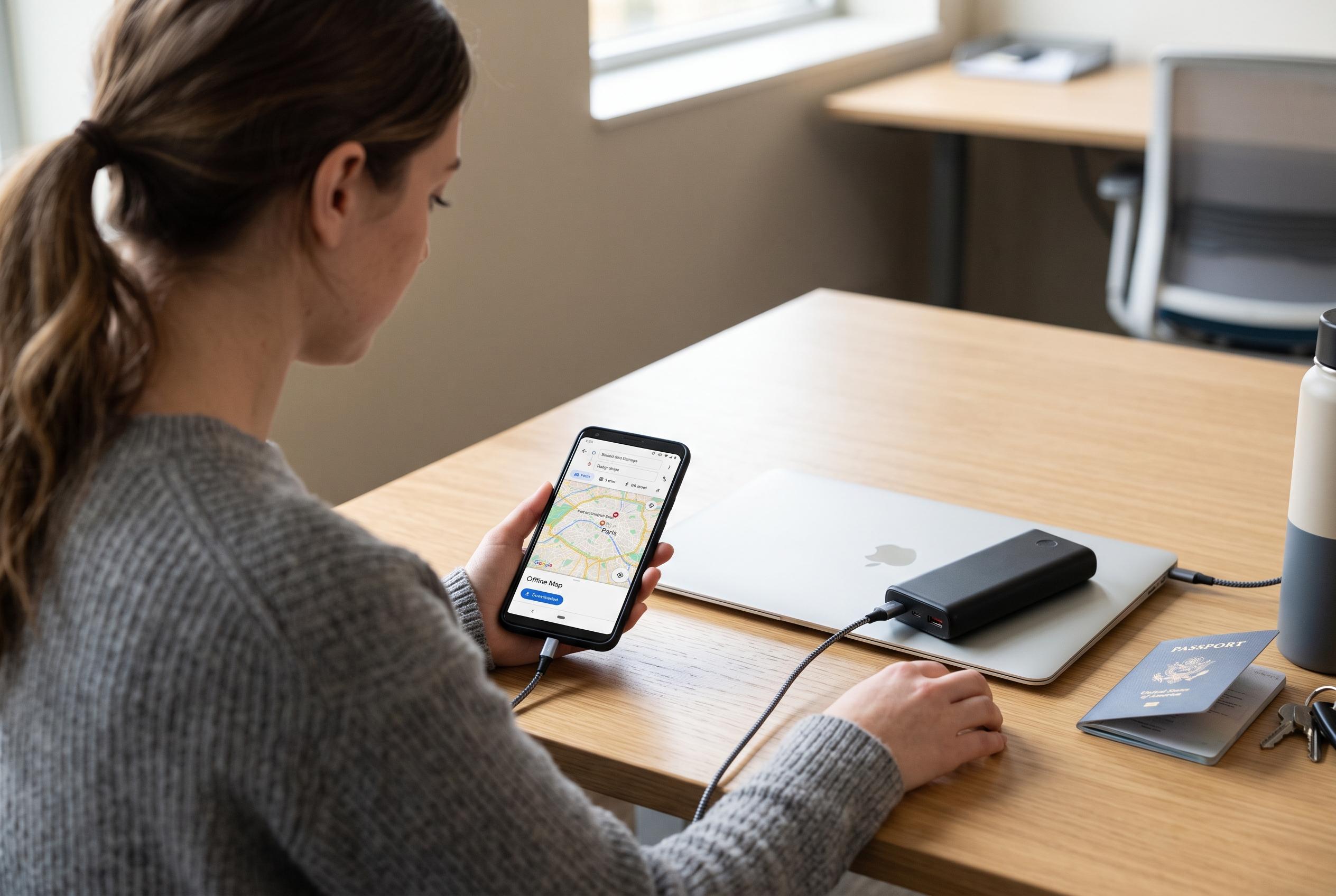

Preparing devices before travel, from offline maps to charging gear, is becoming essential as reliance on digital tools grows, ensuring smoother journeys and avoiding common tech failures.
Travellers increasingly rely on phones and laptops to do the work once spread across maps, tickets, wallets, cameras and guidebooks. That convenience also creates a single point of failure. If the battery dies, the signal drops or the plug does not fit, several trip essentials can disappear at once. Preparing devices before departure reduces that risk and makes a journey far easier to manage.
The first step is to make the phone more useful without a data connection. Offline maps can cover airports, train stations, hotels and the neighbourhoods you expect to visit, while screenshots of routes and key bookings provide a quick fallback if roaming fails. Translation apps should also be set up in advance, with offline language packs downloaded so menus, signs and basic questions can still be handled without a live connection.
Digital paperwork deserves the same treatment. Copies of passports, visas, hotel confirmations, insurance details and transport reservations should be stored in a single folder that is available offline. Security experts also advise travellers to install software updates before leaving, turn off automatic Wi-Fi connections and review location settings so devices do not reveal more than necessary. The Better Business Bureau says limiting the number of devices carried can also reduce exposure and simplify charging and security.
Protection against account lockouts is another priority. Two-factor authentication is helpful, but it can become a problem if the only verification method is a text message sent to a number you cannot use abroad. Setting up authenticator apps, passkeys or recovery codes before departure gives travellers a second route in. It is also wise to test a reputable VPN in advance if hotel or airport Wi-Fi will be part of the trip.
Backups matter just as much as access. Automatic cloud photo backup should be switched on before departure and checked to make sure it works. Consumer Reports recommends keeping extra chargers on hand in emergencies, and that advice applies neatly to travel as well. A portable power bank, plus the right cables, can prevent a dead phone from becoming a larger logistics problem. If several devices need power at once, a compact multi-port charger or power strip can turn one awkward hotel outlet into a usable charging point.
International travel adds one more layer: adapters and voltage. A plug adapter changes the shape of the connection, but it does not convert electricity. Travellers need to confirm that their devices support the voltage used at destination before plugging them in. Universal adapters can be helpful for multi-country itineraries, but they should be matched to the electronics being carried rather than treated as a cure-all.
The simplest way to avoid trouble is to build a short checklist and run it the night before departure. Offline maps, translation tools, documents, backups, emergency contacts, downloaded entertainment, charging cables, a power bank and the correct adapter should all be in place. The goal is not to bring more technology. It is to make the technology already in hand dependable enough that it keeps working when the trip does not go exactly to plan.
Disclaimer: This content is intended for informational purposes only. Readers are advised to exercise their own judgement, conduct due diligence, or consult a qualified expert before acting on any information provided.