
Discover practical steps to diagnose and resolve connectivity problems when your laptop shows it’s connected to a phone hotspot but cannot access the internet, including carrier checks and device settings adjustments.
When a laptop says it is connected to a phone hotspot but nothing loads, the first question is whether the phone itself can still reach the internet over mobile data. Speedefy says that simple test separates a cellular outage from a hotspot-sharing fault, and it is the most useful starting point before changing settings or contacting the carrier.
If the phone cannot browse with Wi-Fi switched off, the problem is unlikely to be the receiving device. In that case, the likely causes are weak signal, Airplane Mode, a carrier outage, or a data block on the line. Several troubleshooting guides also point to plan restrictions, tethering not being enabled, or a hotspot allowance having been used up. If the phone can browse normally but the hotspot cannot deliver data, the fault sits elsewhere in the sharing path.
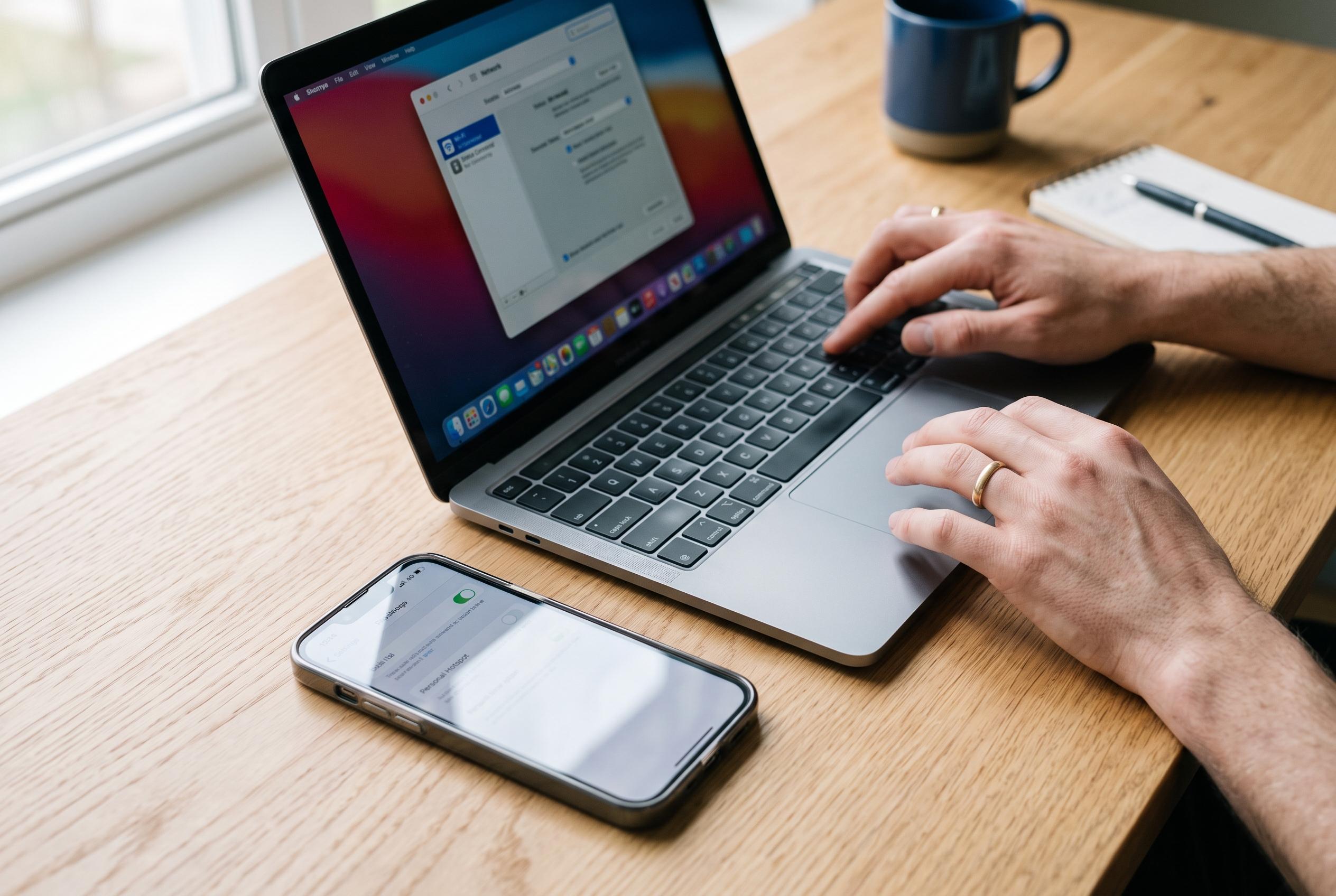
The next step is to restart the hotspot function itself. Turning Personal Hotspot or Mobile Hotspot off, waiting a few seconds, and switching it back on often clears a temporary glitch. It also helps to confirm that the laptop is joining the exact network name and password currently shown on the phone. If the password has changed, the saved network on the laptop should be removed and rejoined from scratch.
If only one device fails, the problem may be local to that device rather than the phone. According to the guides reviewed, a saved Wi-Fi profile, VPN, proxy, private DNS setting, or security app can stop web traffic even when the hotspot connection appears healthy. Forgetting the network, restarting the device, and reconnecting are the simplest checks. TechViral and other Android-focused guides also recommend switching mobile data off and back on, as well as disabling Wi-Fi on the phone while testing.
Compatibility and radio settings can matter as well. Some phones include a maximum-compatibility or similar option for older Wi-Fi hardware, and that can help when a device sees the hotspot but fails to pass data. Keeping the phone close to the connected device and, if necessary, plugging it into power can remove weak-signal or battery-related variables. If Wi-Fi hotspot still fails, USB tethering is a useful test because it bypasses the hotspot radio altogether. When USB works but Wi-Fi sharing does not, the issue is more likely to be with hotspot settings, compatibility, or the wireless share function itself.
If both Wi-Fi hotspot and USB tethering fail while mobile data works on the phone, the carrier account or the phone software may be limiting tethering. At that point, Speedefy recommends contacting the carrier with the phone number, plan details, and the approximate time of the failure, and asking whether tethering is enabled and whether any hotspot allowance remains. It also warns against changing APN values without exact instructions from the carrier, because the wrong setting can break ordinary mobile data too. Network reset should remain a last resort, since it removes saved Wi-Fi and Bluetooth connections.
Disclaimer: This content is intended for informational purposes only. Readers are advised to exercise their own judgement, conduct due diligence, or consult a qualified expert before acting on any information provided.