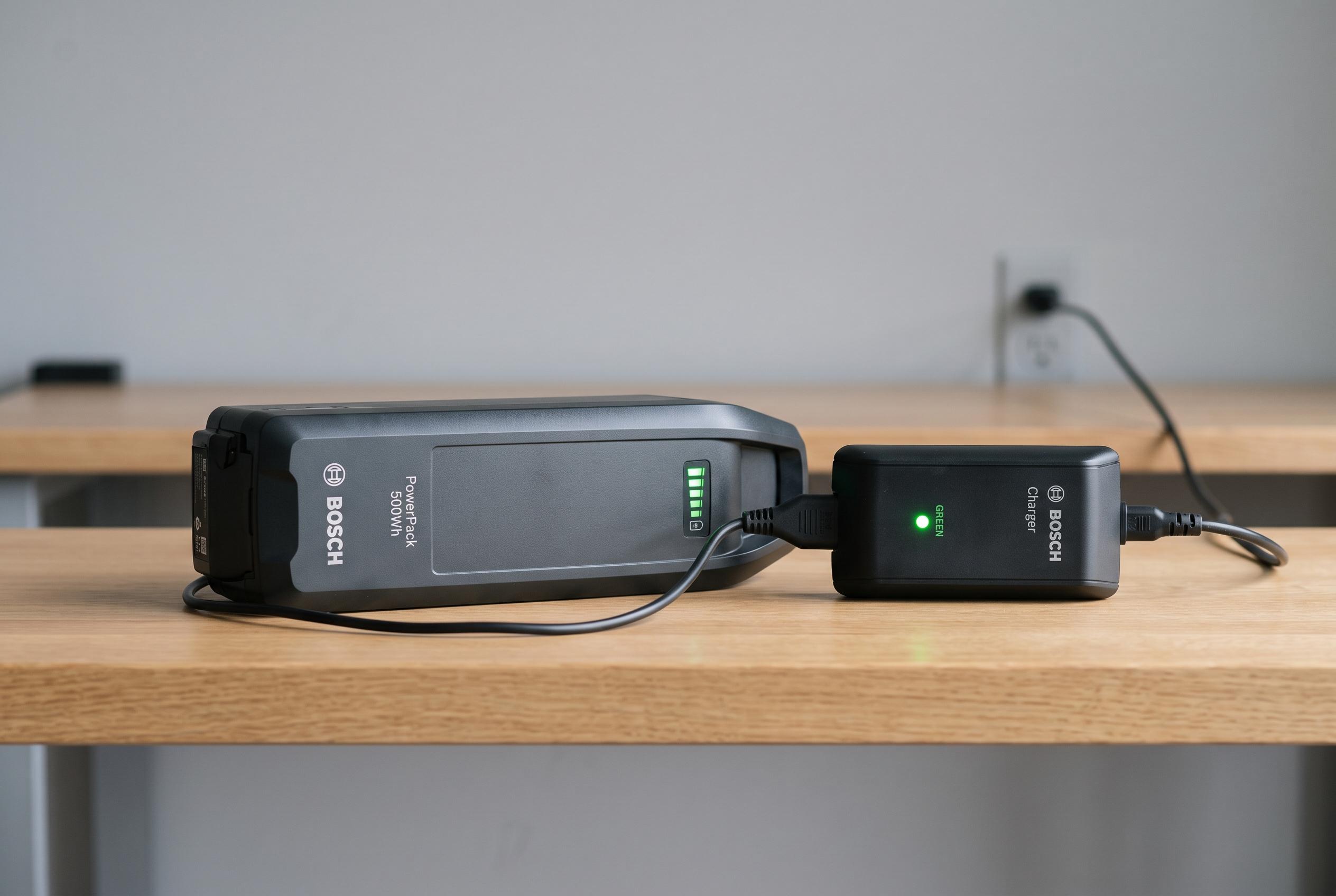

A green light on your e-bike charger doesn’t always mean your battery is charging properly. Experts highlight frequent faults and simple checks to diagnose the issue, from faulty outlets to temperature protection and internal fuse failures.
An e-bike battery that appears not to charge, even when the charger shows green, is often suffering from a fault elsewhere in the charging chain rather than a dead pack. The most common causes are a faulty wall outlet or charger, poor contact at the charging port, a tripped battery management system, deep discharge after storage, a blown fuse, or temperature-related protection. Several troubleshooting guides agree that the correct approach is to start with the simplest checks and work towards the battery itself, while avoiding any attempt to bypass lithium-ion safety systems.
If the charger has no light at all, the first test is the mains supply. A working lamp or phone charger can confirm whether the outlet is live, and the charger should be connected directly to the wall rather than through an extension lead or power strip. If the outlet works but the charger remains dark, the charger or its AC cable is the likeliest failure point. Where the charger lights up but stays green, the issue is usually that it is not detecting a proper charging load, which can happen if the battery is not seated correctly, the port is dirty or corroded, or the plug and cable are damaged.
Temperature is another common cause. Lithium-ion batteries may refuse to charge when they are too cold or too hot, particularly after winter storage or a demanding ride. Guides from several repair sites advise leaving the battery at room temperature before trying again. They also note that a battery left unused for months may drop into a deep-discharge protection state, which can cause the BMS to disconnect the pack to prevent further damage. In those cases, leaving the correct charger connected for 30 to 60 minutes may allow the system to wake up.
A blown fuse is also a frequent explanation, especially on batteries with a user-accessible charging fuse. The important point is that not every battery uses the same fuse rating, so the replacement must match the manufacturer’s specification. If the fuse is inside a sealed enclosure, the battery should not be opened at home. The same caution applies to any pack that is swollen, cracked, leaking, hissing, unusually hot, or giving off a chemical smell. In those cases, charging should stop immediately.
If the battery charges off the bike but not while installed, the fault is more likely in the bike-side contacts, wiring, or mount. If the charger remains green with a discharged battery, the problem may lie with the battery circuit, the BMS, or an internal connection fault. Measured charger output can help narrow this down, but only if used safely and compared with the charger’s stated voltage. For common lithium-ion systems, full-charge output is typically about 42V for 36V packs, 54.6V for 48V packs, and 58.8V for 52V packs.
The practical sequence is straightforward: test the outlet, check the charger, inspect the plug and port, verify battery temperature, try a normal wake-up procedure, inspect any accessible fuse, and only then consider professional battery testing. Several guides stress that a charger showing green does not necessarily mean the battery is healthy or full; it often means no charging current is flowing. In other words, the light is a clue, not a verdict.
Disclaimer: This content is intended for informational purposes only. Readers are advised to exercise their own judgement, conduct due diligence, or consult a qualified expert before acting on any information provided.