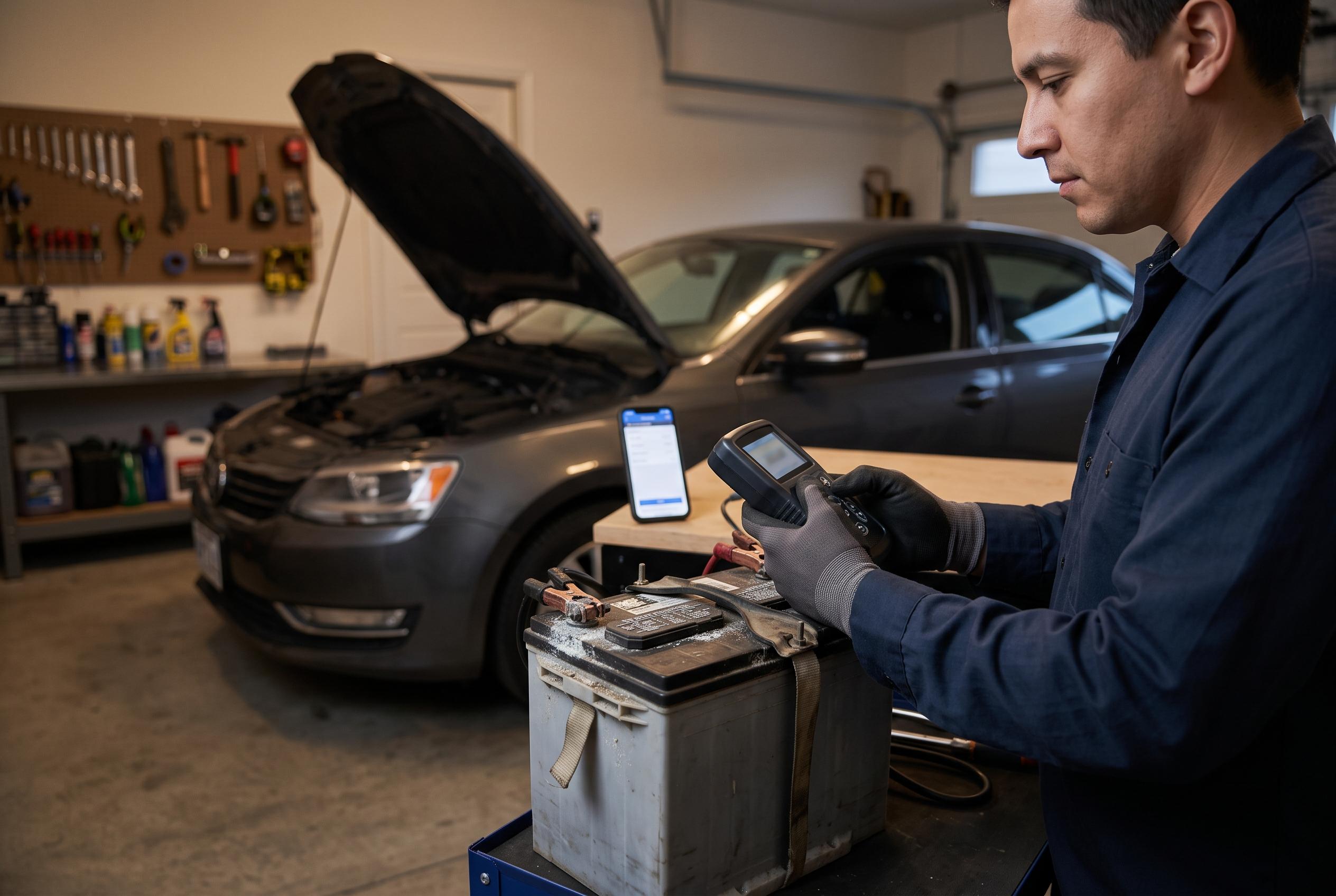

As car batteries age even when parked, regular testing, using both classic and digital methods, can help identify sulphation and other decline signs early, ensuring reliable vehicle performance and avoiding breakdowns.
Car batteries age even when the car is parked. Their chemistry continues to change, and over time lead plates deteriorate. The most important failure mode is sulphation: hard lead sulphate crystals build up on the plates, reducing the active surface, lowering capacity and increasing internal resistance. Research on lead-acid battery ageing also points to corrosion, loss of active material, water loss and internal short-circuits as part of the broader decline process.
The most thorough approach is the classic diagnostic method, which uses proper test equipment. A multimeter checks open-circuit voltage, a hydrometer measures electrolyte density, and a load tester or load fork shows how the battery behaves under stress. A fully charged battery at about 20C typically shows an electrolyte density near 1.27 g/cm³ and a resting voltage of roughly 12.6 to 12.7 volts after several hours at rest. Under load, voltage should usually stay above about 10 volts; a sharper drop suggests the battery is nearing the end of its service life.
A simpler home test is often used by motorists who only have a multimeter. After the car has stood for around six hours, a reading of 12.6 to 12.8 volts is generally treated as a sign that the battery is in fair condition. This method is quick, but it is limited: it does not show how the battery performs when the starter motor draws heavy current, so it can miss a weak battery that still looks acceptable at rest.
Digital testers go further by separating charge from condition. They measure state of charge, or SoC, which shows how full the battery is right now, and state of health, or SoH, which reflects its overall remaining capability. A low SoH, often below 50%, points to replacement. These devices are useful because even a new battery can arrive with less than full health after storage, and results may vary depending on the test mode used.
The practical lesson is straightforward. A battery should be checked at least once or twice a year, especially before winter. Regular testing helps spot sulphation early, before the battery fails to start the engine or causes harder electrical faults. If the battery is still serviceable, timely charging or maintenance may extend its life; if not, replacement is safer than waiting for a breakdown.
Disclaimer: This content is intended for informational purposes only. Readers are advised to exercise their own judgement, conduct due diligence, or consult a qualified expert before acting on any information provided.