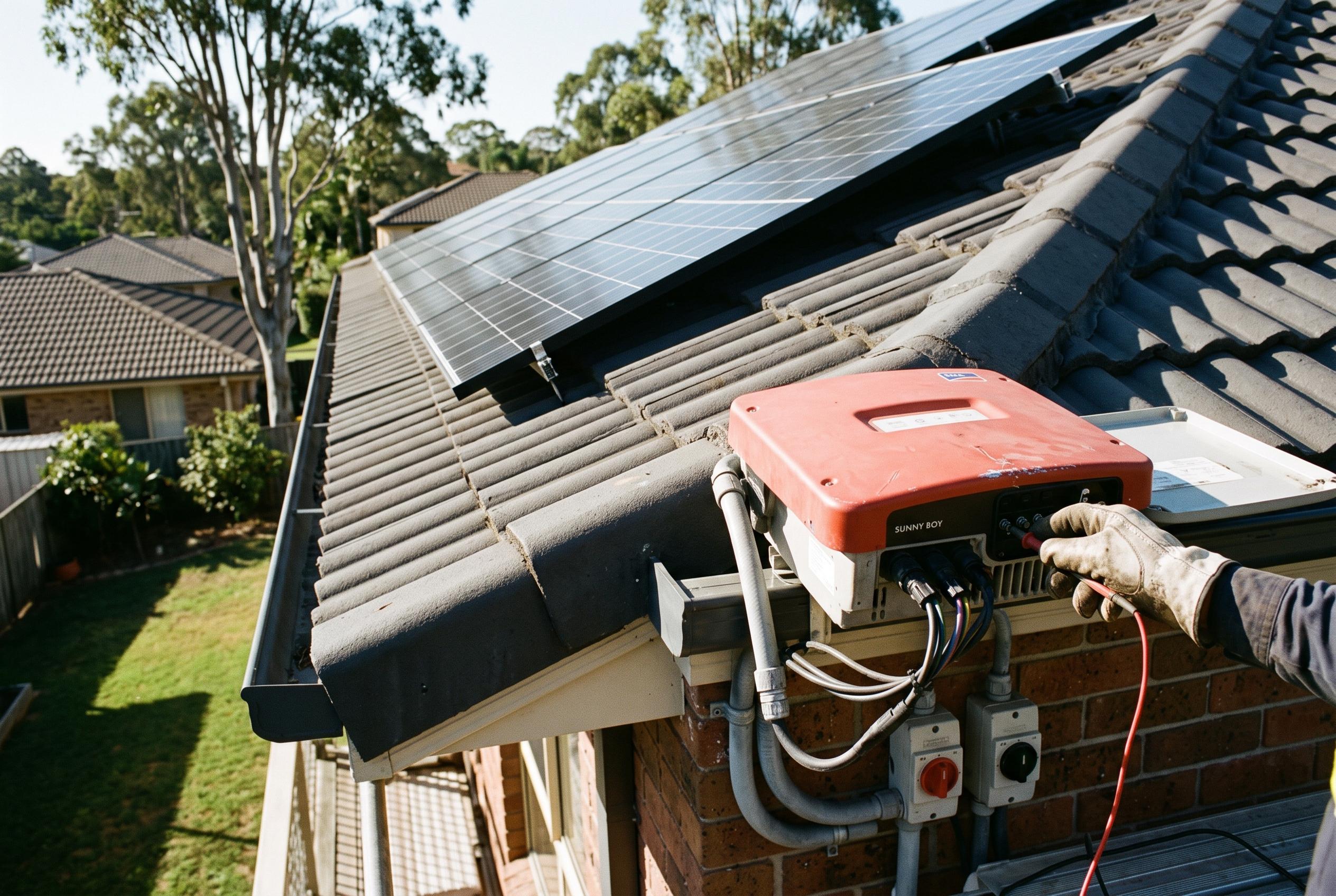

A guide to identifying solar system faults, understanding warranty coverage, and navigating consumer protections in Australia.
Solar faults are usually traced to one of two causes: the equipment itself, or the way the system was installed. That distinction matters because it determines whether the problem is more likely to sit under a product warranty or a workmanship claim, and who should be contacted first. The Australian Government says understanding the warranty terms, conditions and exclusions is essential, while the ACCC notes that consumer rights under Australian Consumer Law apply alongside any written warranty.
The first step is to treat any obvious electrical danger as a safety issue rather than a warranty dispute. Burning smells, scorch marks, damaged wiring, repeated breaker trips or water near live equipment should be dealt with by a licensed electrician. The government’s solar maintenance guidance also stresses regular monitoring, because changes in output or app data can be the first sign that a fault needs attention.
A symptom-led check can often narrow the cause. A dead inverter display may point to a tripped breaker or a failed inverter. An error code or red light is more likely to indicate an inverter fault or a grid voltage issue. A sharp drop in output can stem from dirt, shading, a failed string or an isolator problem. A monitoring app that has gone blank may simply have lost its internet connection after a router or NBN change, while a leak beneath panels usually suggests a roof penetration or flashing problem. A battery that will not charge or discharge may be suffering from settings, firmware or a module fault.
That breakdown is important because product warranties and workmanship warranties cover different things. Product warranties apply to the hardware, such as panels, inverters and batteries. Workmanship warranties cover the installation itself, including mounting, cabling, roof penetrations and commissioning. The federal government says warranty lengths vary widely, and the exact terms depend on the manufacturer and the contract. Industry guides commonly note that panel performance coverage is often long-term, while inverter and battery cover is usually shorter, and the government also advises consumers to check maintenance requirements that could affect warranty validity.
Performance decline does not always mean there is a defect. Solar panels naturally degrade over time, and monitoring history is often the best way to tell normal ageing from an abnormal fault. Comparing generation with the same month or season in the previous year can help, particularly if the fall in output is larger than expected. It is also worth saving screenshots, error codes, photos, serial numbers and invoices before contacting anyone, because those records help establish what has failed and when.
If the installer does not respond, or the business has closed, the route forward depends on whether the issue is with the hardware or the installation. The manufacturer will generally still handle a product warranty claim, although labour costs may not be included. Workmanship claims are harder once a company has wound up, but consumers may still have options through card chargeback, state compensation schemes or a complaint to the relevant consumer agency. If another installer is needed to inspect or complete the work, the government-backed advice is to use an appropriately accredited professional.
The broader lesson is to keep the paperwork from day one. Installation dates, serial numbers, contracts and proof of payment may be needed for warranty claims, unfinished work or Small-scale Technology Certificate paperwork. The ACCC says a seller cannot simply send a customer away to the manufacturer, because the retailer still has responsibilities under consumer law. For new buyers, checking accreditation, confirming the workmanship period in writing and comparing several quotes remain the most effective ways to reduce the risk of disputes later.
Disclaimer: This content is intended for informational purposes only. Readers are advised to exercise their own judgement, conduct due diligence, or consult a qualified expert before acting on any information provided.