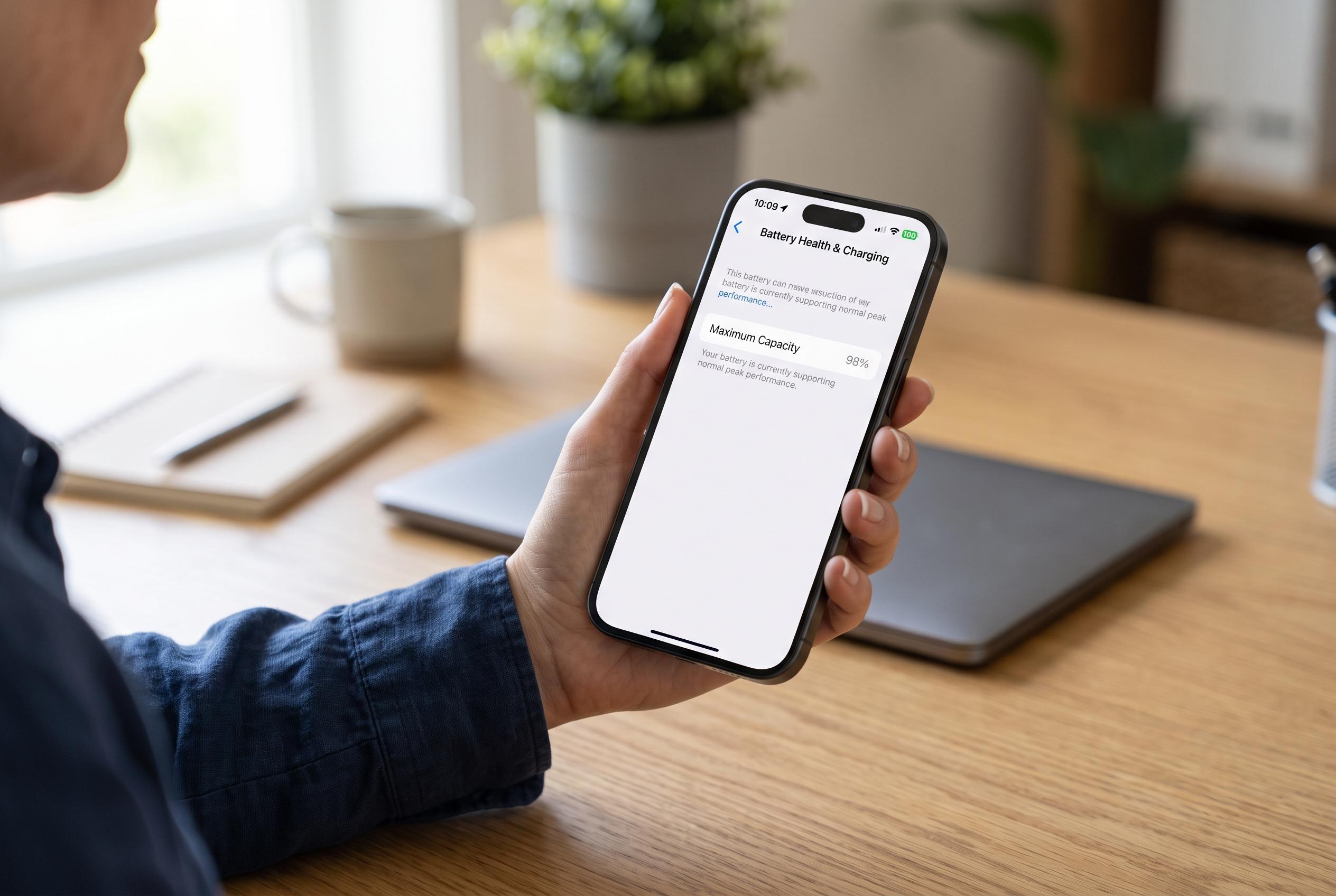

Battery health, rather than just cycle count, offers a more accurate measure of smartphone battery ageing, with temperature and charging habits playing crucial roles in determining lifespan.
For smartphone owners trying to understand battery ageing, the more useful figure is often battery health rather than the raw number of charge cycles. According to Thanh Nien, the two terms are related but not identical: battery health shows how much capacity remains compared with a new cell, while charge cycles track how much total energy has passed through the battery over time.
That distinction matters because lithium-ion cells do not fail in a simple, linear way. As howatlas explains, chemical changes inside the battery, including growth of the solid electrolyte interphase layer and lithium plating, slowly consume active material and raise internal resistance. ScienceInsights adds that each cycle causes a small, permanent loss of capacity, but not every cycle is equally damaging.
Heat is one of the biggest accelerants of that decline. Both howatlas and TechTarget say high temperatures speed up chemical instability and shorten service life, while repeated deep discharges and frequent charging to 100% can add further strain. In practice, a battery cycle is counted when the equivalent of 100% of the battery’s capacity has been used, even if that happens across several partial charges.
The headline number for many phones remains roughly 300 to 500 cycles before capacity drops to around 80%, although some newer models are designed for far more. Thanh Nien notes that Apple’s iPhone 15 is built to handle about 1,000 cycles before reaching that level, a target that points to longer useful life. Even so, battery age depends on a combination of cycle count, charging behaviour and temperature history, which is why a phone with a modest cycle total can still perform poorly if it has been exposed to heat or poor charging habits. When capacity falls below 80%, replacement becomes a practical option even if the cycle count looks acceptable.
Disclaimer: This content is intended for informational purposes only. Readers are advised to exercise their own judgement, conduct due diligence, or consult a qualified expert before acting on any information provided.