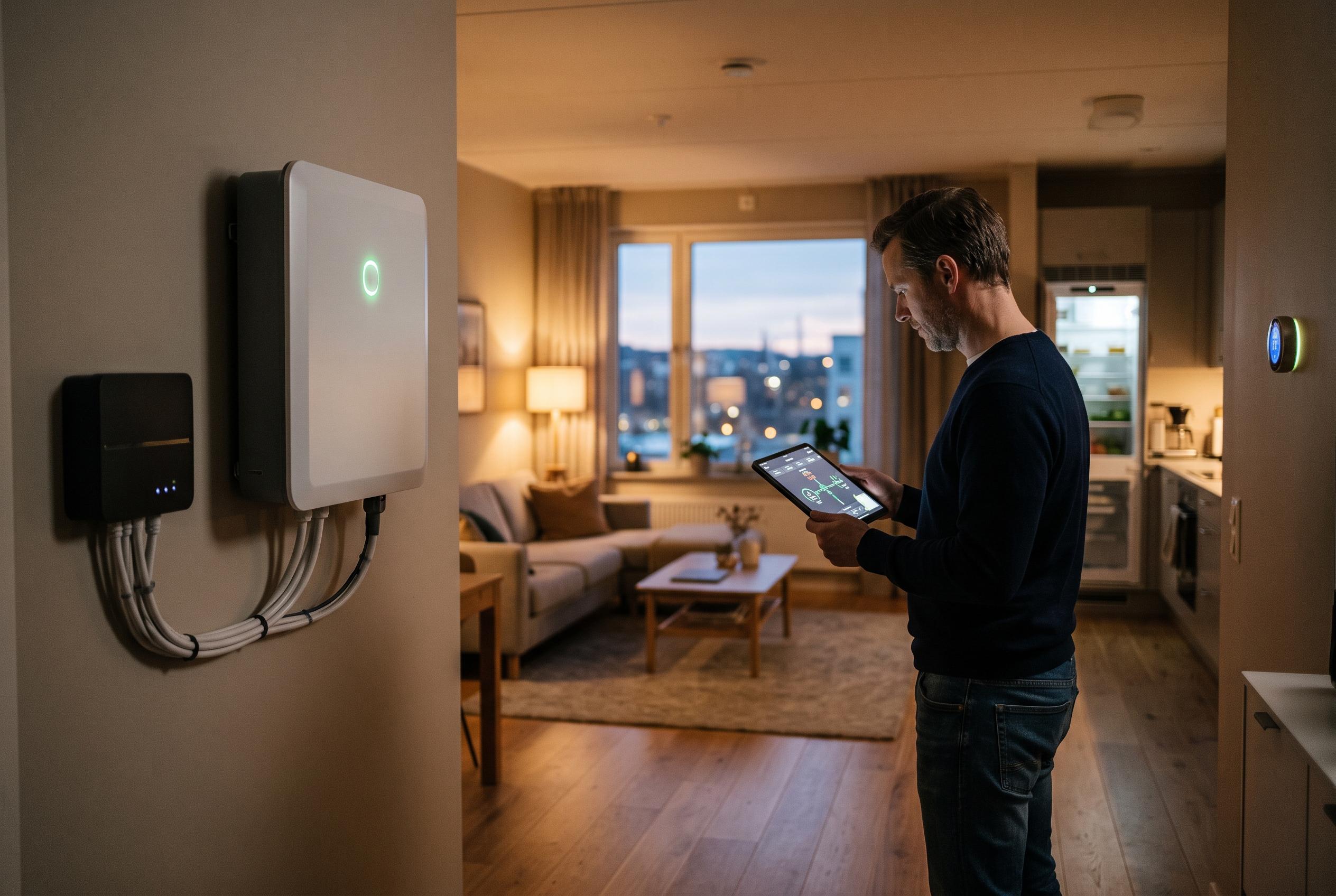

A 10 kWh solar battery’s effectiveness as a backup depends largely on usage patterns, load profiles, and system design, rather than capacity alone. Managing load and integrating solar recharge are key to extending runtime during outages.
A 10 kWh solar battery can provide meaningful backup, but its value depends far more on how it is used than on the headline figure alone. The real runtime is shaped by usable capacity, inverter efficiency, reserve settings and the size of the loads connected to it. In practice, that means the same battery may keep a few essentials running comfortably through an outage, yet empty quickly if it is asked to support heating, cooling or cooking at the same time.
The basic rule is straightforward: divide usable battery energy by average load. Industry guides on battery runtime use the same approach, and the result makes the trade-off clear. At 500 W, a 10 kWh battery can theoretically last about 20 hours; at 1 kW, about 10 hours; and at 2 kW, roughly five hours. Battery calculators note that depth of discharge and inverter losses reduce that figure further, so published capacity should never be treated as the amount actually available at the socket.
For essential household loads, a 10 kWh system can be very practical. Refrigerator, Wi-Fi, lighting and device charging often draw far less than people assume, especially because appliances cycle rather than run constantly. That is why a fridge’s label power is not the same as its day-long consumption. Guides from battery and solar specialists commonly place a light emergency load, including refrigeration and communications, in the range where a 10 kWh battery can support many hours of operation, sometimes close to a full day if demand stays modest.
The picture changes sharply with high-draw appliances. Air conditioning, electric water heating, cooking equipment and clothes drying can dominate the battery almost immediately, even when the inverter is powerful enough to start them. A home battery may have enough stored energy on paper, yet still fail to run a compressor or large motor if its output rating is too low. Conversely, a system with sufficient power delivery may still exhaust its energy in just a few hours under sustained heavy use. For that reason, load profile matters as much as capacity.
Whether a 10 kWh battery can run an entire house depends on the home’s actual average demand, not on the electrical panel alone. A carefully managed essentials-only setup averaging a few hundred watts can stretch the battery far longer than a house operating at several kilowatts. This is why solar companies and battery-sizing guides stress measuring daily kilowatt-hours and peak kilowatts separately. One figure shows how long the battery may last; the other shows whether it can supply the load at all.
Solar recharging can extend runtime significantly if the system is designed to operate during an outage. Daytime generation may cover live loads and replenish the battery, but only if conditions are favourable and the array is large enough. Cloud cover, winter sun, shading and poor orientation can all reduce output. A realistic plan should therefore assume a cloudy day as well as a clear one, rather than relying on ideal weather to deliver resilience.
Manufacturers’ published figures also need careful reading. Some quote nominal capacity, while others specify usable capacity, which is the more important figure for backup planning. Enphase, for example, lists the IQ Battery 10C at 10 kWh usable energy and 7.08 kW continuous output, making it clear that both energy and power should be checked before purchase. By comparison, Tesla’s Powerwall 3 is listed at 13.5 kWh, while FranklinWH’s aPower 2 is listed at 15 kWh usable, showing how quickly practical backup time rises as capacity increases.
For homeowners trying to size storage correctly, the better question is not what a 10 kWh battery can run in the abstract, but which loads must stay on, for how long and at what power level. Once those figures are known, the battery runtime becomes much easier to estimate and far less likely to disappoint in an outage.
Disclaimer: This content is intended for informational purposes only. Readers are advised to exercise their own judgement, conduct due diligence, or consult a qualified expert before acting on any information provided.