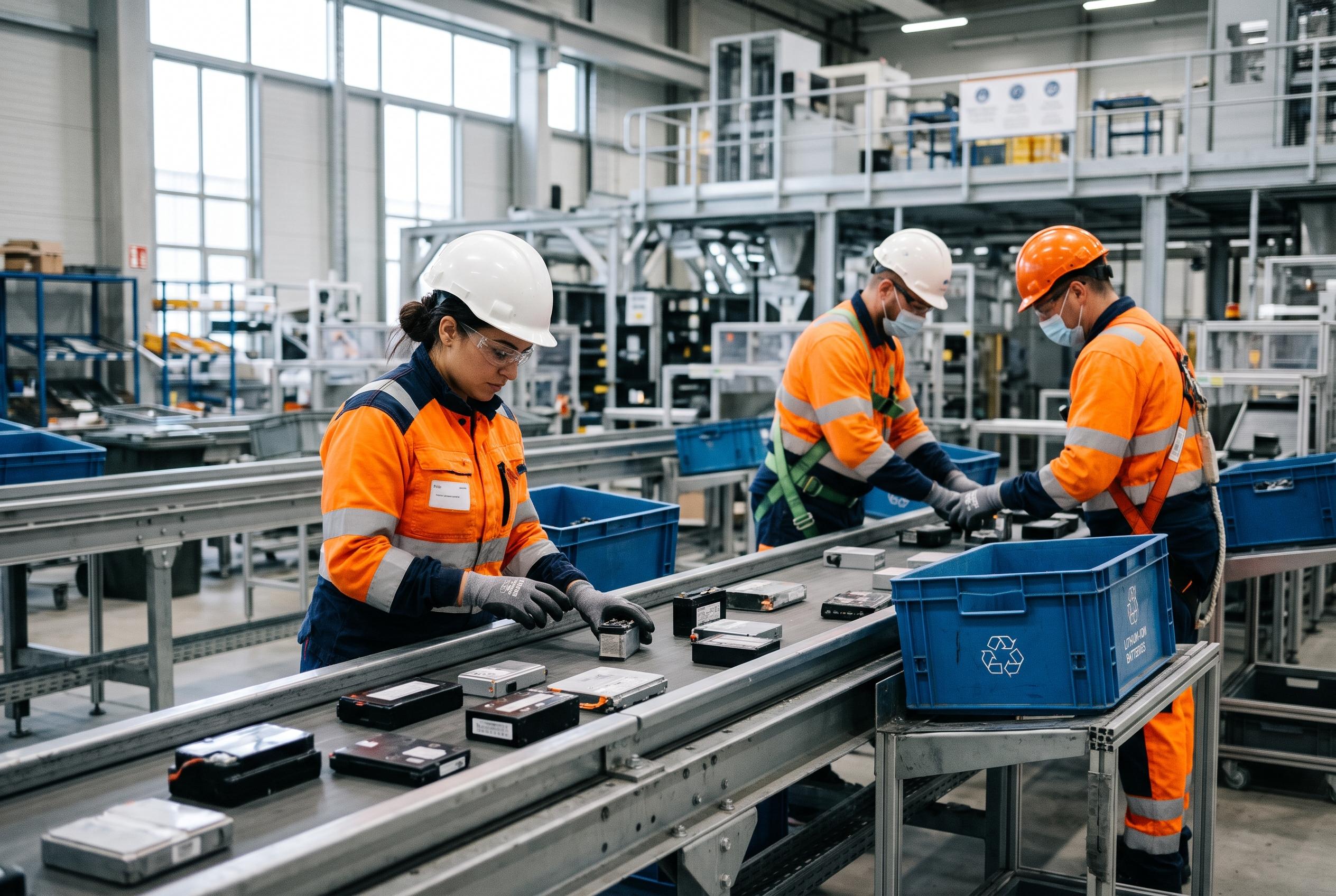

The EPA says lithium-ion batteries must stay out of household bins, while the materials recovered from them may require several industrial stages before they are ready for reuse.
Lithium-ion batteries should never be thrown into household rubbish or placed in curbside recycling, according to the US Environmental Protection Agency. The agency says they should instead go to a dedicated battery-recycling point or a household hazardous-waste collection site, while electronics that contain such batteries should be routed through an authorised e-waste programme that can safely remove packs, protect personal data and direct materials to the appropriate metals processor.
Recycling these products is a multi-stage industrial process rather than a single action. The EPA describes a chain that typically begins with collection, followed by identification and sorting, safe preparation, black-mass production, metals recovery and finally refining and manufacturing. The aim is to separate valuable materials into cleaner streams before any attempt is made to turn them back into battery-grade or other industrial inputs.
That distinction matters because “recovered” does not necessarily mean “ready for reuse”. A recycler may produce an intermediate material that still needs further processing at another facility. Depending on the battery chemistry and the plant’s equipment, the output may contain lithium, cobalt, nickel, manganese, graphite, copper and aluminium, but the amount recovered varies with feedstock quality, processing route and market conditions, the EPA says.
For households, the safest approach is to identify the item, check whether the collection point accepts that exact chemistry and condition, and isolate exposed terminals with non-conductive tape if the programme advises it. Damaged or swollen batteries require special care and should not be charged, punctured, crushed or placed in a normal drop-off container. The EPA and state agencies such as Washington’s Department of Ecology both warn that improper handling can lead to fires and environmental harm.
Electronics should be treated with the same caution. Devices such as phones, laptops, power tools and cameras may contain built-in lithium-ion cells that are difficult to remove safely. In those cases, the better option is usually to hand over the complete device to an authorised collection scheme rather than forcing out a glued-in battery. Before disposal, users should erase data where possible and confirm how the recycler handles storage media and chain of custody.
The technical route also affects what is ultimately recovered. Pyrometallurgy uses high heat and is generally suited to varied feedstocks, but lithium may remain in slag or require separate recovery. Hydrometallurgy uses liquid chemical steps and can recover several key metals, while direct recycling tries to preserve the cathode structure and is still more limited in scale. For that reason, the EPA and other authorities advise consumers and businesses to check not only whether a recycler accepts batteries, but also what it actually recovers, how it measures yields and where downstream refining takes place.
Disclaimer: This content is intended for informational purposes only. Readers are advised to exercise their own judgement, conduct due diligence, or consult a qualified expert before acting on any information provided.