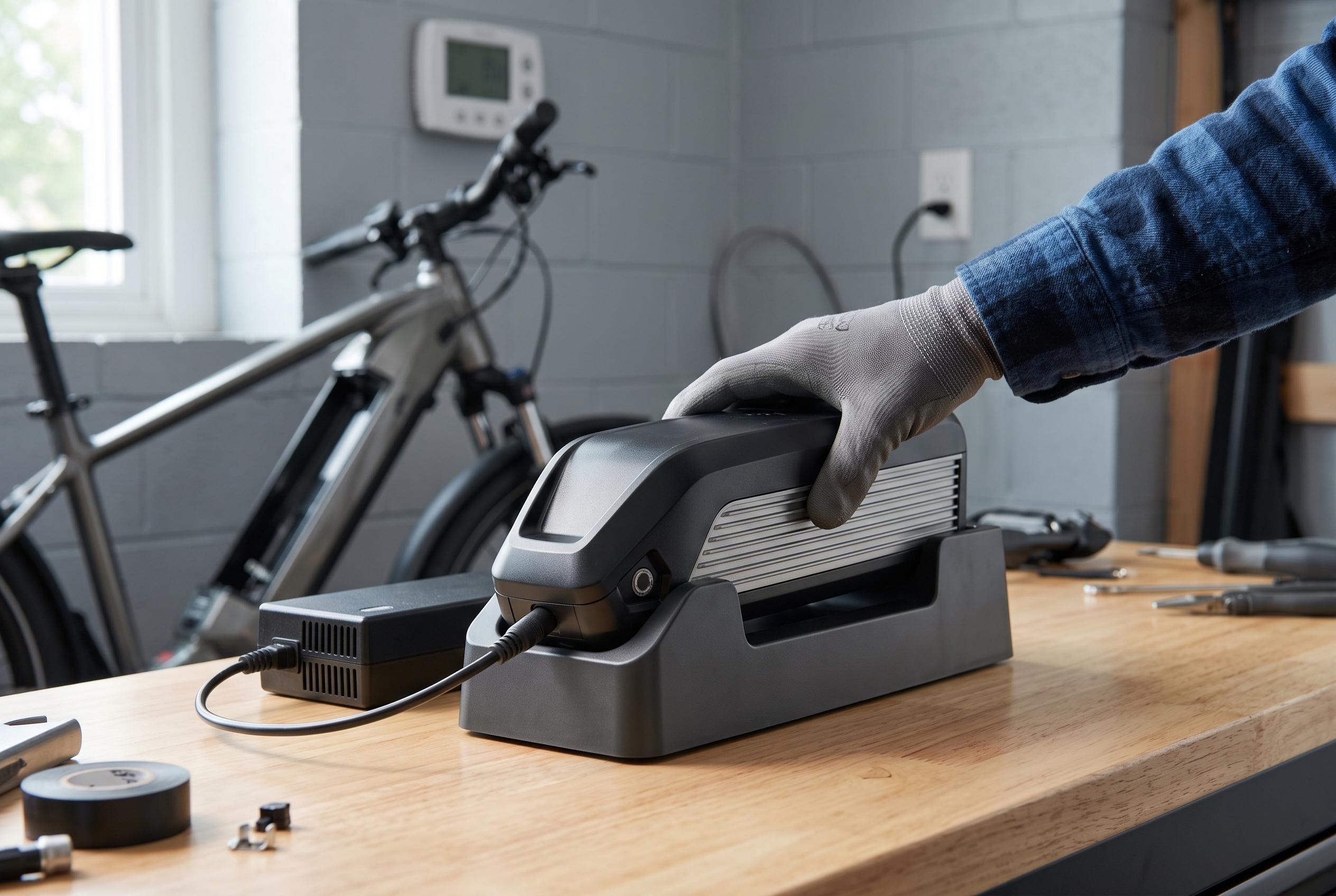

Adopting optimal charging practices, such as shallow cycling, temperature considerations, and strategic storage, can significantly prolong the health and capacity of lithium-ion batteries in e-bikes, helping riders get the most from their batteries over time.
You do not need to plug in an e-bike after every journey, and in some cases doing so is less favourable for long-term battery health than waiting. Industry guidance and manufacturer advice agree that lithium-ion batteries are generally happiest when used in the middle of their charge range, rather than being pushed repeatedly to full capacity or left empty for long periods.
The practical rule is simple: shallow charging is usually better than deep cycling. Many battery-care guides describe a comfort zone of roughly 20% to 80% state of charge for everyday use, because cells experience less chemical stress away from the upper and lower extremes. Keeping a battery close to full for long periods, or regularly running it down to very low levels, increases wear. REI and other cycling advice services also note that partial charges are acceptable and often preferable to waiting until the battery is nearly exhausted.
Temperature matters just as much as charge level. Charging immediately after a ride can add unnecessary heat stress, especially after steep climbs, fast riding, or heavy cargo use. Several manufacturers and battery guides recommend allowing the battery to cool indoors before connecting the charger, and avoiding charging in very hot, very cold, wet, or poorly ventilated conditions. Cold charging is especially risky for lithium-ion cells, while charging in high heat can accelerate ageing and degrade capacity.
That does not mean riders should avoid charging to 100% altogether. Full charging remains useful before longer trips, winter rides, or any outing where maximum range is required. What matters is how long the battery stays at that level. According to battery-care guidance from cycling retailers and e-bike makers, it is better to top up shortly before departure than to leave the battery sitting fully charged for days. Modern battery management systems prevent overcharging, but they do not stop gradual capacity loss caused by prolonged high-voltage storage.
For most riders, the most sensible routine is to charge when convenient, but not obsessively. A daily commuter may choose to charge after returning home, once the battery has cooled, while a weekend rider may wait until the battery falls to a more moderate level before topping up. If the bike will not be used for weeks, the preferred storage level is usually around half charge, kept in a dry place at room temperature. That approach reduces both deep-discharge risk and high-voltage ageing.
Safety still deserves attention. REI and other expert sources advise using the manufacturer’s charger, keeping the battery indoors, and avoiding unattended charging for long periods, including overnight where possible. A visual check for damage, moisture, swelling, or a hot charging brick is worthwhile before every session. In practice, the best charging habit is not to charge after every ride, but to charge when the battery needs it, under stable conditions, with the correct equipment.
Disclaimer: This content is intended for informational purposes only. Readers are advised to exercise their own judgement, conduct due diligence, or consult a qualified expert before acting on any information provided.