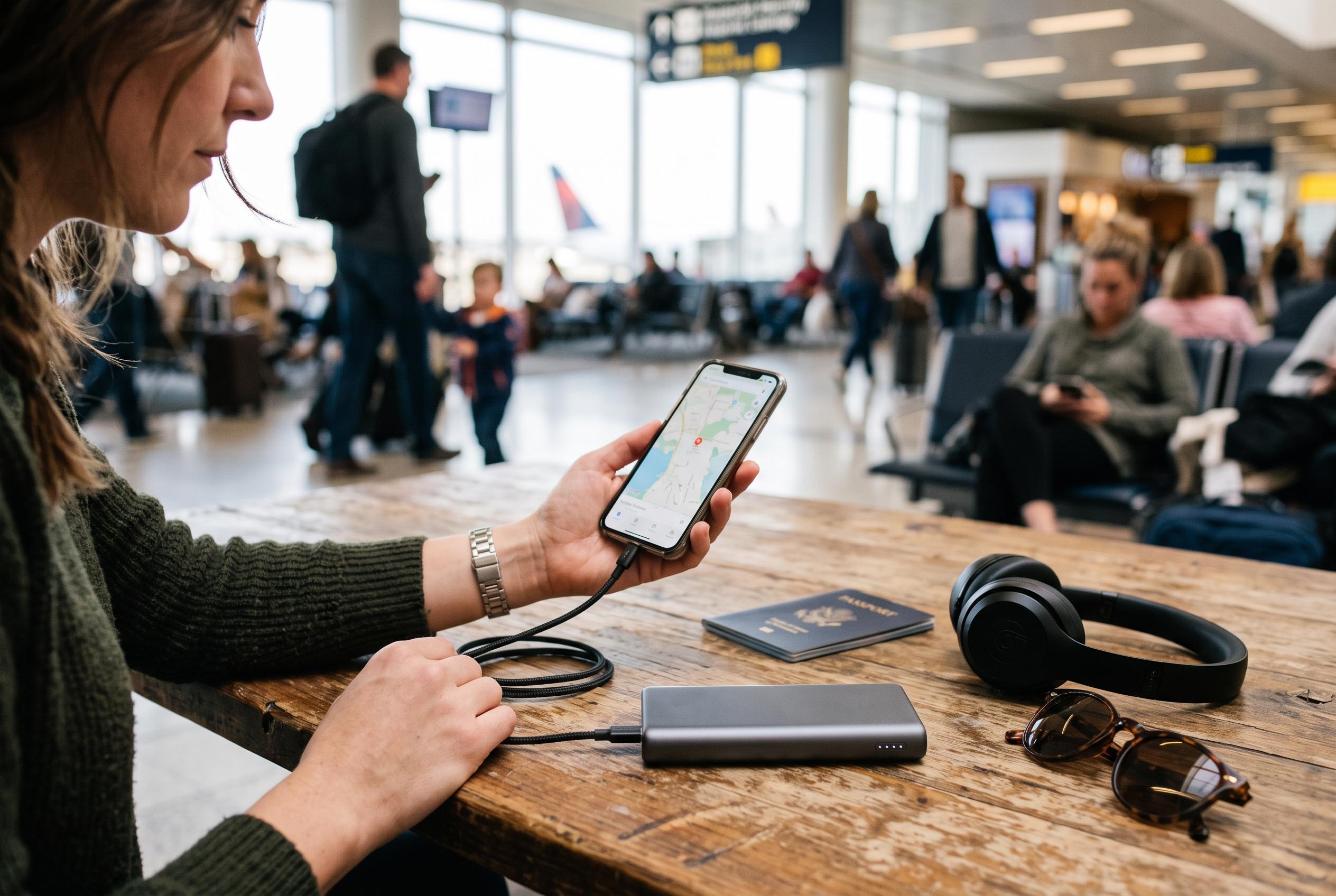

Capacity, charging speed, portability and airline restrictions all matter when choosing a power bank, making the largest battery an unnecessarily heavy option for many users.
Portable chargers have become a routine part of travel kit and everyday carry. As smartphones, tablets, earbuds and other connected devices now do far more than handle calls and messages, the risk of running out of power has become a practical inconvenience rather than a minor nuisance. A well-chosen power bank provides a simple answer, but the best choice depends on how, where and how often it will be used.
The first question is capacity. According to Anker, smaller power banks in the 5,000mAh to 10,000mAh range suit lighter use, while 15,000mAh to 20,000mAh models are better for heavier users and frequent travellers. REI says buyers should think about how long they will be away from mains power, how many devices they need to charge and whether they want a charger for a quick top-up or repeated use over several days. In practical terms, a compact battery may be enough for a commuting phone user, while someone carrying a tablet and accessories is likely to need something larger.
Charging speed is the next key factor. Lenovo says shoppers should look beyond capacity and examine output power, charging standards and port selection, because these determine how efficiently a charger will work with modern devices. USB-C, particularly when paired with USB Power Delivery, has become especially important because it supports faster charging on many current phones and tablets. Input speed matters as well: a power bank that recharges quickly is easier to keep ready for the next trip or long day away from home.
Portability remains a trade-off against energy storage. DeltaThree notes that higher-capacity chargers generally weigh more and take up more space, which can matter on business trips, hikes or long sightseeing days. Some models now include more practical extras, such as built-in cables, multiple output ports or folding plugs, but these features should be assessed alongside basic reliability rather than treated as a substitute for it. Tom’s Guide, in its testing-based round-up, places emphasis on weight, versatility and real-world convenience alongside raw capacity.
Safety and compatibility should not be overlooked. Anker highlights protection against overheating and overcharging, while Lenovo and REI both stress the importance of matching the charger to the devices being used. That means checking the cable type, the output standards and the manufacturer’s specifications rather than buying on price alone. A low-cost charger with vague claims and poor build quality can be a false economy, especially if it is used daily or packed for travel.
Airline rules add another layer of planning. Portable chargers usually need to be carried in cabin baggage rather than checked luggage, and limits may depend on watt-hour rating. A battery rated at 10,000mAh and 3.7 volts, for example, has a nominal energy capacity of 37Wh. Because airline policies can change, travellers should confirm the current rules before departure rather than assume last year’s guidance still applies.
In the end, choosing a portable charger is less about finding the biggest battery and more about finding the right balance. The best option is one that fits the device mix, charging habits and travel pattern of the user, while offering the right mix of speed, safety and portability. For many people, that will mean a modest, lightweight model for daily use. For others, especially those travelling often or powering several devices, a higher-capacity charger is the more practical choice.
Disclaimer: This content is intended for informational purposes only. Readers are advised to exercise their own judgement, conduct due diligence, or consult a qualified expert before acting on any information provided.