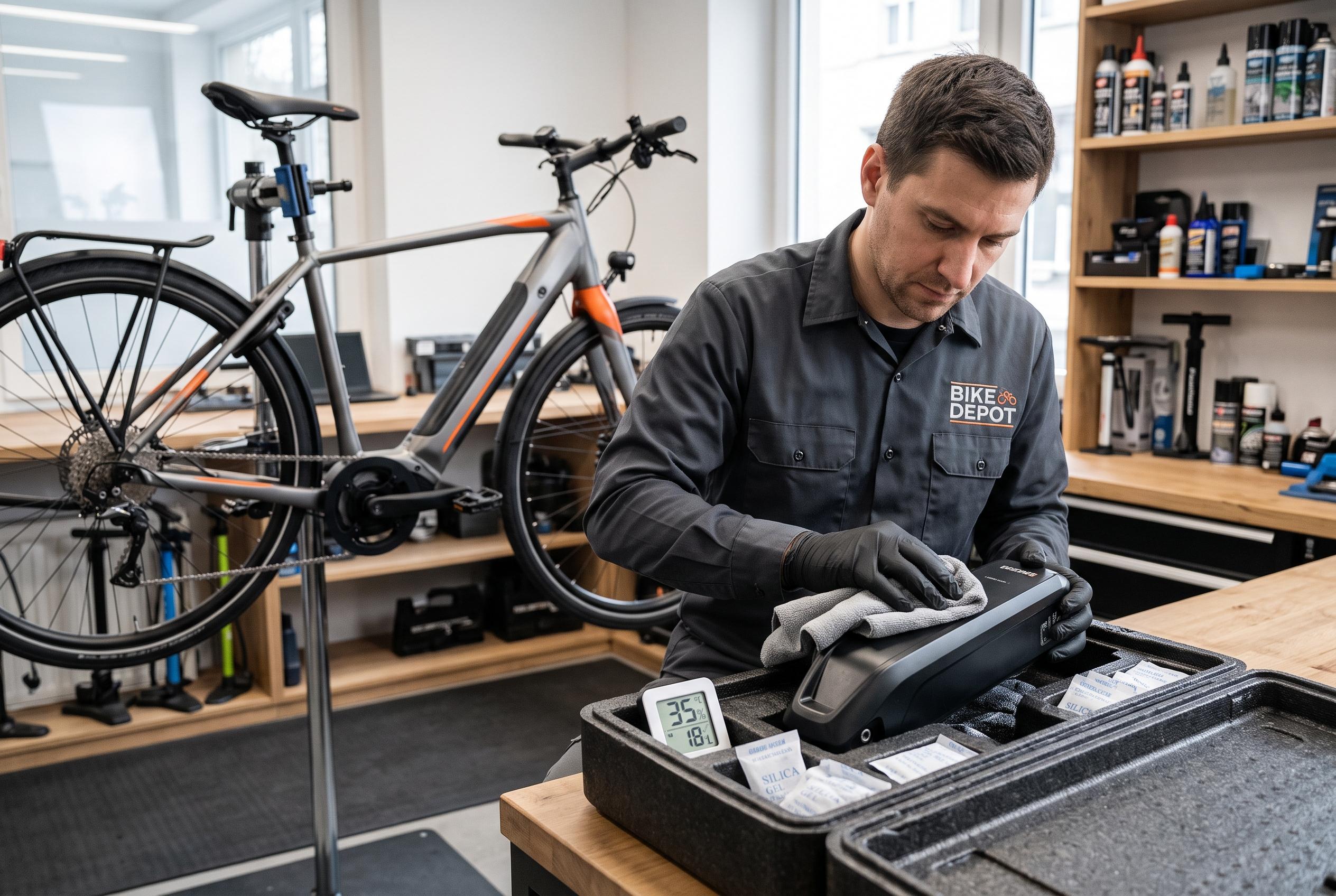

Expert guidance highlights the importance of proper battery maintenance and protective measures to ensure e-bike longevity during colder months, moving beyond basic dry storage to emphasise temperature-sensitive handling and corrosion prevention.
Winter storage is about more than keeping an e-bike dry. According to Himiway’s guidance, cold conditions can weaken battery chemistry, encourage corrosion and leave mechanical parts exposed to unnecessary wear. The basic rule is simple: remove the battery, keep it indoors, and store the bike in a dry, enclosed place rather than in a freezing shed or an unheated garage.
Battery care matters most. Himiway recommends keeping a lithium-ion pack in a climate-controlled space at roughly 50°F to 70°F, or 10°C to 21°C, with a partial charge rather than full or empty. Other winter maintenance guides, including those from Oregon eBikes and Bike Besties, point to a similar storage window of around 30% to 60%, with periodic top-ups to avoid deep discharge. The practical aim is to preserve the cells while preventing the battery management system from dropping into an unrecoverable low-voltage state.
Temperature is also critical when charging. Velotric advises against charging a battery that still feels cold, and Himiway says a pack should be allowed to warm to room temperature before being plugged in. That caution reflects the chemistry of lithium-ion cells: charging below freezing can cause lasting damage, while cold weather more generally reduces available range and can make battery readings less stable. In use, riders should expect shorter trips and less responsive power delivery until the battery warms up.
The rest of the bike needs preparation as well. Himiway and other maintenance guides recommend washing away salt, mud and road grime, then drying the frame thoroughly to reduce the risk of corrosion. The drivetrain should be lubricated with a wet or all-weather chain lube, which performs better in damp, slushy conditions than a dry lubricant. It also helps to shift into the smallest rear cog before storage, which reduces tension on the derailleur and cables.
Storage location and protection are equally important. A basement, heated garage or spare room is preferable, with a breathable cover if the bike must stay in a colder space. Himiway also advises inflating the tyres to the recommended pressure and checking them periodically to avoid flat spots. Other winter guides add that battery contacts should be kept clean and dry, and that road salt should be wiped from brake and drivetrain components after winter rides. For owners who continue riding through the cold, the same logic applies: keep the battery warm until departure, avoid charging it while frozen, and treat winter as a maintenance period rather than a time to park the bike and forget it.
Disclaimer: This content is intended for informational purposes only. Readers are advised to exercise their own judgement, conduct due diligence, or consult a qualified expert before acting on any information provided.