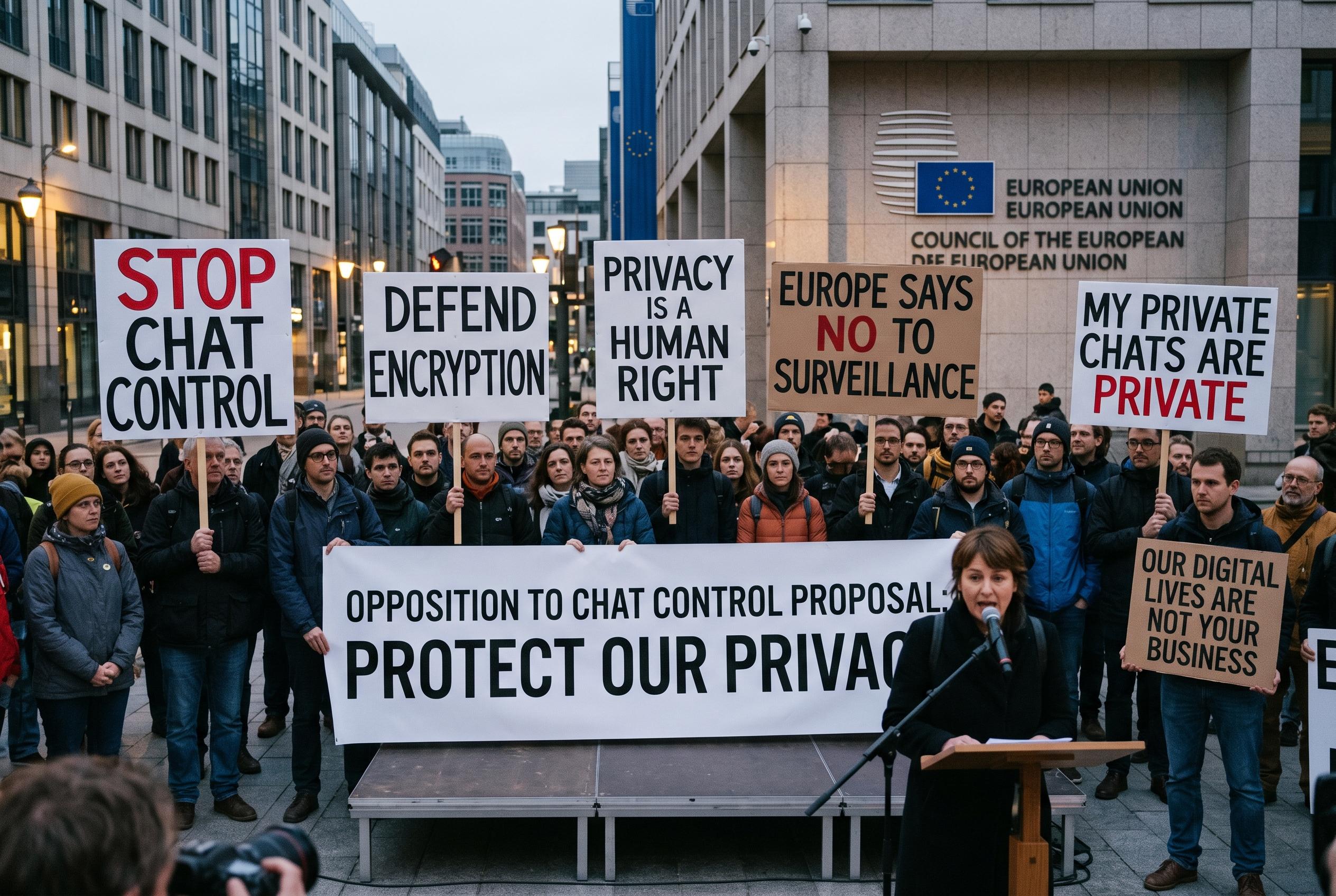

As the European Union prepares to vote on Chat Control 2.0, a contentious proposal to scan private communications for child abuse material, experts warn it threatens encryption and civil liberties, pitting safety against privacy in an increasingly divided digital landscape.
Chat Control 2.0 has become one of the European Union’s most divisive digital policy fights, with ministers expected to vote again in September after earlier attempts were delayed or left unresolved. The proposal would create a system for scanning private messages, images and files for suspected child sexual abuse material or signs of grooming, and if approved it could also affect Norway through the EEA framework. Norwegian privacy officials say the measure goes too far, while supporters argue that existing tools are not enough to combat the scale of online abuse.
At the centre of the dispute is whether safety can justify mandatory scanning of communications that are meant to remain private. Euronews reported in July that the debate has repeatedly split the EU between advocates who see the scheme as a child-protection tool and critics who view it as a step towards mass surveillance, particularly if it reaches services such as WhatsApp and Signal, which rely on end-to-end encryption. The Electronic Frontier Foundation has warned that client-side scanning, where content is checked on a device before it is sent, would weaken that protection rather than preserve it.
That concern has drawn in engineers, security researchers and civil liberties groups. Tjerand Silde, an associate professor at NTNU, told NRK that pre-screening encrypted messages would make secure and confidential communication much harder to guarantee. He was among more than 800 experts from 37 countries who signed a joint appeal against the proposal. The State of Surveillance has likewise described the plan as part of a broader EU push that could normalise client-side scanning and create new pressures on encryption architecture.
Law enforcement voices are more supportive, even if they acknowledge the proposal is still unsettled. Erlend Røyset Riise of Kripos told NRK that the volume of online child abuse is unacceptable and that a better reporting system could give police more useful data. Reuters and other outlets have previously reported that the EU Parliament has been more sceptical of blanket scanning than the Council, where member states have generally been more open to the idea. TechRadar noted that privacy safeguards have been tightened in some drafts, but the political bargain remains fragile. In Germany, Justice Minister Stefanie Hubig said “Widespread surveillance of private chats must be taboo in a constitutional state”, underlining how sharply the issue still divides Europe.
For Norway, the practical question is no longer abstract. NRK reported that the government decided in July 2025 not to seek special exemptions or formal reservations, which strengthens the likelihood that any final EU approval would also be applied through the EEA. That leaves the September vote as a pivotal moment not just for EU messaging rules, but for the future of encrypted communication in one of Europe’s most privacy-conscious countries.
Disclaimer: This content is intended for informational purposes only. Readers are advised to exercise their own judgement, conduct due diligence, or consult a qualified expert before acting on any information provided.