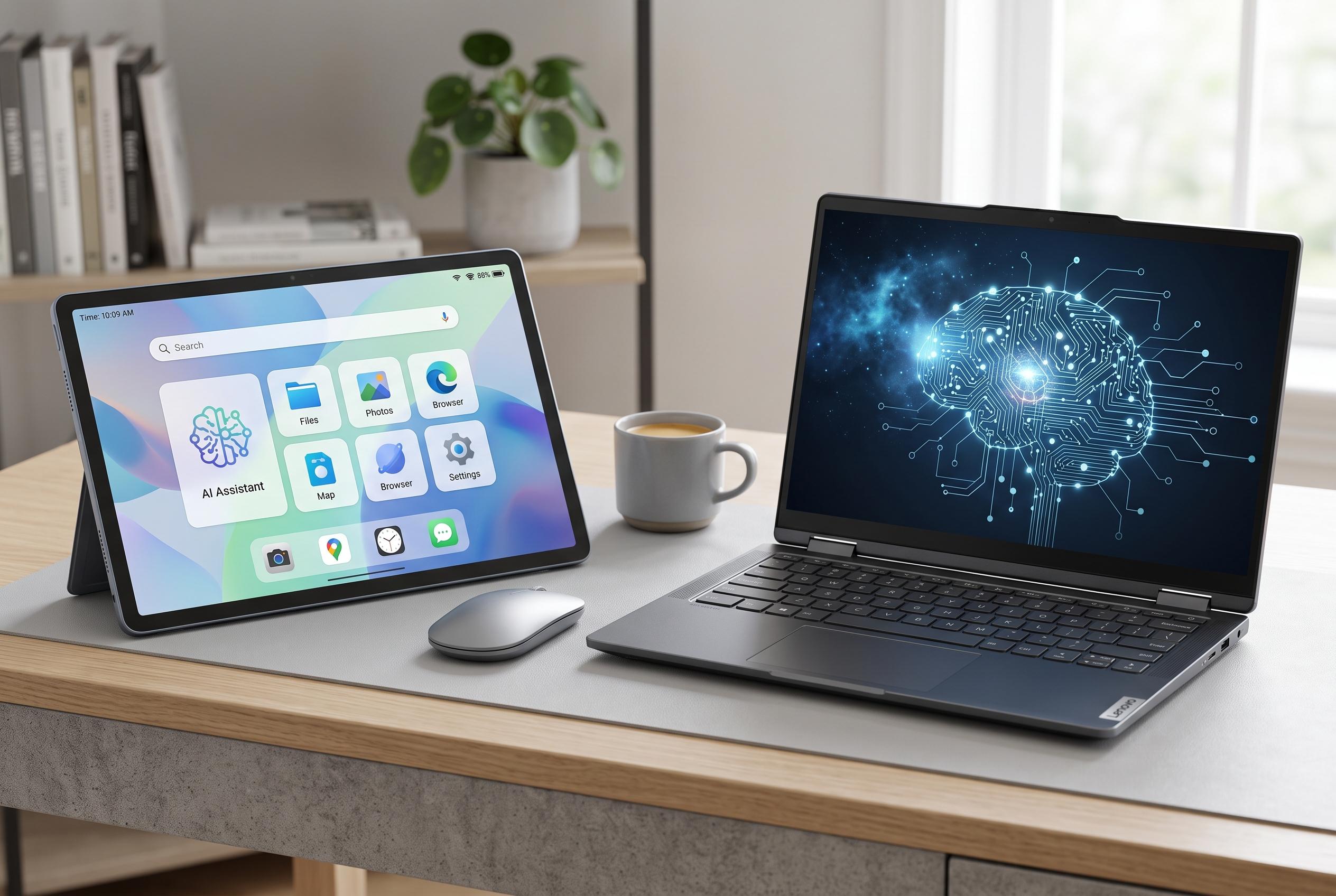

Lenovo prepares to launch its first Googlebook-branded devices, including a 13-inch tablet and new Chromebooks, marking Google’s strategic push into Android-based laptops integrated with AI capabilities, with devices expected to arrive before year’s end.
Lenovo is preparing to bring its first Googlebook-branded devices to market, with a detachable-keyboard tablet expected to sit alongside at least two laptops in the range. The most clearly identified model so far is Lenovo Googlebook Duet m, a name that appeared in the Bluetooth SIG database and points to a MediaTek-powered configuration. According to Ferra, the device will use a 13-inch display and could reach shops before the end of the year.
The Googlebook label refers to Google’s new Android-based laptop platform, which Google outlined in May. Android Central reported that the initiative is centred on Gemini and other AI features, and that Lenovo’s early hardware appears to track closely with the company’s existing Chromebook designs. Leaked images show a familiar Lenovo industrial style, including a light-coloured chassis, USB-A and USB-C ports, side-mounted speakers and a Pixel Glow LED accent.
For the tablet model, the form factor appears to stay close to Lenovo’s established Duet line, which has long relied on a kickstand cover and detachable keyboard. Notebookcheck said Lenovo is also working on a new Chromebook Duet with a MediaTek processor, with an 11-inch screen and stylus support, suggesting that the company may be preparing both a smaller mainstream model and the larger 13-inch variant identified in the Bluetooth listing. That would continue Lenovo’s split between consumer and education-focused Duet machines.
The broader context is a quiet but significant shift in Google’s laptop strategy. MediaTek has already confirmed Lenovo Chromebook Duet models powered by its Kompanio 838 chip, and recent Duet refreshes have focused on better displays, lighter metal construction and longer battery life rather than radical design changes. In that light, Lenovo’s Googlebook range looks less like a one-off experiment than an early test of Google’s attempt to move Android further into the laptop market. If the current timetable holds, the first devices could arrive in the autumn, with more detail likely to emerge at Google’s next hardware showcase.
Disclaimer: This content is intended for informational purposes only. Readers are advised to exercise their own judgement, conduct due diligence, or consult a qualified expert before acting on any information provided.