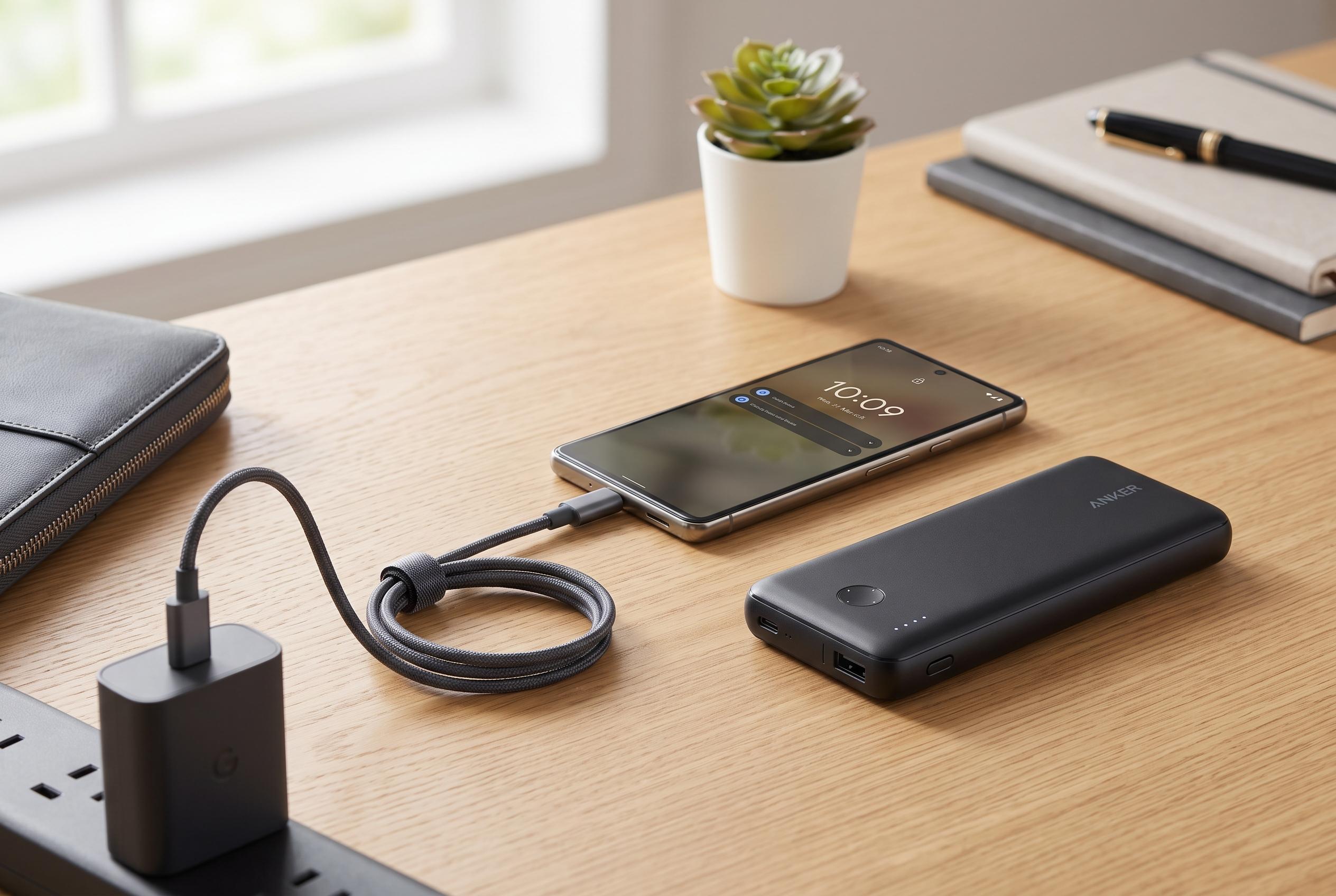

Understanding the compatibility and specifications of chargers, cables, and power banks is vital to optimise smartphone charging speeds, safeguard battery health, and ensure safety across different usage scenarios.
The choice between a wall charger, a USB-C cable and a power bank is less about the biggest figure on the box than about matching the right components to the phone and the use case. Wattage matters, but so do the device’s own charging limits, the quality of the cable and whether the setup is being used at home, in the office or on the move. A charger that is technically powerful enough will still be held back if the handset, cable or charging protocol cannot negotiate that output safely.
Two technical terms are worth understanding before plugging anything in. Watts measure power, while mAh describe battery capacity. That means a charger rated at 100W will not make a phone charge faster if the handset can only accept 25W. According to technical explainers on USB Power Delivery, the charger and device negotiate voltage and current over the cable, which is why USB-C charging can scale from modest phone charging to much higher outputs for tablets and laptops. USB-PD also helps the pair settle on a safe level rather than simply forcing maximum power.
For most modern smartphones, a 30W USB-C charger is enough. Users with premium phones, or those who want a single adapter for a tablet or a light notebook, may reasonably look at 45W or 65W models. Above that, higher figures are mainly useful when a charger is meant to serve several devices at once. As Eaton and other technical guides note, multi-port chargers split available output between ports, so the headline wattage is not necessarily available to every connected device at the same time. That makes the small print on the packaging more important than the largest number in the marketing material.
The cable is often the weak point. A USB-C lead can limit charging if it is only rated for lower power, if it is poorly made or if it does not support the relevant USB-PD negotiation properly. In practical terms, that can turn a fast charger into a slow one. USB-C charging guidance from several technical sources makes the same point: the cable must be able to carry the current the charger is trying to deliver, otherwise the system falls back to a safer but slower rate. Well-made cables normally state their supported wattage clearly, such as 60W or 100W, and tend to last longer than unbranded alternatives.
Power banks should be judged on both capacity and output, not just mAh. A 10,000mAh unit will not provide 10,000mAh of usable phone charging, because some energy is lost in conversion and through the cable. Technical explanations of power delivery also show why output rating matters: a low-power power bank may be fine for a phone, while a higher-output model is more useful if it must also serve a tablet or compact laptop. For air travel, spare lithium batteries should be carried in hand luggage rather than checked baggage, and many airlines apply limits around the 100Wh mark, which is why buyers should check the label before travelling.
The wider lesson is that battery health depends more on heat and charging habits than on any single charging speed. As the Webnews article notes, keeping a lithium-ion battery near full charge for long periods can add stress over time, while repeated deep discharges are also undesirable. That does not mean overnight charging is harmful in itself; many phones now slow or pause charging near 80% and complete the process before wake-up time. The aim is not to find the most aggressive charger, but the combination of charger, cable and power bank that fits the phone’s limits and the user’s routine.
Disclaimer: This content is intended for informational purposes only. Readers are advised to exercise their own judgement, conduct due diligence, or consult a qualified expert before acting on any information provided.