

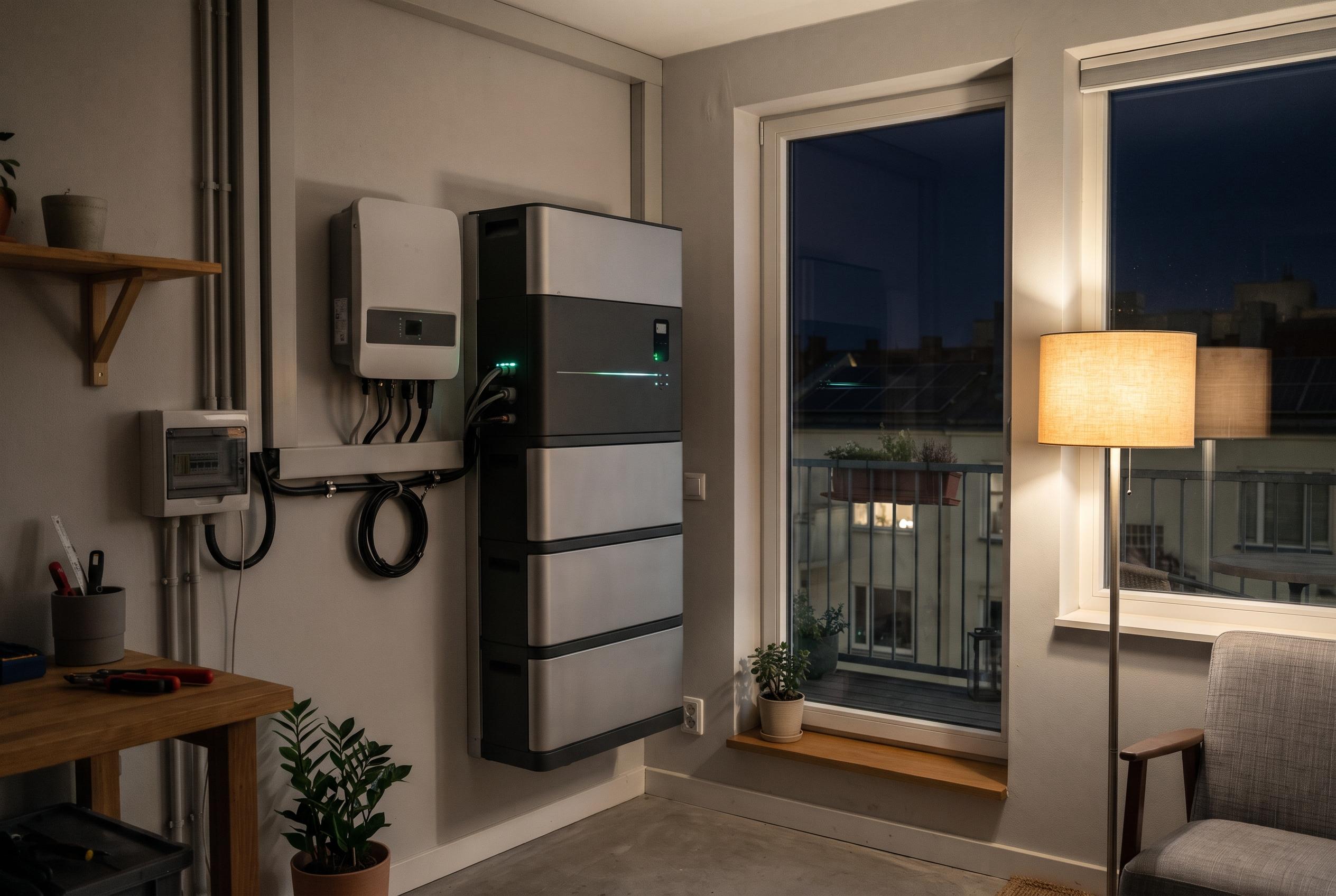

With 5 kWh of storage, substantial backup power and Home Assistant support, Anker’s latest battery is built to grow beyond a plug-in solar kit. Its clunky app and opaque AI controls remain the weak points.
Rising electricity prices have sharpened interest in home storage, and the broader logic is straightforward: when gas-fired plants still set the marginal price, electricity becomes more expensive even as solar and wind capacity expands. In that setting, compact battery systems have moved from niche gadgets to practical household infrastructure, especially for users who want to shift consumption into cheaper periods or make better use of their own solar generation.
Anker’s Solarbank 4 Pro is the clearest sign yet that the category is moving beyond the original idea of a plug-in balcony unit. The latest model carries a 5.024 kWh LiFePO4 battery, four solar inputs with a combined ceiling of 5,000 watts, and up to 2,500 watts of AC output or grid charging. It is also heavy at 50 kilograms, which makes installation a two-person job, but that weight comes with a more substantial enclosure, IP66 protection and a notably larger storage capacity than earlier generations.
The hardware is designed to remain compatible with older Anker batteries, which is important for anyone already invested in the system. In practice, the company has tried to protect users from having to replace everything at once, even as the platform has grown into something that looks increasingly like a small residential energy system rather than a classic balcony solar kit. That shift matters because the legal and technical limits are not the same everywhere. In Germany, the simplified balcony-solar category is still tied to an 800 VA inverter ceiling and up to 2,000 watts of installed module capacity, while Austria keeps the plug-in limit at 800 watts and requires notification of the network operator before operation begins.
For households that stay within the plug-in rules, the Solarbank 4 Pro may be more system than strictly necessary. But its extra capacity is not only about feeding power back to the grid. The built-in off-grid socket can deliver substantial output for appliances during outages or for internal backup use, and the unit can also draw from the grid at up to 2,500 watts. That makes it more flexible than a basic balcony inverter, particularly for users who want to time-shift consumption, store surplus solar energy, or support higher-load devices under a more formal installation.
The software is where the machine becomes either genuinely useful or needlessly complicated. Anker has added a display that shows the most important operating data without opening the app, and the app itself now presents a more visual overview of weather, day-night cycles and energy flows. Even so, its structure remains awkward, with key settings spread across menus in a way that is not always intuitive. The company has also expanded operating modes, including a custom schedule, self-consumption mode, tariff-based modes and an AI-driven setting that is meant to balance prices, forecasts and household demand.
That AI function is promising in concept but still imperfect in execution. The system can make decisions that appear sensible only after the fact, and it is not yet transparent enough to explain its own behaviour clearly. The more convincing advance is Anker’s move towards local control. The company now officially supports Home Assistant through Modbus on the Solarbank 4 Pro and selected accessories, which reduces dependence on the cloud and opens the door to detailed home-energy automation. For technically minded users, that is arguably the most important change in the product line.
The same applies to smart metering. Anker’s own meter remains the straightforward choice, but third-party options such as Everhome’s EcoTracker IR can offer a cheaper route into real-time consumption tracking if the installation and signal conditions are suitable. For users with flexible tariffs, the combination of live household data, weather forecasts and programmable automation can make storage more valuable, but only if the household can actually consume enough energy at the right times. That is why payback depends heavily on roof or balcony orientation, battery use, tariff spread and the overall size of the solar array.
Taken as a whole, the Solarbank 4 Pro is a strong piece of hardware with serious ambition. It is almost excessive for a minimal plug-in balcony setup, yet that is also what makes it interesting: the same unit can serve a small apartment today and become part of a more formal photovoltaic installation later. The main weaknesses are not in the battery pack or enclosure, but in the software layer, where the app still needs refinement and the AI needs to become more explainable. For buyers who want a system with room to grow, Anker has built something unusually future-proof.
Disclaimer: This content is intended for informational purposes only. Readers are advised to exercise their own judgement, conduct due diligence, or consult a qualified expert before acting on any information provided.



