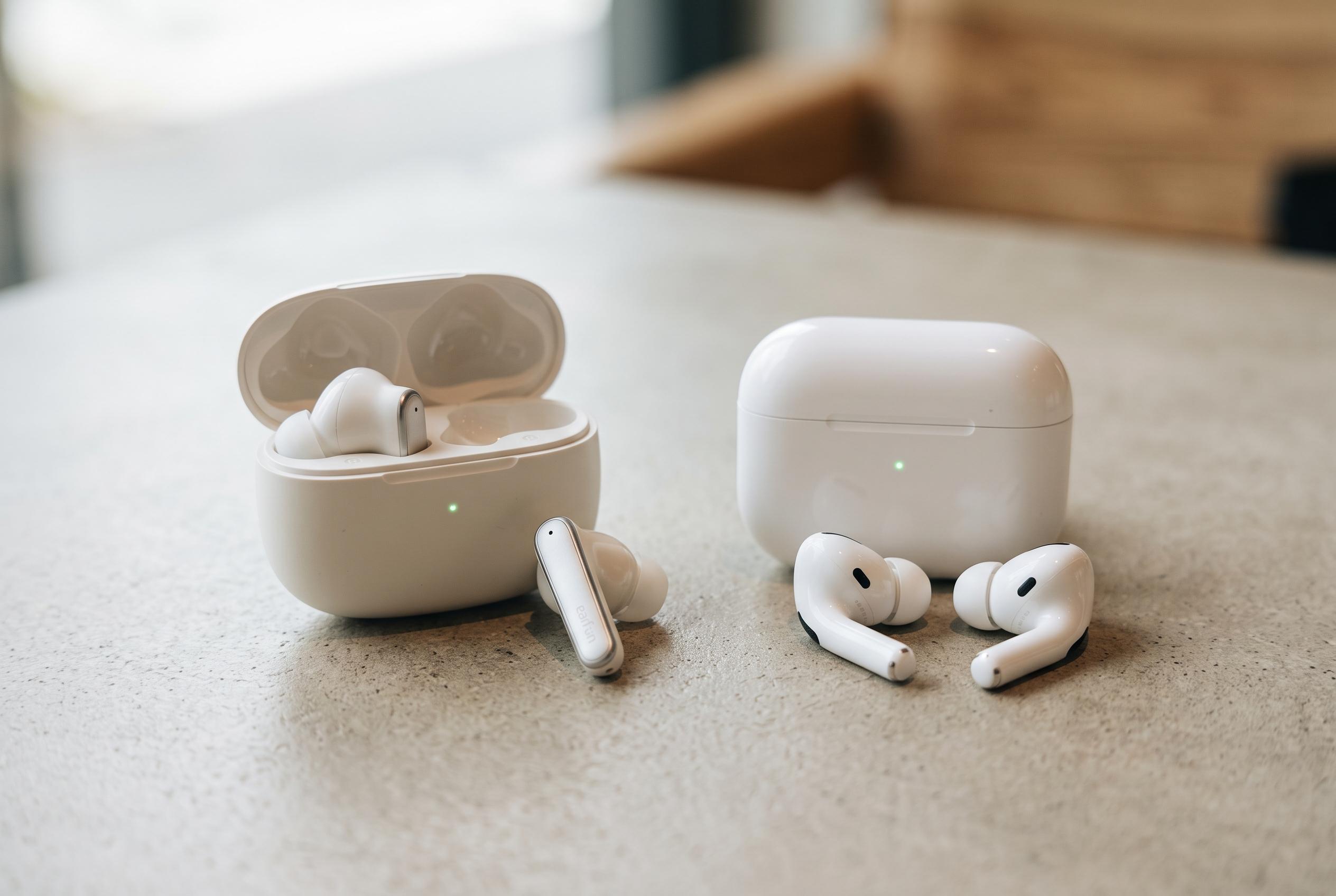

As in-flight comfort and convenience become crucial, travellers are increasingly favouring compact earbuds like EarFun Air Pro 4 and Apple AirPods Pro 3 over bulky over-ear headphones, reshaping the in-flight audio landscape.
For frequent flyers, the best headphones are not always the most expensive ones. Portability, battery life and noise cancelling matter more in the cabin than they do at a desk, which is why many travellers now favour compact earbuds over premium over-ear sets. That trade-off has also shaped current buying guides: TechRadar places the Sony WH-1000XM6 at the top of its travel list, but also points to lighter alternatives such as the Bose QuietComfort Ultra Earbuds and Apple AirPods Pro 3 for people who value space and convenience.
That logic is reflected in the choice to travel with EarFun’s Air Pro 4 rather than Sony’s WH-1000XM6. The Sony over-ears remain a strong all-round headphone, with improved active noise cancellation, a refined design and a 30-hour battery, according to Tom’s Guide. But they are still bulkier than most carry-on kits can comfortably absorb. EarFun’s earbuds are a more practical in-flight compromise: they are small enough to disappear into a pocket, and independent reviews have found that their ANC is strong enough to reduce the low-frequency drone that dominates aircraft noise.
The newer EarFun Air Pro 4+ has pushed the line forward again, with PC Gamer reporting better sound quality, wireless charging, dual Bluetooth connectivity, LE Audio and Auracast support, plus a battery life of 12 hours per charge and 54 hours in total with the case. That makes the family more competitive against pricier rivals. For travellers, though, the original Air Pro 4 still has the key qualities that matter most: inexpensive replacement cost, compact size and enough endurance for a long sector with the charging case as backup.
Apple users have a different calculation. The AirPods Pro 3 are especially attractive for anyone already inside Apple’s ecosystem because of the automatic device switching and tight iPhone integration. They also offer eight hours of listening with ANC on and 24 hours total with the case, which makes them well suited to long flights. What Hi-Fi? notes that Sony’s forthcoming WF-1000XM6 earbuds will bring stronger cancellation, 32-bit processing and support for LDAC, but at a higher price and with a similar eight-hour battery figure. For many travellers, that means the gap is likely to come down to platform preference rather than raw specification alone.
For passengers who still prefer over-ears, the Sony WH-1000XM6 remains the benchmark for sound quality and ANC, while the Bose QuietComfort Ultra Headphones are the more comfort-led option for long-haul use. The Sony set is highly regarded for its improved cancellation and foldable design, but Bose’s appeal lies in practical cabin features, including the cable arrangement that supports wired use when battery life runs low. In the same category, Sennheiser’s Momentum 4 still stands out for endurance, and newer mid-range models such as JBL’s Live 780NC and Anker’s Soundcore Space Q45 show how far the budget end of the market has improved.
The broader lesson is that travel headphones should be judged by the conditions in which they are used. ANC-on battery life is the meaningful figure for flights, not the headline number on the box. The real question is whether the headphone fits the rest of your carry-on load and the way you sleep, work and move through the cabin. For some travellers, that still points to a flagship over-ear model. For many others, a good pair of earbuds is the more sensible answer.
Disclaimer: This content is intended for informational purposes only. Readers are advised to exercise their own judgement, conduct due diligence, or consult a qualified expert before acting on any information provided.