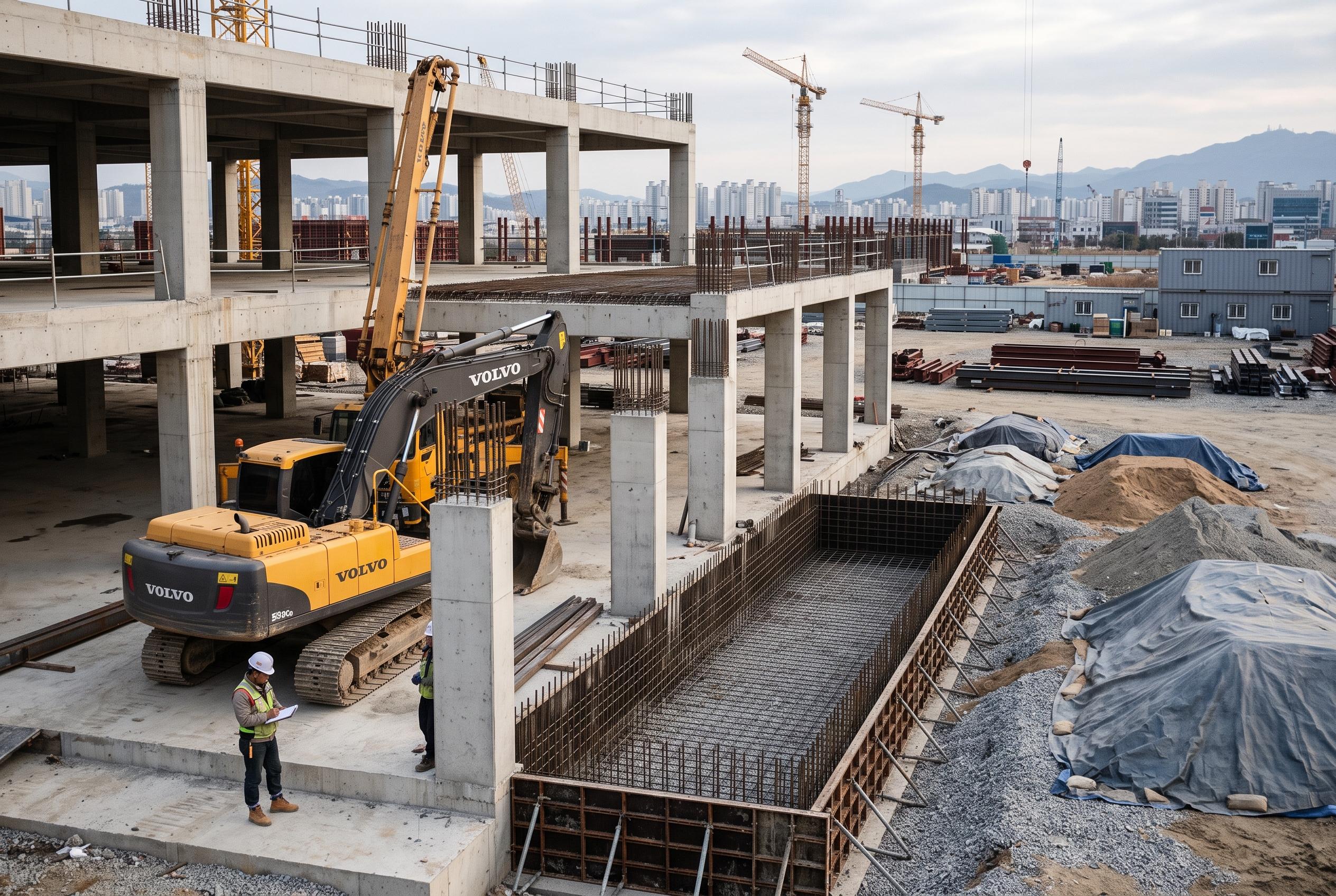

As Gwangju prepares for a major semiconductor complex, local builders warn that sand and aggregate shortages could jeopardise the region’s booming construction sector, risking delays and rising costs.
South Korea’s south-western construction market is heading into a period of exceptional demand, but local builders warn that the region’s supply of sand and aggregate is already under strain. Newis reports that the prospect of a major semiconductor cluster in Gwangju has sharpened concern that a shortage of raw materials for ready-mixed concrete could become a constraint on one of the area’s biggest development cycles.
The pressure is not theoretical. According to industry figures cited by Newis, annual shipments of ready-mixed concrete in the region fell from 6.13 million tonnes in 2020 to 4.4 million tonnes last year, a drop of about 28 per cent. As local aggregate output has declined, sand prices have risen and longer transport routes have added to costs, leaving producers with less room to absorb further demand from large-scale projects.
That risk matters because semiconductor fabrication plants require far more than a single factory shell. They depend on extensive civil works, industrial plots, roads and utility networks, all of which consume large volumes of concrete at the outset. Newis says the government plans to develop about 8.26 million square metres around the former Gwangju military airport as a national semiconductor industrial complex, with space for production facilities, suppliers, research buildings and residential functions. If that programme advances as planned, the region’s concrete market could face years of elevated demand. But builders say the supply chain will falter if aggregate supply is not secured first. South Korea has seen before how quickly material shortages can disrupt construction: in 2023, cement shortages and a freight union strike halted or delayed a large share of worksites, prompting repeated warnings from industry groups about wider delays and rising costs.
Nearby Naju, one of the main aggregate sources for Gwangju, illustrates the bottleneck. Newis reports that six stone extraction sites currently hold permits there, but some licences run only until the end of 2027, making renewals a likely flashpoint. Local disputes over extension approvals, resident consent and environmental concerns have become a recurring feature of permit proceedings, raising the prospect that the very quarrying needed to support the region’s construction boom may be the first thing to run short.
Disclaimer: This content is intended for informational purposes only. Readers are advised to exercise their own judgement, conduct due diligence, or consult a qualified expert before acting on any information provided.