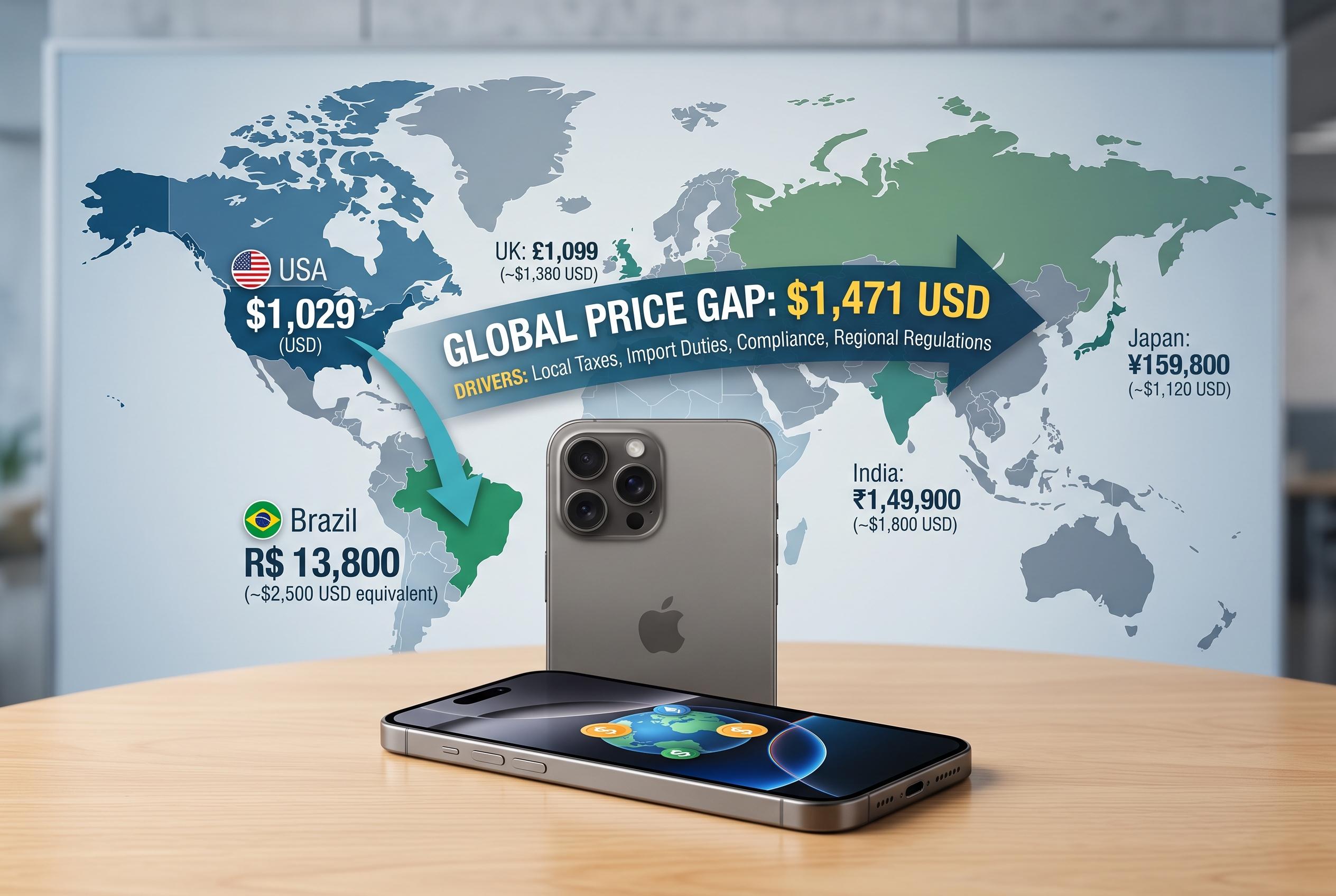

Deutsche Bank’s latest report reveals a $1,471 price gap for the iPhone 17 Pro across markets in 2026, driven by taxes, imports, and regulations, highlighting the complex landscape of mobile device pricing worldwide.
Apple’s iPhone pricing still varies sharply by market in 2026, with Deutsche Bank’s latest “Mapping the World’s Prices” data showing that geography, taxation and regulation can change the cost of the same handset by well over $1,000. Vanguard News reported that the 256GB iPhone 17 Pro ranges from $1,121 in Japan to $2,592 in Türkiye, a gap that underlines how uneven global consumer pricing remains.
At the lower end of the table, Japan is the cheapest market in the Vanguard ranking, followed by South Korea and the United States, which are both placed at about $1,181. Hong Kong comes next at $1,200, while Taiwan, the UAE and Canada also sit below most European markets. The survey puts the Philippines, Vietnam and China just inside the top 10, with only a few dollars separating them in some cases. Condé Nast Traveller Middle East said Japan’s position has since shifted after Apple raised the local price in July 2026, illustrating how quickly these rankings can move.
The pattern is familiar. Apple does not simply set one global retail price and convert it at the day’s exchange rate. Local taxes, import duties, registration fees, currency moves and market rules all feed into the final shelf price. In Europe, prices often look higher because sales tax is usually included in the advertised figure. In Türkiye, that effect is amplified by a stack of levies, which helps explain why the handset is more than twice as expensive there as in Japan.
For buyers comparing countries, the headline lesson is that the cheapest place to buy an iPhone is not always the same as the cheapest place to own one. Travellers may face warranty limits, tax-refund rules or customs charges, while domestic shoppers can encounter retailer promotions or carrier subsidies that narrow the gap. Even so, the 2026 data show that location still matters, and in some cases it matters a great deal.
Disclaimer: This content is intended for informational purposes only. Readers are advised to exercise their own judgement, conduct due diligence, or consult a qualified expert before acting on any information provided.