
Recent updates to Android and cross-platform features have significantly narrowed the longstanding advantages of iPhone, challenging the narrative of iOS exclusivity and prompting a reassessment of the smartphone ecosystem landscape.
For years, the default case against switching from iPhone to Android rested on a short list of familiar grievances: poor texting, awkward file sharing, weak magnetic charging, patchy device tracking, unreliable backups and a lack of seamless hand-off between phone and laptop. Much of that argument now feels dated. Several of the most persistent gaps have narrowed markedly, and some have been closed altogether, even if the experience still varies by handset and ecosystem.
The biggest shift has been in messaging. Apple’s adoption of RCS in iOS 18 brought richer cross-platform chats, including higher-quality media and typing indicators, while encryption has also begun rolling out for some cross-platform conversations, depending on carrier support. Reuters-style coverage of the issue has long treated green-bubble friction as a cultural problem as much as a technical one, but the practical advantage is no longer as one-sided as it once was. Some functions, including editing and Tapback-style reactions, are still uneven across platforms, so the system is better than before rather than fully uniform.
File sharing has moved on as well. Google’s Quick Share is now the standard Android sharing tool, replacing the fragmented systems that previously caused confusion. According to Google’s support documentation, it works on Android 6 and later, Chromebooks and select Windows PCs, and can also support iPhone transfers through QR-based flows. More recently, Google has pushed closer integration between Quick Share and AirDrop, first on the Pixel 10 line and then more broadly on additional Android phones, which removes one of the most visible barriers in mixed-device households. Android Central has also reported on a tap-to-share upgrade that simplifies nearby sharing on Pixel devices by letting users bring phones together to transfer contact details, photos and videos.
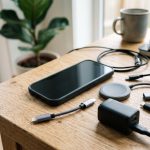
Charging and accessories are another area where the old comparison has weakened. Qi2 and Qi2.2 have brought magnetic alignment and faster wireless charging to more devices, with speeds reaching 25W in supported implementations. Google has added magnets to the Pixel 10 family, while Samsung has opted for 25W wireless charging without built-in magnets on some Galaxy models, leaving users to rely on cases if they want the magnetic experience. That means Android remains inconsistent in the way it delivers the feature, but it is no longer fair to treat magnetic charging as an iPhone-only advantage.
Tracking accessories also looks less decisive than it did a year or two ago. Google’s Find Hub now rides on a large Android device network, and the company says the system can use roughly three billion Android devices as relays. The trade-off is that Google leans more heavily on user controls and anti-stalking safeguards than Apple does with Find My, which can make location updates less immediate. Even so, the scale of the network means the gap has become much smaller in everyday use.
The strongest remaining argument for staying with iPhone is not messaging or sharing, but continuity. Apple still controls both ends of the Mac-to-iPhone experience, so Handoff and Universal Clipboard work with a level of integration Android cannot yet match on its own. Microsoft Phone Link and Google’s ChromeOS links are useful bridges, but they remain workarounds rather than a unified system. Android’s backup story is also still less complete: while contacts, call logs, SMS, settings and photos are covered, the data inside many apps still depends on individual developers. In practice, that means the old “iPhone envy” list has shrunk substantially, but not every item has disappeared. For users who live on a Mac, Apple still has the clearer answer. For everyone else, the case for iPhone exclusivity is weaker than it was.
Disclaimer: This content is intended for informational purposes only. Readers are advised to exercise their own judgement, conduct due diligence, or consult a qualified expert before acting on any information provided.