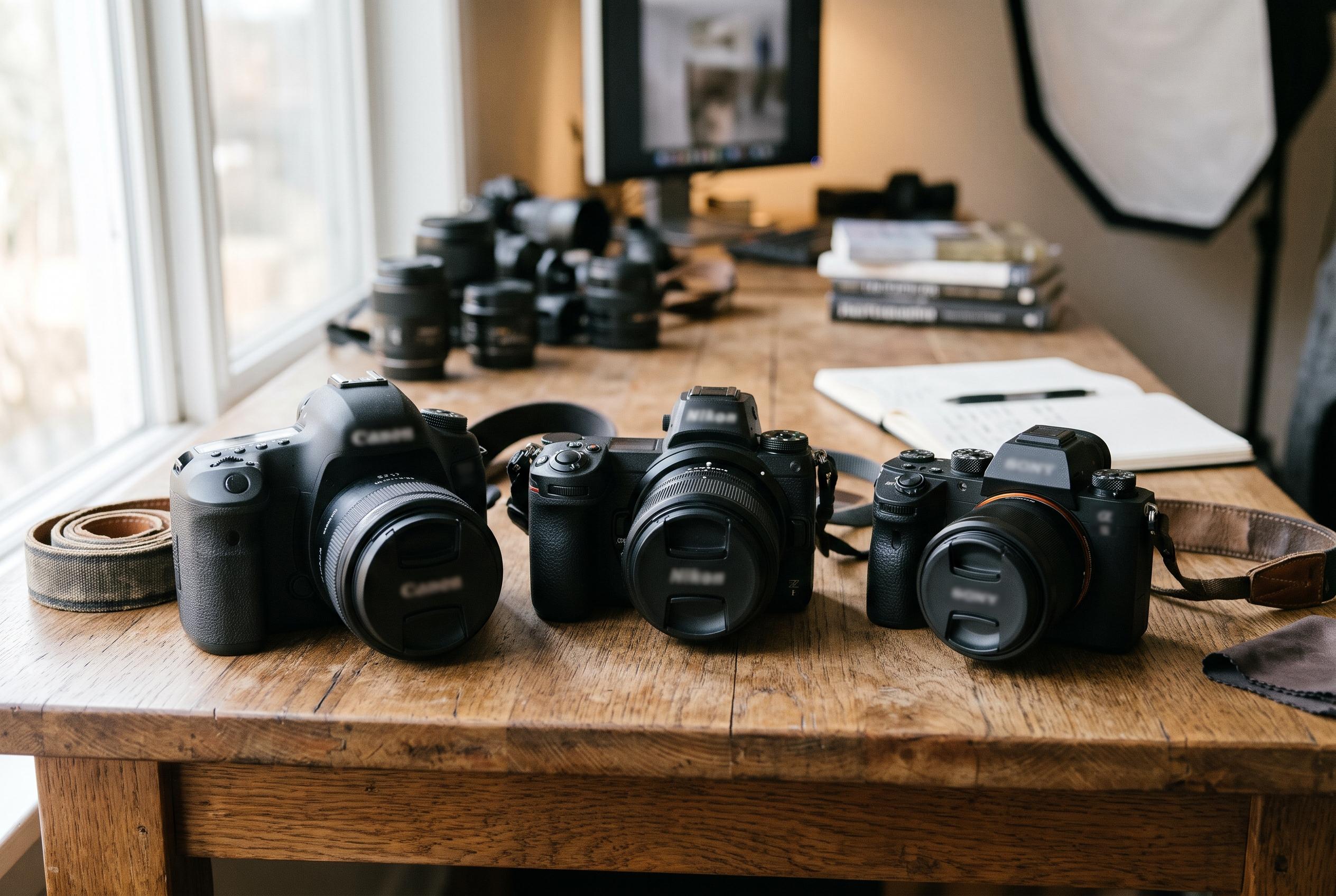

Canon’s newest body leads on features, Nikon offers the more balanced stills camera, and Sony’s a7 IV stands out when discounts bring it below the $2,000 mark.
Among full-frame cameras around the $2,000 mark, Canon, Nikon and Sony now offer several credible alternatives for buyers who want a larger sensor without moving into far more expensive bodies. DPReview’s 2025 round-up places Canon’s EOS R8 Mark II, Nikon’s Z5II and a handful of older Sony models in the conversation, with each option trading features differently rather than simply competing on headline price alone.
Canon’s EOS R8 Mark II looks like the most up-to-date of the group. According to Canon’s announcement, it is a compact full-frame mirrorless body aimed at enthusiasts and content creators, with a 24.2-megapixel sensor, in-body image stabilisation, subject tracking autofocus and a lightweight design. The company also says it supports 40 frames per second electronic shooting and 4K video, while the US body-only price is set at $1,899. That puts it close enough to the under-$2,000 ceiling to matter, but still low enough to leave room for a lens.
Nikon’s Z5II remains the safer recommendation for many buyers who want a more conventional stills-focused camera. Nikon’s own product information lists it as a full-frame mirrorless model with a Z mount, UHS-II SD card support and the expected battery and image-quality controls for the line. DPReview notes that it brings in-body image stabilisation and an autofocus joystick, making it a stronger all-rounder than the stripped-back Z5IIC. Nikon’s Z5IIC is effectively the same camera without an electronic viewfinder, which makes it smaller and more screen-led, but also less versatile for photographers who prefer eye-level composition. Nikon’s comparison page says both models share 24.5-megapixel full-frame sensors, subject-detection autofocus and 5-axis stabilisation, so the real distinction is in handling rather than core image quality.
Sony’s older a7 III is still available under the same price threshold, but it now looks dated beside newer rivals. Sony’s specification page confirms that it still offers full-frame imaging and 5-axis stabilisation, yet DPReview says its autofocus, video features and menu system lag behind more recent bodies. The a7 IV is a more persuasive choice if it can be found near $2,000, since Sony’s product information lists a 33-megapixel sensor, 4K video, internal 10-bit recording and advanced autofocus with subject tracking and eye detection. That makes it more of an enthusiast hybrid than a beginner camera, but it remains one of the stronger full-frame deals when discounts bring it into the same price band.
For buyers comparing these cameras, the decision comes down to usage rather than a simple hierarchy. Canon’s R8 Mark II offers the newest feature set and the most obvious specification leap, Nikon’s Z5II is the most balanced option for general photography, the Z5IIC is the cheaper, screen-first variant, and Sony’s a7 IV becomes attractive only when sales pull it down into the same bracket. In a market where full-frame bodies routinely differ more in ergonomics and workflow than outright image quality, those trade-offs matter as much as the badge on the front.
Disclaimer: This content is intended for informational purposes only. Readers are advised to exercise their own judgement, conduct due diligence, or consult a qualified expert before acting on any information provided.