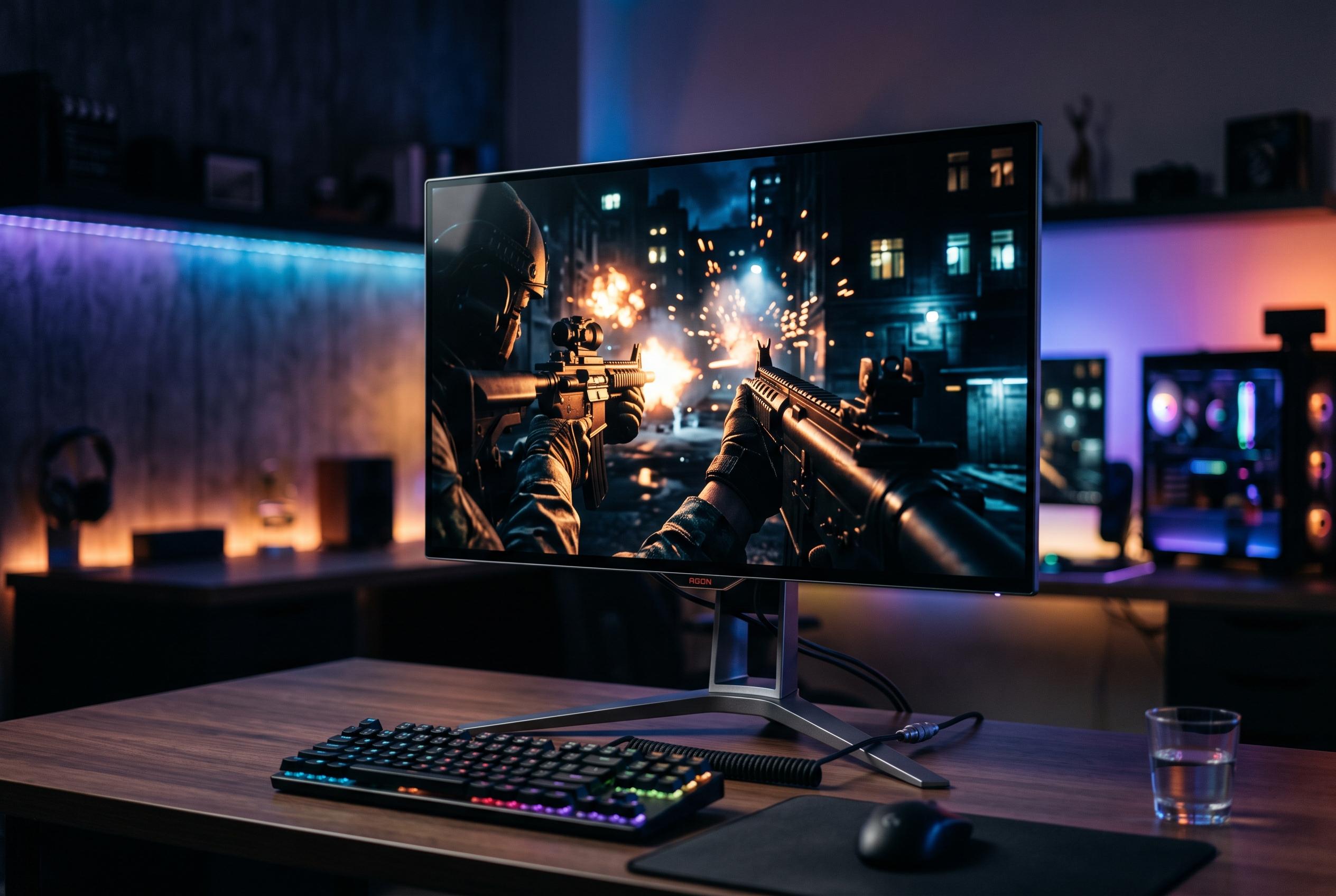

As Gamer Day approaches, the rivalry between Mini LED and OLED technologies intensifies, offering gamers new choices that balance contrast, brightness, and cost in high-end displays.
Choosing a gaming monitor is no longer a simple choice between size and price. For many buyers, the real decision is between speed, image quality and how much graphical load their PC can sustain. With Gamer Day approaching on 29 August, the market is broad enough to reward careful comparison and easy enough to punish overspending. The main trade-off remains the same: lower-end panels can offer excellent value, while premium OLED and Mini LED models now push into specialist territory.
The two display technologies that matter most today are Mini LED and OLED. According to RTINGS, OLED panels use self-emissive pixels, which gives them true blacks and essentially limitless contrast. Mini LED, by contrast, still relies on an LCD layer but adds thousands of local dimming zones to improve brightness and HDR performance. ViewSonic says that makes Mini LED a strong fit for bright rooms, while OLED is usually stronger in dark environments and for motion handling. The downside for OLED is the risk of burn-in, which remains a concern for users who leave static images on screen for long periods.
For gaming, refresh rate and response time are just as important as panel type. A screen at 144Hz or 165Hz is still perfectly adequate for story-driven games and general use, but competitive shooters and esports titles benefit more from 240Hz, 300Hz or 320Hz. Some high-end OLED panels now reach around 0.03ms response time, which helps reduce ghosting and keeps movement sharp. PC Gamer’s recent testing found that OLED remains the stronger choice for dark scenes and HDR precision, while Mini LED offers higher peak brightness and clearer text at a lower cost.
Resolution is the other major variable. Full HD remains sensible for buyers who want the highest frame rates without pushing the graphics card too hard. QHD at 27 inches is widely regarded as the most balanced option, combining sharpness and manageable hardware demands. For users who want maximum immersion, 4K at 32 inches or ultrawide formats can be compelling, but only if the rest of the system is strong enough to maintain performance. El País noted that some gamers are also turning to modern smart TVs for similar reasons, but monitors still hold an advantage in desk-friendly use, input control and desktop ergonomics.
That balance is reflected in current models sold in Chile. The Samsung Odyssey OLED G8 and ASUS ROG Swift PG32UCDP sit at the premium end, with the latter supporting a dual mode that switches between 4K at 240Hz and Full HD at 480Hz. TCL’s ultrawide and OLED+ options target users who want either wider multitasking space or fast, high-end play. At the more accessible end, the Xiaomi Mini LED Gaming Monitor G Pro 27i, TCL 25G64 and ASUS TUF Gaming VG27AQ3A show why Mini LED and Fast IPS remain attractive: they deliver strong performance, good brightness and far lower prices than OLED, without demanding the same level of financial commitment.
Disclaimer: This content is intended for informational purposes only. Readers are advised to exercise their own judgement, conduct due diligence, or consult a qualified expert before acting on any information provided.