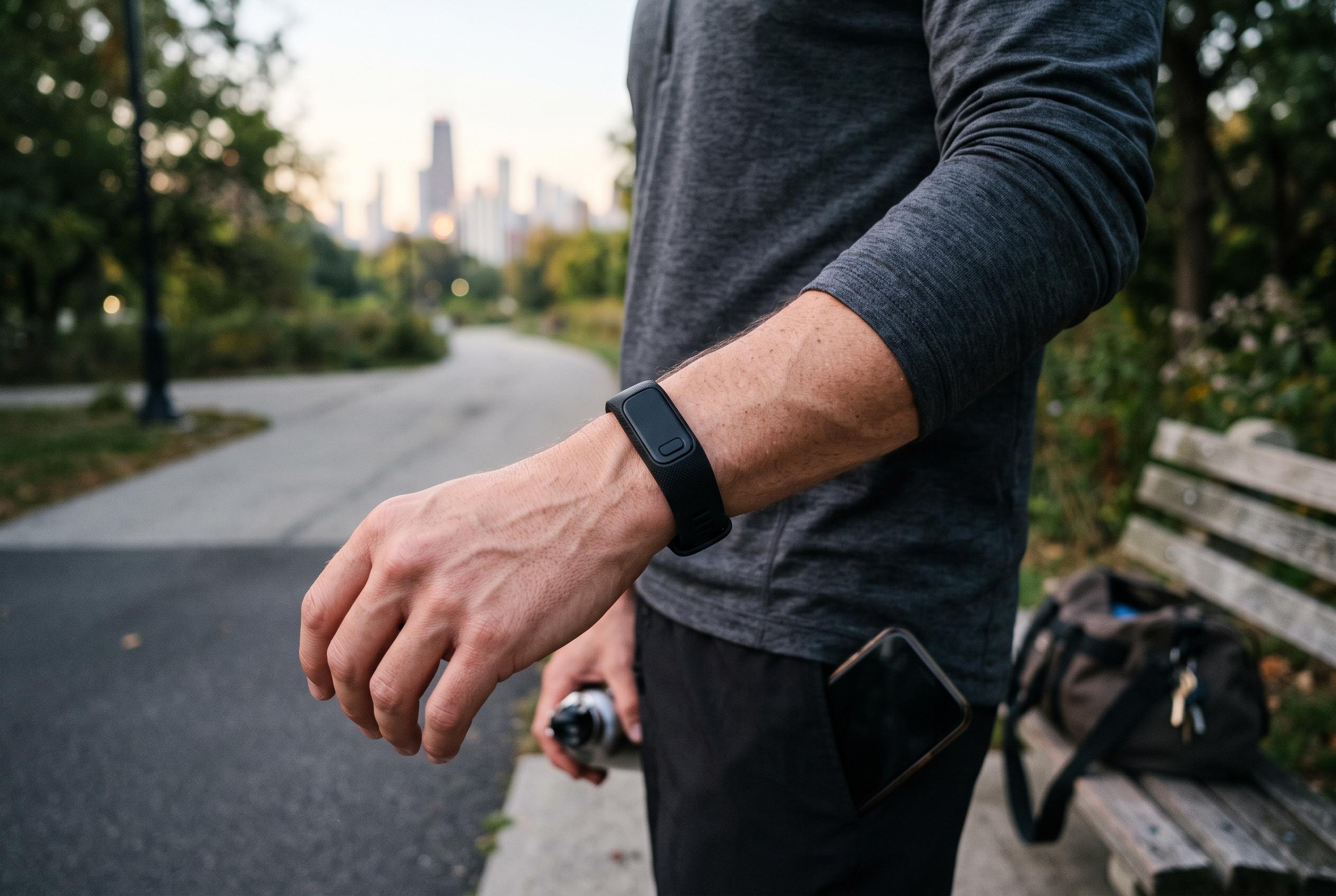

Garmin launches the Cirqa Smart Band, a screenless, subscription-free wearable targeting the same health monitoring market as Whoop and Oura, with a focus on discreet design and extended battery life, but faces stiff competition in interpretation and coaching features.
Garmin’s Cirqa Smart Band is a clear attempt to move into the same screenless, always-on tracking category occupied by Whoop and Oura, while leaning hard on one of the company’s strongest selling points: no ongoing subscription. Garmin says the band provides 24/7 health and activity tracking through the Garmin Connect app, and has priced it at $199.99, or £179.99 in the UK. The device also supports wrist and arm wear, which broadens its use for both sleep and exercise.
That promise is only part of the story. In practice, the Cirqa exposes Garmin’s long-running weakness in software: the hardware may collect rich data, but the app still tends to present it more as a dashboard than as a coach. Garmin Connect organises metrics clearly and gives users a dense overview of sleep, activity and recovery, but it does less to translate those numbers into immediate guidance than rivals that trade on AI-led summaries and behavioural advice. Garmin’s own Connect+ subscription adds features such as AI insights, food logging and coaching, but several of those capabilities are not fully relevant to Cirqa.
The hardware itself appears to be more convincing than the software layer around it. Garmin says the band can last up to 10 days on a charge, and early reviews suggest that battery life is a genuine advantage in day-to-day use. The device is also designed to be discreet, with a single-button control and a fabric ComfortFit band intended to make it comfortable during sleep and exercise. According to BikeRadar, it can also feed live heart-rate data to Garmin Edge bike computers, which makes it more useful for cyclists than many general-purpose wellness bands.
Even so, Cirqa does not arrive into a blank market. It lands in a category where buyers are already paying for polished interpretation rather than just data collection, and that remains the main gap Garmin has not fully closed. Body Battery, Garmin’s long-established recovery score, still does much of the work the company expects from more recent AI-heavy features. At the same time, Tom’s Guide reported that Garmin has also been linked to a possible smart ring project, after a certification filing suggested a product called the Garmin Cirqa Smart Ring, although that listing was later removed. That leaves open the possibility that Garmin is still testing how far it wants to push into the broader market for screenless health trackers.
Disclaimer: This content is intended for informational purposes only. Readers are advised to exercise their own judgement, conduct due diligence, or consult a qualified expert before acting on any information provided.