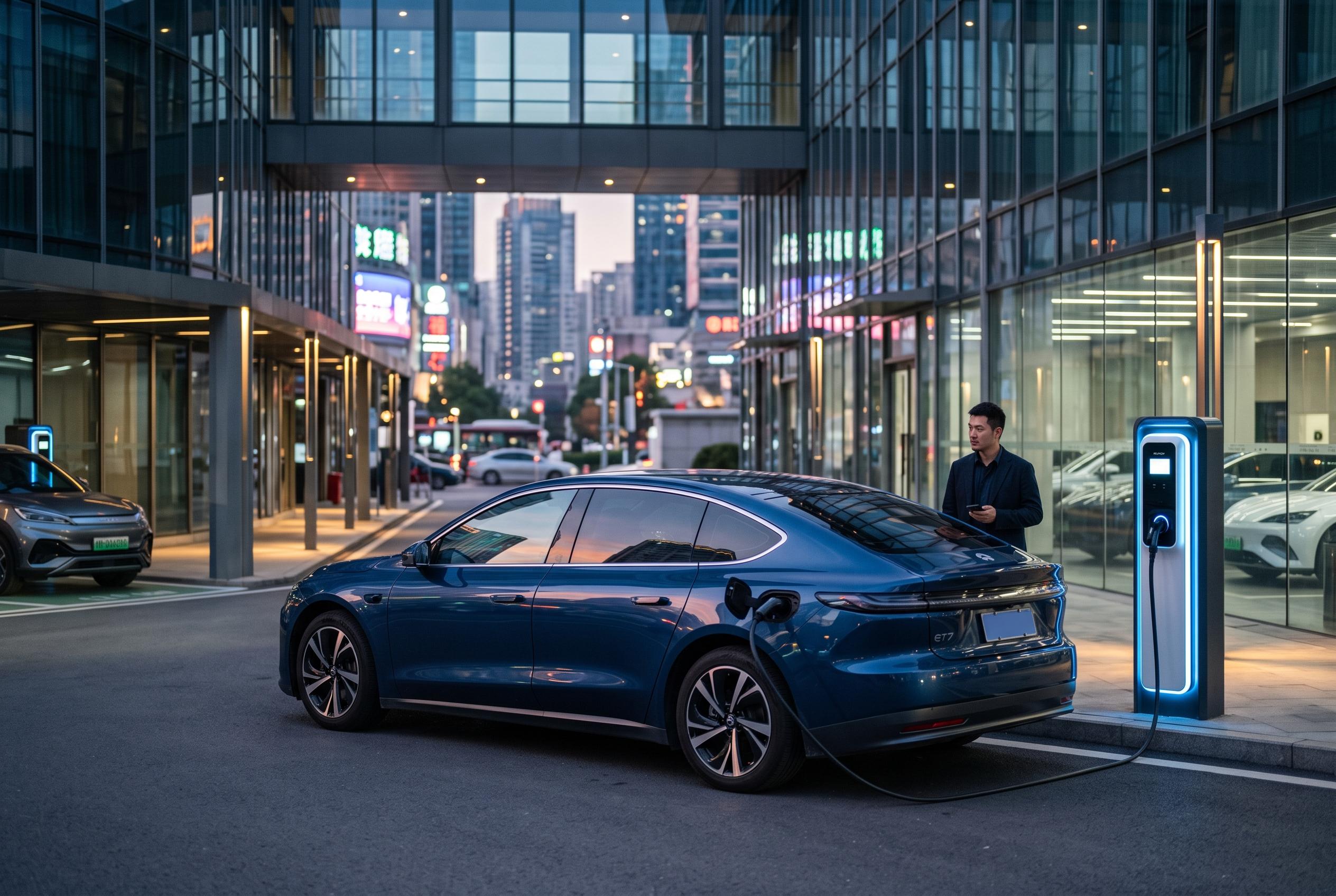

China implements an 11-year-old battery consumption tax, prompting industry-wide price adjustments and marking a move towards market-oriented policies for electric vehicles.
China’s battery consumption tax has taken effect on 1 September, ending an 11-year period in which key battery types had been exempt. The new levy starts at 2% and is due to rise to 4% on 1 September 2027, covering lithium-ion storage batteries, lithium primary batteries, nickel-metal hydride batteries, mercury-free primary batteries and all-vanadium flow batteries, according to the policy notice issued by the Ministry of Finance, the General Administration of Customs and the State Taxation Administration.
The change is more significant than the rate suggests. In the short term, the cost burden is likely to be absorbed by carmakers and battery suppliers rather than passed straight to buyers, but the pressure is acute in a market already defined by narrow margins and aggressive price competition. Industry commentary cited in the lead report estimates that a 60kWh pack in a battery-electric vehicle could face an added tax cost of several hundred yuan, with the greatest strain on mainstream models priced between 100,000 and 300,000 yuan.
Negotiations between automakers and battery makers have already begun to determine who pays. The tax is triggered when batteries leave the factory and invoices are issued, not when contracts are signed, so even long-term orders placed before the policy change are not exempt if delivery occurs after 1 September. The report says established first-half contracts are likely to be absorbed by carmakers, while newer fourth-quarter orders may be split between buyers and suppliers, with weaker second-tier battery makers facing less favourable terms.
Some producers have already moved to lift prices. The lead report says EVE and Lishen Battery have both notified customers of higher charges from September, while CATL raised a quotation for 314Ah cells in August. The commercial logic is clear: if vehicle makers cannot pass the tax through to retail prices, the burden will be spread across the supply chain, and smaller cell and materials suppliers may end up carrying a disproportionate share.
The levy also fits a broader policy reset. KPMG and China.org.cn reported in July that authorities will end the preferential vehicle and vessel tax treatment for energy-saving vehicles and new energy vehicles from 1 January 2027, while earlier 2025 guidance tightened the technical thresholds for purchase-tax incentives on electric and plug-in hybrid models. Taken together, the changes point to a shift away from broad tax support and towards a more market-based framework for the industry.
That shift matters for consumers as well as manufacturers. The idea that battery-powered cars will always be cheaper is fading, and total ownership costs are becoming harder to ignore, especially as tax preferences are withdrawn across the purchase and use cycle. The lead report quotes Cui Dongshu, secretary-general of the China Passenger Car Association, as saying the policy is a milestone in moving the sector from policy support towards a mature market stage. In practical terms, the industry is entering a period in which product quality, efficiency and residual value will matter more than tax advantages.
Disclaimer: This content is intended for informational purposes only. Readers are advised to exercise their own judgement, conduct due diligence, or consult a qualified expert before acting on any information provided.