
Anker announces a strategic shift at IFA 2026, unveiling 22 new devices and consolidating its sub-brands under a single identity, with a focus on connected, AI-driven smart home infrastructure including its first in-house home hub, MindBase.
Anker used IFA 2026 to signal a wider reset of its consumer-electronics identity, unveiling 22 new products while also folding its five sub-brands, including Eufy and Soundcore, under the single Anker name. Chief executive Steven Yang said the old category-by-category structure no longer made sense, arguing for “one brand, one promise” across the company’s charging, smart-home, audio and energy lines. The move places Anker among a growing number of hardware makers trying to simplify branding as their products become more interconnected and more dependent on AI.
The launch list spans headphones, earbuds, power banks, chargers, security devices, robot vacuums, a robot lawn mower and a solar battery system. Among the more notable devices are the Eufy Robot Vacuum Omni E35, which pairs a self-cleaning mop roller with 35,000Pa of suction, and the MagGo Power Bank Pro 2, which Anker says is its fastest wireless battery pack and the first with a built-in cooling fan. The company also highlighted new Soundcore earbuds and sleep-focused products, alongside a first fully in-house robot lawn mower, the S2 Max, which Anker says can operate without boundary wires or RTK positioning.
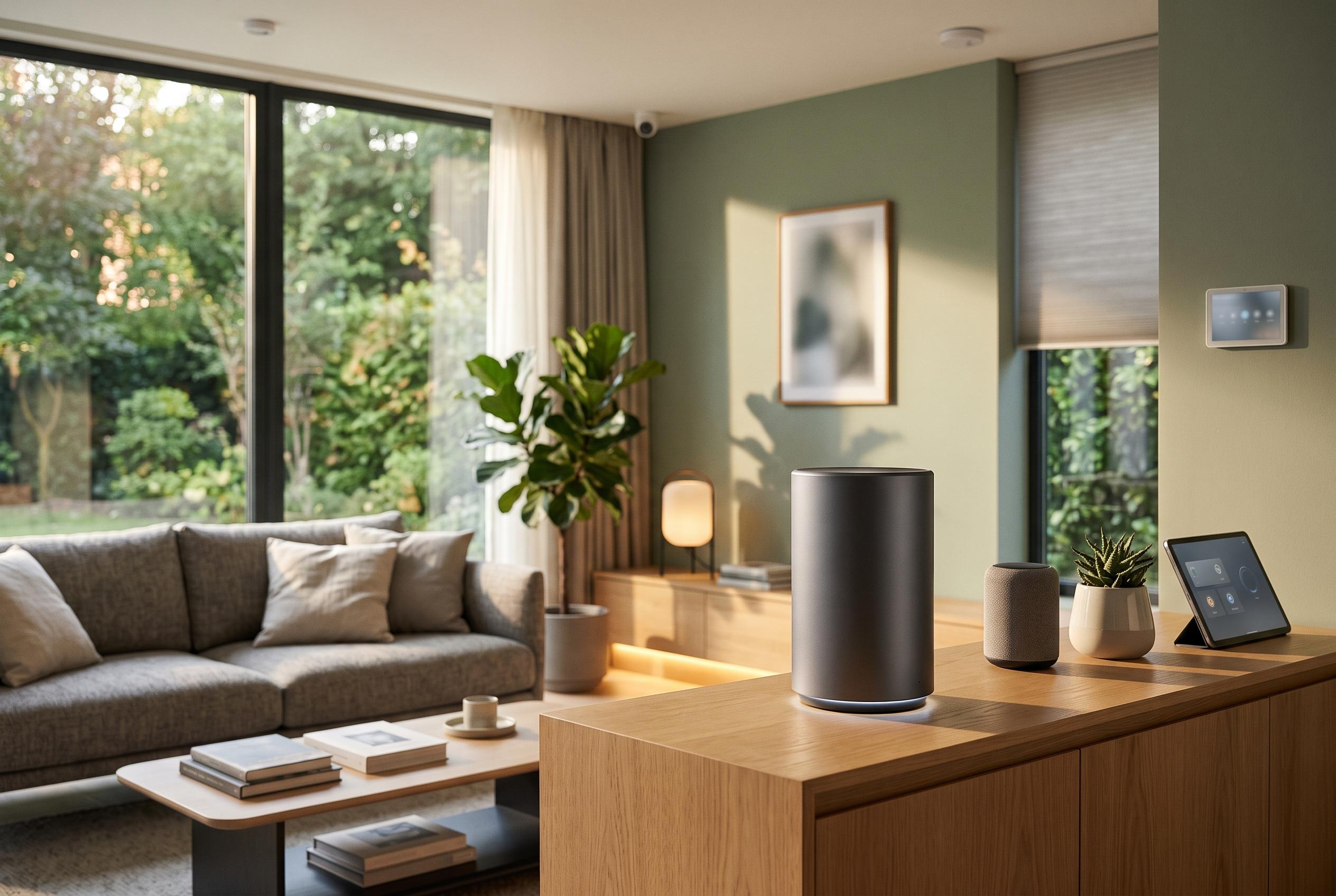
The most strategically important release is MindBase, Anker’s first AI home hub. It is designed to link Anker products and Matter-compatible devices into one system and is intended to work with Apple HomeKit, Amazon Alexa and Google Home. Anker says the device uses a TrueSmart Agent architecture to run local intelligence across different household functions, while 48TB of expandable local storage is meant to keep recordings, household data and family media stored inside the home rather than sent to the cloud. That emphasis on local processing mirrors a broader theme at IFA 2026, where AI features are increasingly being framed around privacy, speed and on-device control.
For Anker, the timing is significant. The company is trying to turn a large and varied product range into a more coherent platform business, with the smart home now acting as the centre of gravity. That puts MindBase into a crowded field dominated by Google Nest and Amazon Echo, but Anker may see an opening among existing customers who already own its vacuums, security gear, chargers or power stations and would prefer a single control layer across them. The result is less a product launch than a statement of intent: Anker wants to be seen not just as a maker of accessories, but as a systems company built around connected home infrastructure.
Disclaimer: This content is intended for informational purposes only. Readers are advised to exercise their own judgement, conduct due diligence, or consult a qualified expert before acting on any information provided.