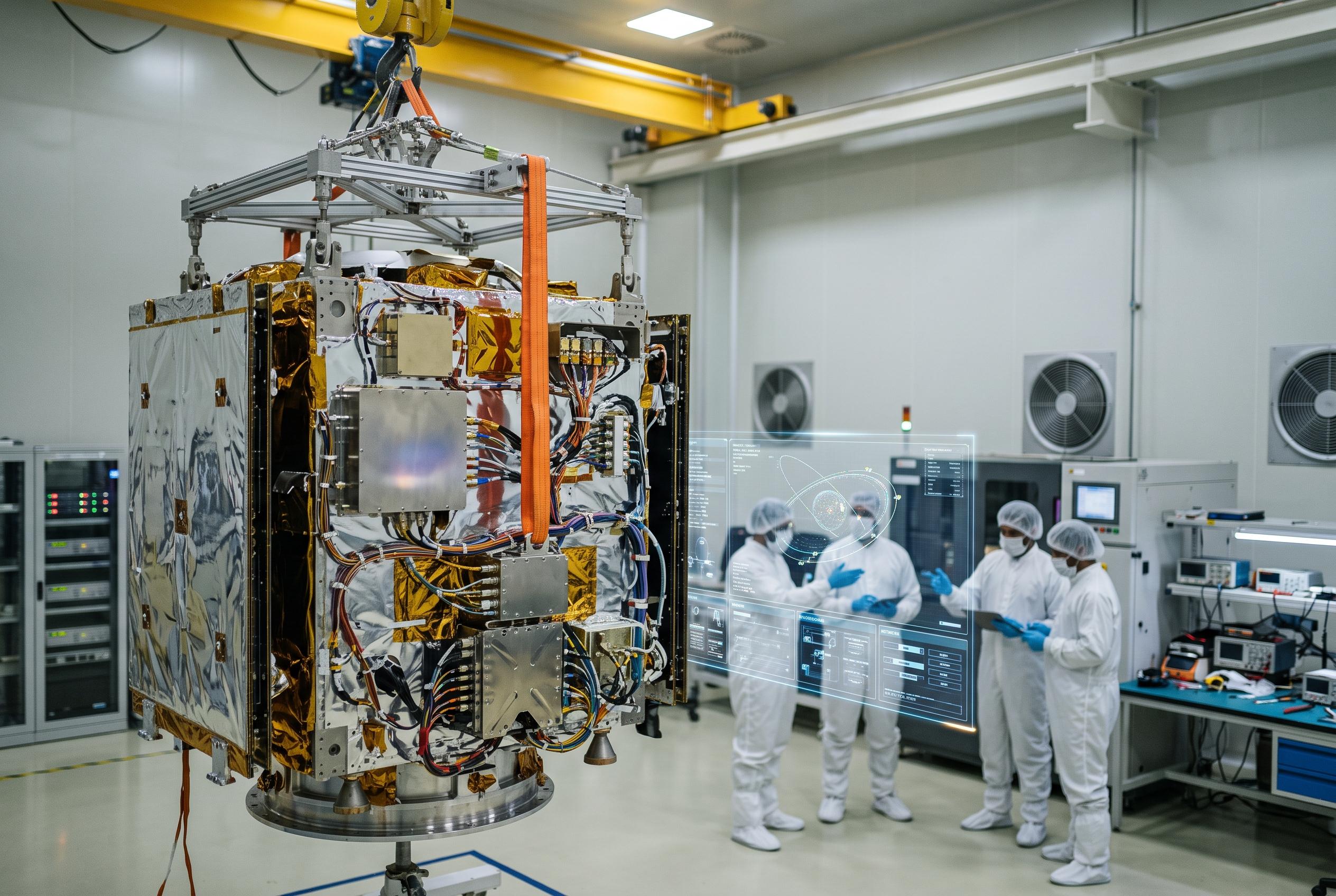

India’s burgeoning private space sector marks a milestone with satellite launches and governmental support, yet its funding remains concentrated and challenges persist in scaling up its ecosystem beyond groundbreaking milestones.
India’s private space industry has reached a point where symbolism and hard economics are colliding. In July, Skyroot Aerospace became the first Indian private company to put an orbital rocket into space, and in August Prime Minister Narendra Modi convened 20 founders and chief executives in New Delhi to press his case for India as a global space hub. Yet the money remains heavily concentrated. Tracxn data reported by The Times of India shows Indian space start-ups have raised $113 million so far in 2026 and $871 million since 2021, but only about a quarter have secured outside capital and the 10 best-funded companies have taken more than $548 million between them.
The political message from Modi’s 23 August 2026 meeting was clear: the government wants the sector treated as a national strategic industry, not a niche venture-capital theme. Ahead of National Space Day, which marks Chandrayaan-3’s lunar landing, Modi told the founders that India should build an ecosystem capable of pulling in talent from around the world. The Indian Express reported that he said: “I believe that we can draw the entire talent pool because of you, and that will become our strength.” Hindustan Times said he also stressed that policy consistency mattered because it gave reassurance to people willing to take risks in a new field.
The guest list itself showed where the commercial centre of gravity now sits. Hindustan Times identified participants including Skyroot Aerospace, Agnikul Cosmos, Pixxel, Dhruva Space, GalaxEye, PierSight, Bellatrix Aerospace, Digantara, SatSure, Manastu Space, OrbitAID Aerospace and TakeMe2Space. The Indian Express said founders used the session to describe work on global ground-station networks, satellite engines, space-debris-removal robotics, orbital docking and refuelling systems, and even pharmaceutical manufacturing in microgravity. One founder said Indians working abroad had started returning because of the sector’s recent momentum. The meeting, however, was a show of backing rather than a funding announcement.
Behind the optics, the investment picture remains narrow and uneven. The Times of India said the sector has seen 241 funding rounds over the past five and a half years, with 72 start-ups securing investment. Funding rose from $43 million in 2021 to a peak of $200 million in 2025, after dipping to $72 million in 2024 during a wider venture-capital slowdown. India now has 285 space technology start-ups by Tracxn’s count, 274 of them active. Geography is concentrated as well: Bengaluru has drawn $495 million, or 57 per cent of the total, ahead of Hyderabad on $205 million and Chennai on $80 million. The same report said consolidation is likely over the next 12 to 18 months as weaker companies struggle to raise follow-on capital.
The government’s own numbers are more expansive and, in some cases, materially different. In a July reply in the Rajya Sabha, Jitendra Singh, the minister of state overseeing space, said private investment had crossed $618.5 million by 31 March 2026, up from $100.5 million in 2021-22 and $348.5 million in 2023-24. He said $187 million in private investment had already been reported during 2026, that 105 authorisations had been granted to non-government entities as of 14 July 2026, and that 17 space start-ups had been authorised by IN-SPACe to undertake space activities. The same official account said active space start-ups had risen from one in 2014 to more than 400. Singh also said applications are screened for strategic and security implications, and that dedicated safety and security guidelines are being prepared as private participation expands.
That official optimism sits alongside a more cautious analytical view. A June review by the Carnegie Endowment said Indian space-tech funding climbed to $130.2 million in 2023 from $97.7 million in 2022, then fell 55 per cent to $59.1 million in 2024 even though deal count rose. Carnegie argued that the post-reform policy framework has helped, but that practical bottlenecks remain in facility sharing, fee structures and technical support. It also pointed to signs of genuine technical depth: GalaxEye is developing a second satellite with 0.5-metre resolution and a revisit time of under three days; Digantara says its surveillance satellite can track objects as small as 5 cm in orbit; Bellatrix is working on propulsion for ultra-low Earth orbit; and PierSight unveiled its Varuna satellite in 2024 for round-the-clock maritime surveillance.
The commercial promise is real, but so are the scale constraints. Moneycontrol, citing Tracxn, said in July that India had about 260 space start-ups with almost $730 million in total funding, roughly a quarter of it raised in the previous year. The same report said Skyroot had become India’s first space-tech unicorn at a $1.1 billion valuation. Even so, founders and analysts were still describing a sector in its build-out phase. Suyash Singh of GalaxEye said: “The Indian ecosystem today is extremely ripe for deep tech,” but added that “the challenges are real, especially around capital and supply chains”. Chaitanya Giri of the Observer Research Foundation told Moneycontrol that satellite communications could become India’s largest commercial opening as telecoms move towards 6G, while IN-SPACe chairman Pawan Goenka warned that India was “late to the party”.
The question now is whether India’s space reforms can produce breadth as well as showcase wins. Skyroot’s Vikram-1 launch from Sriharikota on 18 July 2026 proved that an Indian private company can reach orbit from home soil. Pawan Chandana, Skyroot’s co-founder, told The Indian Express that the company already had three factories, enough capacity to build one rocket a month, and eight launch contracts, mostly from foreign customers. That is the sector’s opportunity in one sentence: India has begun to demonstrate commercial-grade capability. Its unresolved problem is that most of the ecosystem still sits outside the funding circle needed to turn isolated milestones into a durable industry.
Disclaimer: This content is intended for informational purposes only. Readers are advised to exercise their own judgement, conduct due diligence, or consult a qualified expert before acting on any information provided.