
The refreshed Framework Laptop 12, offering factory-installed Fedora Linux, is witnessing a surge in demand, outpacing Windows and signalling a shift in consumer preferences for open-source operating systems in portable devices.
Framework’s refreshed Laptop 12 is turning into an unusual test case for the PC industry: Linux is not just being tolerated, it is outselling Windows. Clubic reported that, within hours of the 18 August 2026 announcement, Framework said pre-orders for the Fedora version were running at about 10 to 1 against the Windows model. Hardware Busters and Notebookcheck both said the company linked that decision to its own customer data, which indicates that roughly 80% of Laptop 12 owners already run Linux.
That makes the operating-system decision arguably more important than the spec sheet. Until now, buyers who wanted Linux on Framework’s smallest convertible generally had to buy the DIY edition, fit their own parts or wipe a Windows installation after delivery. LinuxPanda noted that the refreshed machine changes that equation by offering a ready-built system with Fedora 44 KDE Plasma Desktop installed at the factory. Clubic described it as a first for the Laptop 12 line, and one that appears to have found demand immediately.
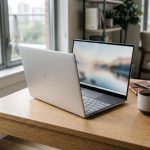
The hardware update is still substantial. Several reports said the machine keeps the same basic 12.2-inch touchscreen convertible format, along with the speakers and general chassis design, but replaces last year’s 13th Gen Intel Raptor Lake platform with Intel’s Core Series 3 chips, previously known as Wildcat Lake. Hardware Busters identified the new processor choices as the Core 3 304, Core 5 320 and Core 7 350. Notebookcheck added that two of the four expansion slots now support Thunderbolt 4, while the other two remain at USB 3.2 Gen 2 speeds. The refresh also brings Wi-Fi 7, a power-button fingerprint reader and a backlit keyboard, with Notebookcheck saying the fingerprint reader is standard on Core 5 and Core 7 models.
The more meaningful improvement may be endurance rather than raw speed. Hardware Busters said Wildcat Lake is designed first for efficiency, so buyers should expect stronger battery life rather than a dramatic leap in performance. PC Gamer, citing Framework’s own figures, said the company is claiming 57% longer battery life while browsing and 70% longer battery life while streaming Netflix, despite keeping the same 50Wh battery. On a compact 2-in-1 aimed at study and light work, that is a more consequential promise than a marginal benchmark gain.
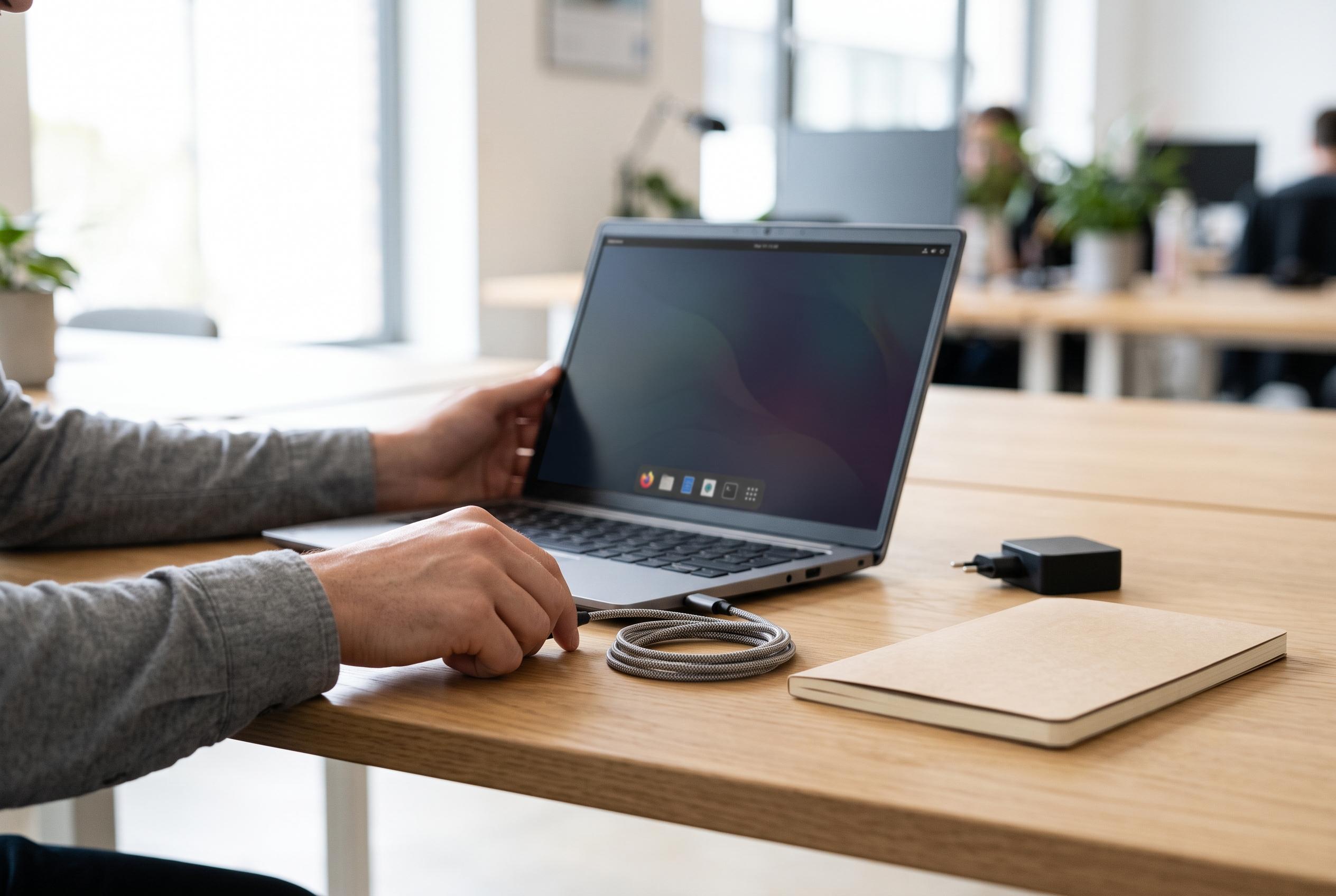
The Fedora choice also fits the type of machine Framework is selling. LinuxPanda argued that KDE Plasma is a practical desktop for a small convertible, where touch input, tablet use and stylus support matter more than they do on a conventional clamshell laptop. Just as importantly, the Fedora option removes several steps for buyers who want Linux but do not want to assemble components and create installation media themselves. LinuxPanda also noted that Framework continues to publish compatibility guidance for other distributions, including Ubuntu, Bazzite, Arch Linux, Linux Mint and NixOS, though support levels are not identical across them.
Framework’s usual selling point, however, remains intact: the company is treating this as an upgrade path as much as a new product. Notebookcheck reported that the new Core Series 3 mainboards went on pre-order from 18 August at $299 for the Core 3 304, $449 for the Core 5 320 and $669 for the Core 7 350. LinuxPanda said existing owners can swap in a new board rather than replace the whole computer, because the Laptop 12 retains its modular approach to memory, storage and port modules. Frandroid presented that repairable, compact format as the easiest entry into the wider Framework ecosystem for buyers who want longevity without moving to a larger or more expensive model.
Pricing is central to the pitch. Notebookcheck said the pre-built Fedora configuration starts at $699, while the older 13th Gen DIY version now starts at $499. PC Gamer reported base prices of $549 or £549 for a Core 3 304 configuration, $779 or £779 for Core 5 320, and $999 or £999 for Core 7 350, before memory and storage are added. Frandroid framed the machine as a low-cost repairable alternative in a market where many ultraportables and convertibles are increasingly sealed, harder to service and tied to a single operating-system choice.
If Framework can deliver first shipments in October as scheduled, the Laptop 12 will arrive with a stronger message than most Linux-friendly hardware launches manage. This is no longer just a story about community support or post-purchase tinkering. It is a case in which a manufacturer has looked at how customers already use a product, then made Linux the obvious pre-installed option. The early sales ratio reported by Clubic suggests that, at least for this audience and this form factor, that judgement may have been correct.
Disclaimer: This content is intended for informational purposes only. Readers are advised to exercise their own judgement, conduct due diligence, or consult a qualified expert before acting on any information provided.