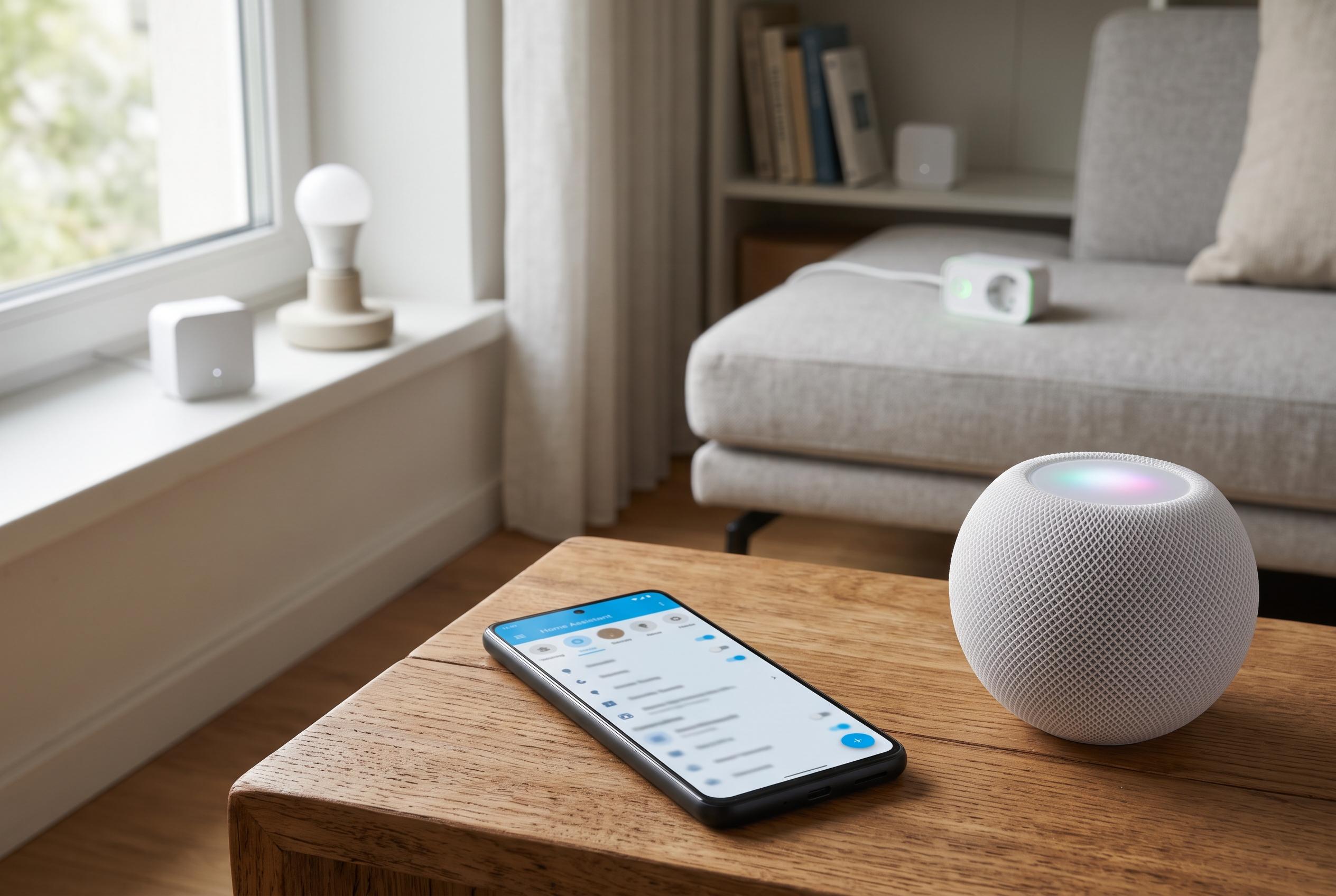

A new workaround using Home Assistant’s HomeKit Bridge allows users to integrate non-HomeKit devices with Siri on the HomePod, overcoming Apple’s device recognition limits and creating a more unified smart home experience.
A HomePod can sound far more capable once Siri’s lag is fixed, but speed is only part of the story. The bigger limitation, as one Home Assistant user found, is that Apple’s assistant will only act on accessories it can recognise as HomeKit devices. If a switch, sensor or service is not in that ecosystem, Siri behaves as if it does not exist.
That creates a split smart home: Home Assistant may already be managing lights, automations and sensors across multiple protocols, while the HomePod can see only a narrow Apple-approved subset. Home Assistant’s own HomeKit Bridge is designed to close that gap by exposing selected entities to Apple Home and Siri, even when the underlying devices do not natively support HomeKit. By contrast, Home Assistant’s HomeKit Device integration is meant for accessories that already carry the “Works with HomeKit” label.
In practice, the bridge turns Siri into a front end for a much larger local system. Once the integration is enabled, Home Assistant generates a QR code that can be scanned on an iPhone or iPad, after which eligible devices appear in the Home app. The setup is not entirely automatic, because names and rooms still need to be assigned one by one, but it avoids the need to replace hardware or rebuild existing automations.
The result is more than basic light control. Scenes such as “good morning” and “good night” can reach across devices that were never HomeKit-certified, while binary sensors can be exposed so Siri can report on services such as a self-hosted media server. Home Assistant’s documentation says the bridge is intended specifically to let Home Assistant entities be controlled through Apple’s Home app and Siri.
The local architecture matters as much as the compatibility fix. Because commands to bridged devices follow the same on-device route as native HomeKit accessories, they do not need a cloud skill or third-party webhook. Home Assistant’s zeroconf discovery can also reduce the amount of manual setup required elsewhere on the network, which helps keep the system lightweight and responsive.
For users already running Home Assistant, that makes the HomePod feel far less restrictive. Siri is no longer limited to a handful of devices wearing Apple’s badge, and the speaker regains usefulness without being replaced. The broader lesson is simple: in many smart homes, the problem is not the voice assistant itself, but the narrow set of devices it is allowed to see.
Disclaimer: This content is intended for informational purposes only. Readers are advised to exercise their own judgement, conduct due diligence, or consult a qualified expert before acting on any information provided.