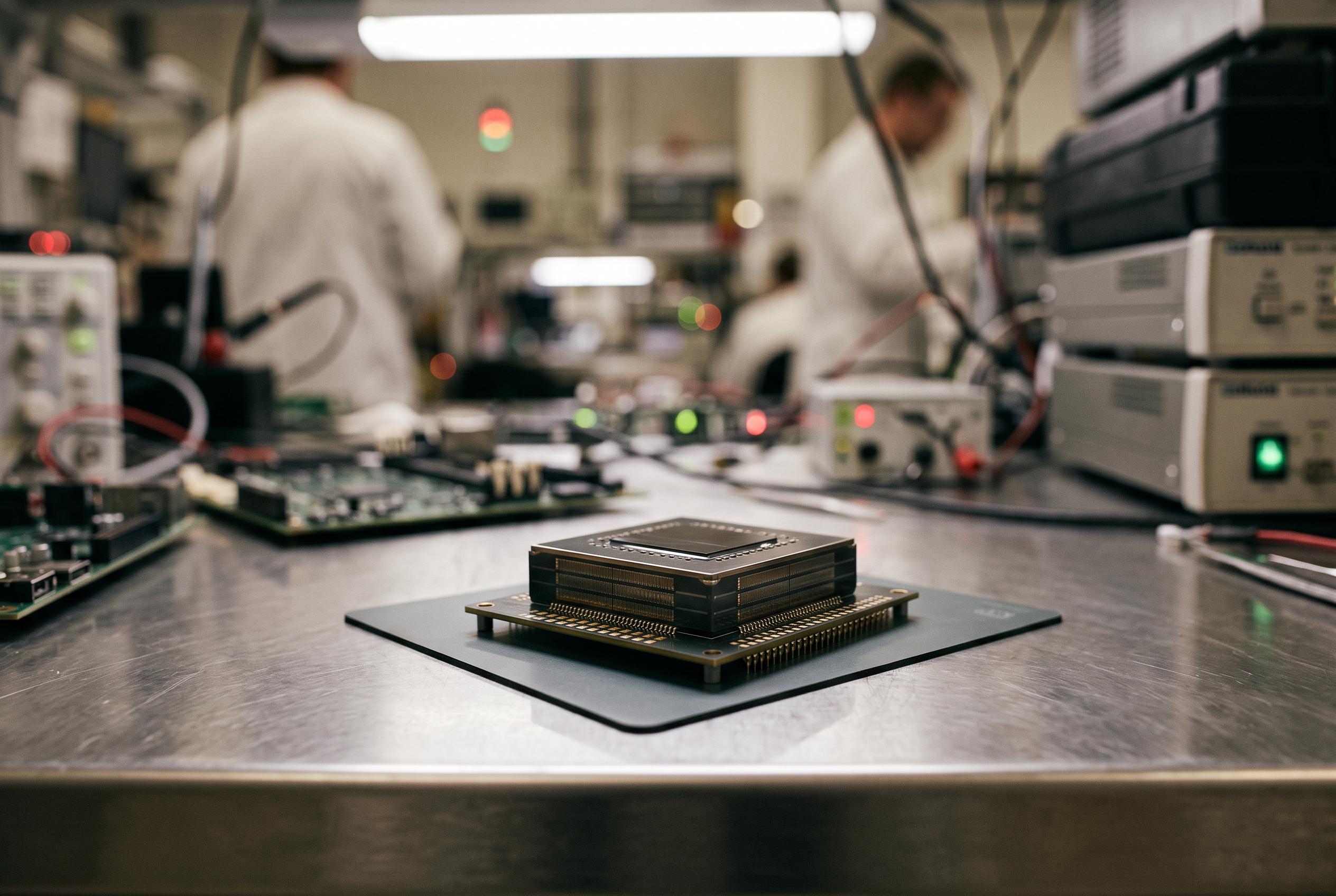

Leading memory producers Samsung Electronics and SK Hynix are now managing less than ten days’ worth of finished inventory amid soaring demand for AI-related high-bandwidth memory, threatening to deepen supply constraints through 2027.
Samsung Electronics and SK Hynix have entered an unusually tight phase in the memory cycle, with KB Securities estimating that both groups now hold fewer than 10 days of finished inventory. For two companies that together account for a very large share of global DRAM output, the figure suggests the market has little protection against further shocks. A disruption in power, logistics or geopolitics could now exhaust available stock within days, not weeks.
The pressure is being driven by high-bandwidth memory, particularly HBM4, which is increasingly central to artificial intelligence systems. Unlike conventional DRAM, HBM4 relies on a much more complex stacked-die structure that consumes far more wafer capacity per unit of output. Industry analysts say that shifting production towards HBM4 reduces supply available for server DRAM and other memory products, making the shortage broader rather than narrower. The effect is already visible across the supply chain, with AI infrastructure pulling on HBM, DDR5 and enterprise storage at the same time.
That strain is showing up in revenue data. TrendForce said the global DRAM market generated $154.73bn in the second quarter of 2026, up 59.5% from the previous quarter. Samsung led the market with a 39.4% share, while SK Hynix remained second and Micron recorded the fastest quarterly revenue growth among the three major suppliers. Even so, the gains have not resolved the physical shortage, because much of the industry’s new capacity is being redirected towards the most profitable AI-related products.
The imbalance is likely to persist. KB Securities expects the memory market to face the tightest supply conditions in its history by 2027, while other analysts have warned that shortages could extend through at least that year and beyond. Samsung has already said significant shortages across memory products may continue through 2027, and SK Hynix has indicated that its 2026 HBM output was effectively sold out. Micron has made similar remarks, saying industry supply remains well short of customer demand.
Capacity expansions are coming, but not quickly enough to restore balance in the near term. SK Hynix’s new M15X fab is only gradually ramping, while its packaging expansion remains on an extended timetable. Samsung is also increasing HBM capacity, but analysts expect much of the industry’s effort through 2026 and 2027 to go into process migration rather than large rises in wafer starts. In practical terms, that means more advanced memory for AI accelerators and less conventional memory for the rest of the market.
For buyers, the implications are straightforward. Lead times are already long, quotation windows are short and procurement conditions are likely to tighten further if AI spending remains at current levels. For investors, the shortage has reinforced the pricing power of the leading memory makers, even after recent share price volatility. The central question is no longer whether demand is strong, but whether the industry can add capacity fast enough to stop the AI build-out from absorbing nearly all of it.
Disclaimer: This content is intended for informational purposes only. Readers are advised to exercise their own judgement, conduct due diligence, or consult a qualified expert before acting on any information provided.