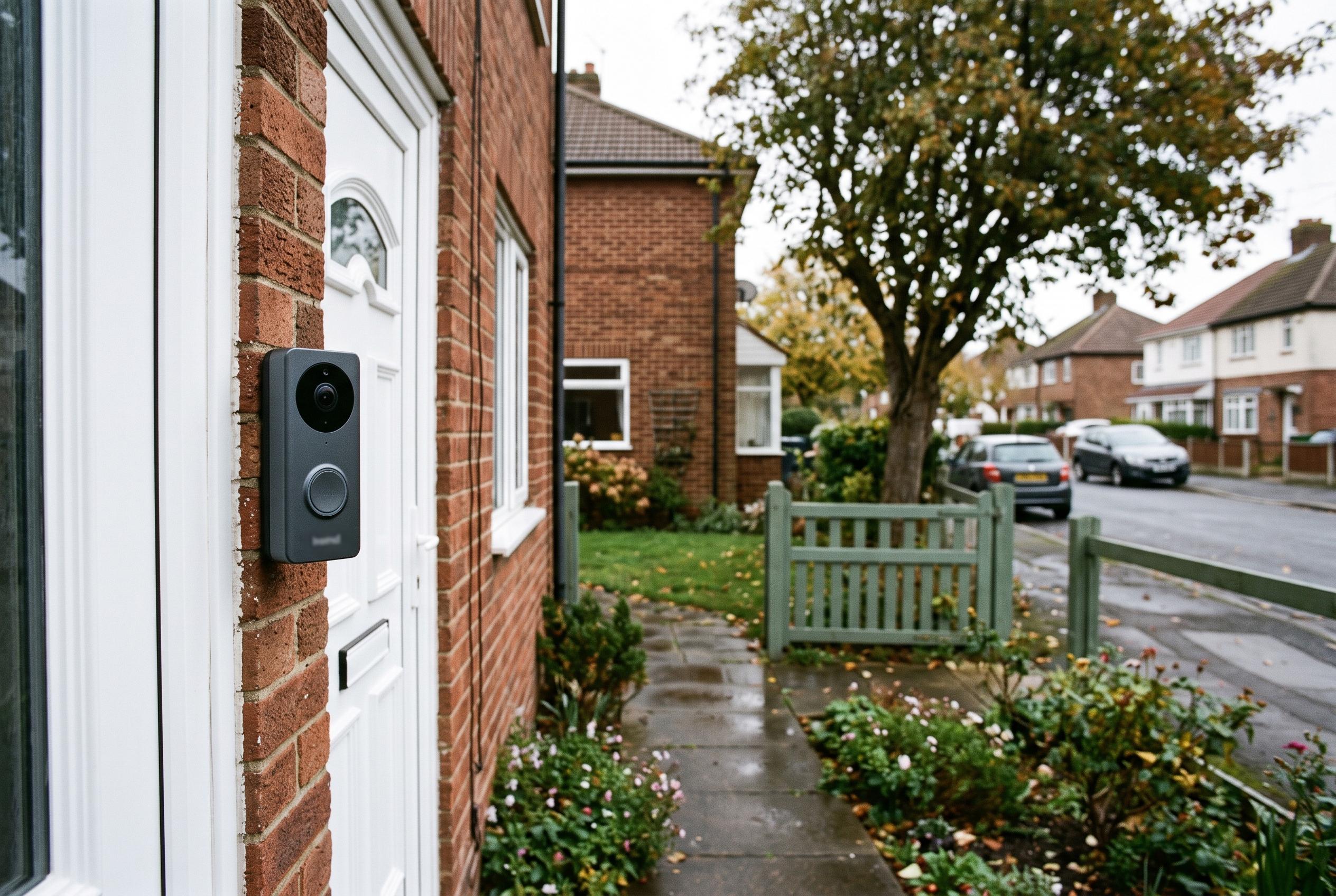

While video doorbells are lawful in the UK, homeowners must adhere to privacy laws, ensuring their devices do not infringe on neighbours’ rights by capturing shared spaces or public areas. Proper setup, signage, and awareness of legal responsibilities are crucial as authorities increase scrutiny over surveillance practices.
Video doorbells are legal in the UK, but only if they are used in a way that respects privacy law. The key issue is not the device itself, but what it records. If a camera is aimed wholly within a homeowner’s own boundary, there is usually little cause for concern. Problems arise when the field of view extends on to a neighbour’s property, a communal area, a footpath or the street, because that can bring the UK GDPR and the Data Protection Act 2018 into play, according to guidance cited by Homebuilding, GDPR Safe and several councils. The general principle is proportionality: a doorbell camera should be set up for home security without capturing more than is necessary.
That means homeowners may have legal responsibilities if their device records beyond the front door. According to specialist guidance quoted by Eufy and T3, users should consider whether the camera angle can be narrowed, whether privacy zones can block out sensitive areas, and whether audio recording is needed at all. If public or shared spaces are captured, a Data Protection Impact Assessment may be appropriate. People who may be recorded should also be told, usually through clear signage, since asking every passer-by for consent is not realistic. Footage should be stored securely and deleted once it is no longer required.
The rules are not merely theoretical. Local authority guidance, including advice from Southampton Council and Falkirk Council, says filming people in shared spaces or outside the property boundary can breach privacy rights. The Information Commissioner’s Office can intervene where a system is misused, and civil claims are also possible. Eufy cited the case of Fairhurst v Woodard in 2021 as an example of how intrusive doorbell surveillance can lead to harassment findings, data protection breaches, damages and substantial legal costs.
For anyone worried about a neighbour’s doorbell, the first step is usually a calm conversation. Eufy advises asking when the device records and whether it is pointed at private space. If that does not resolve the issue, residents can document the camera’s position, note the absence of warning signs and complain to the Information Commissioner’s Office. In more serious cases, especially where there is persistent intrusion or harassment, the police or a solicitor may need to be involved.
Disclaimer: This content is intended for informational purposes only. Readers are advised to exercise their own judgement, conduct due diligence, or consult a qualified expert before acting on any information provided.