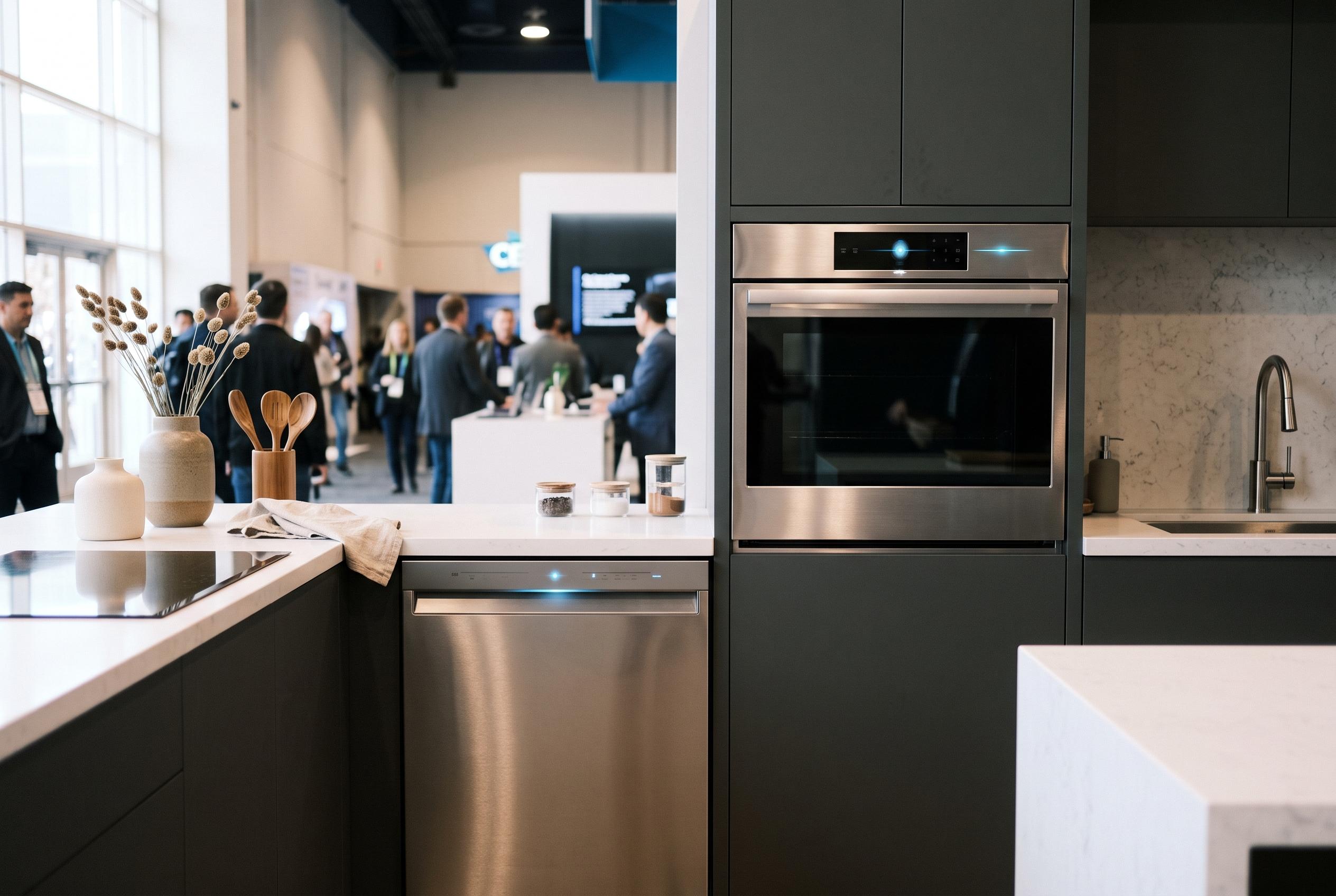

The 2026 Berlin consumer electronics show reveals a shift towards autonomous kitchen hardware, with ovens and dishwashers now featuring AI-driven vision systems that recognise contents and optimise performance.
Kitchen appliances are moving beyond timers and thermostats into vision systems and machine learning, with this year’s Berlin consumer electronics show offering some of the clearest signs yet that the connected kitchen is becoming more autonomous. Cameras, once reserved for phones, cars and security systems, are now being built into ovens and dishwashers to recognise what is inside them and adjust their behaviour accordingly.
Haier’s ID Ultimate Series 6 smart oven was among the most notable launches, according to T3. Its internal AI Vision camera identifies food, tracks progress and can stop cooking automatically to protect texture and temperature. The oven has a 78-litre capacity, seven shelf levels and cooking modes such as steam and sous-vide, while a front-mounted light bar indicates status. Haier is also pairing it with an induction hob designed to work as part of a wider kitchen system or as standalone units.
LG has taken a similar approach with its Signature smart oven, which Tom’s Guide said was shown at CES 2026. The appliance uses an in-built camera and Gourmet AI to monitor baking, send alerts through the ThinQ app and automatically set temperature and timing for more than 85 dishes. Samsung has also moved in this direction, with its Bespoke AI Oven using a built-in camera and AI Pro Cooking technology to recognise more than 80 foods and recommend settings, while KitchenAid already offers a camera-equipped oven feature on selected wall ovens for live monitoring without opening the door.
The dishwasher category is now following the same path. According to reports on Miele’s Diamond G8, a camera mounted inside the door analyses the load and tailors the wash cycle, detergent use and drying according to the items detected, including bottles, straws, pans and mixed loads. The broader trend is clear: manufacturers are turning kitchen hardware into perception systems that can identify contents, suggest settings and, in some cases, run with less human intervention.
Disclaimer: This content is intended for informational purposes only. Readers are advised to exercise their own judgement, conduct due diligence, or consult a qualified expert before acting on any information provided.