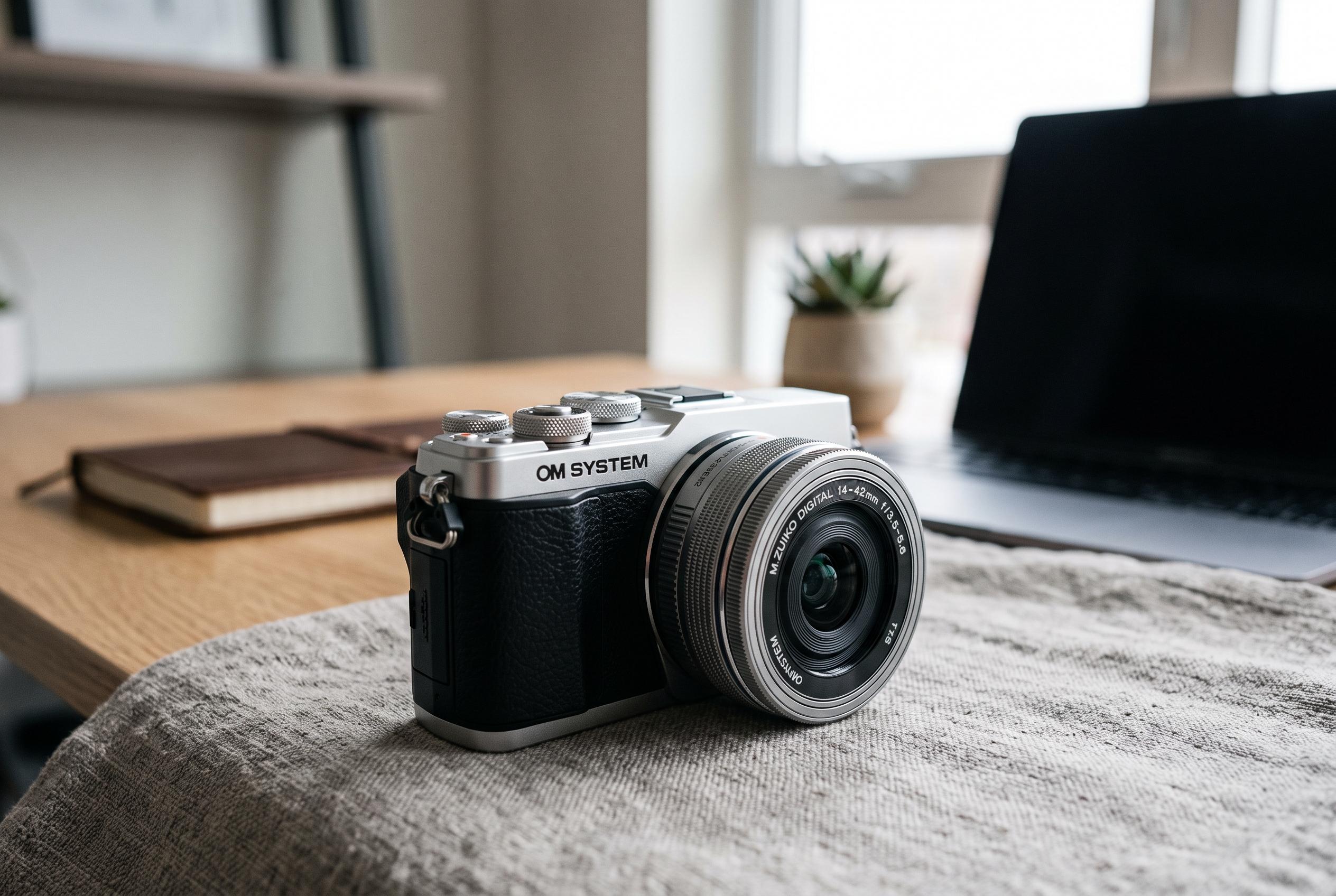

OM Digital Solutions unveils the new OM System PEN, a compact Micro Four Thirds camera combining weather sealing, in-body stabilisation, and an electronic viewfinder at a disruptive price point , challenging traditional assumptions about premium features and affordability.
OM Digital Solutions has used the PEN name to make a clear technical statement: compact cameras can still offer serious features without crossing into premium pricing. The new OM System PEN is the first model in the 67-year-old line to wear the OM System badge, and it is also the first PEN to add a built-in electronic viewfinder and weather sealing. At $999.99 for the body, it lands in a space where comparable APS-C rivals typically cost far more, while still bringing stabilisation, sealing and modern autofocus to a small rangefinder-style body.
That pricing is easier to understand once the format is considered. The Micro Four Thirds sensor is physically smaller than APS-C, and that reduction in size affects the whole camera: the stabilised sensor unit is smaller, the sealing surfaces are smaller, and the optical demands on lenses are less severe. The result is a body that can accommodate in-body image stabilisation, weather protection and an EVF without the cost penalty seen in larger-sensor systems. OM System is effectively turning a format limitation into a commercial advantage.
The camera’s specification sheet is more than a size story. According to Digital Camera World’s review, the PEN uses a 20.4-megapixel Four Thirds sensor, the TruePic IX processor and 121-point autofocus with subject detection for people and animals in stills. It also adds computational tools such as Live ND and high-resolution shooting, along with a new BLS-7 battery and a side-mounted memory card slot. The body is positioned as a stills-first camera, with 4K video available but 8-bit recording and no subject tracking for video, which limits its appeal for serious hybrid shooters.
The weather sealing is welcome, but it should not be overstated. The PEN carries IPX1 protection, which is enough for light drizzle and incidental moisture when used with a compatible lens, but it is not the same as the more robust sealing found on OM System’s higher-end bodies. In practice, that makes the new PEN better suited to commuting, travel and everyday carry than to punishing field use. Even so, for a compact camera aimed at enthusiasts, the combination of sealing, stabilisation and an EVF is unusual at this price.
OM System’s strategy appears to be to give the PEN enough capability to satisfy advanced users while keeping the body small, approachable and comparatively affordable. The design choice is deliberate: the camera is intended to be a portable companion rather than a brute-force tool, and its retro styling and rangefinder-inspired viewfinder placement reinforce that identity. For buyers who value size, usability and practical image quality over large-sensor low-light performance, the new PEN is a notable reminder that the Micro Four Thirds format still has room to compete on value.
Disclaimer: This content is intended for informational purposes only. Readers are advised to exercise their own judgement, conduct due diligence, or consult a qualified expert before acting on any information provided.