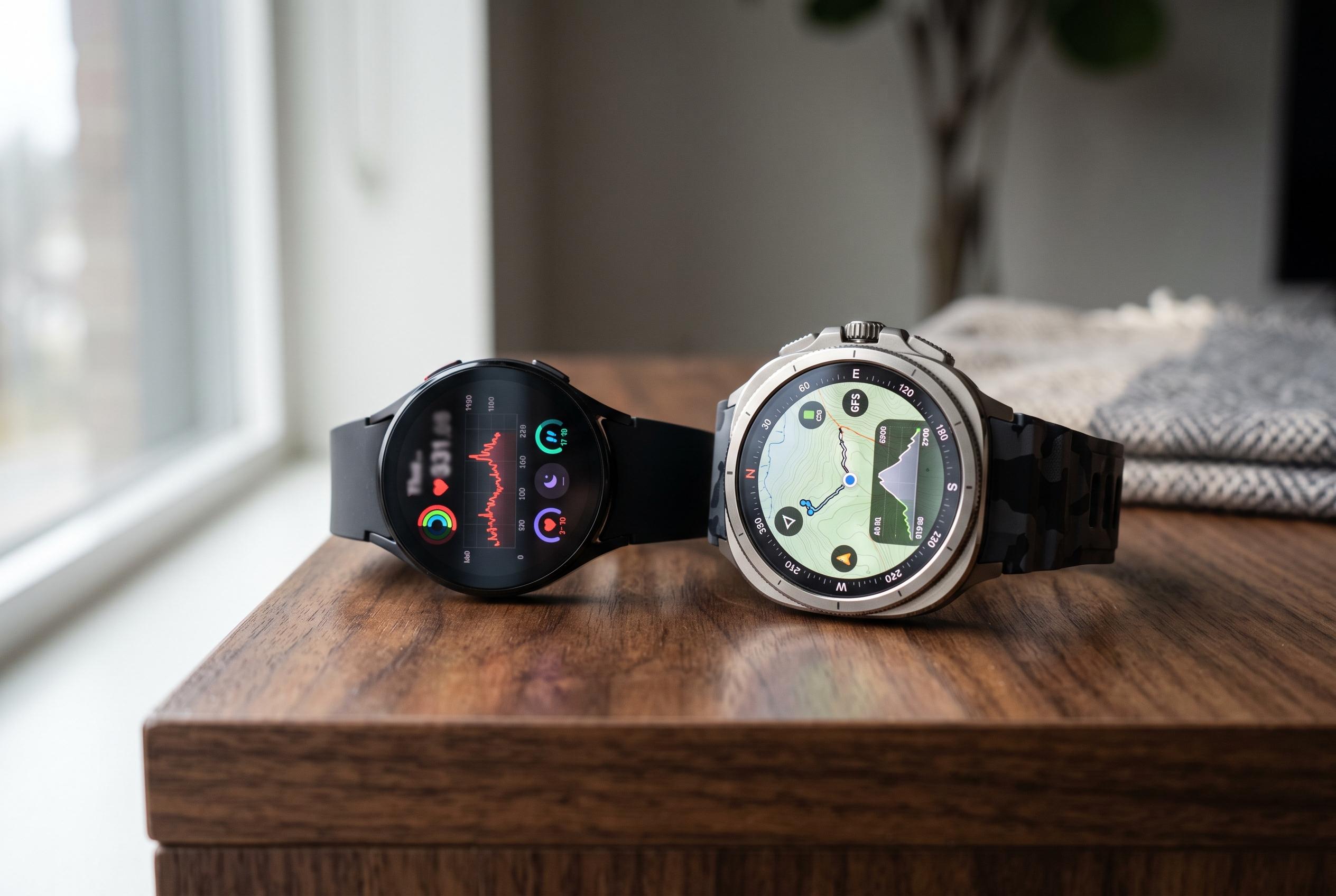

Samsung’s latest Galaxy Watch 9 and Ultra 2 reveal a bifurcated smartwatches market, targeting both outdoor enthusiasts and everyday users with specialised features and hardware design.
Samsung’s latest premium wearables underline a market that is splitting in two. The Galaxy Watch Ultra 2 and Galaxy Watch 9 share a common software base and much of the same health stack, but they are aimed at different buyers. The Ultra 2 is the tougher, more outdoors-focused model, while the Watch 9 is pitched as a lighter everyday smartwatch for people who mainly want fitness and wellbeing tracking without the bulk.
That divide is visible in the hardware. The Ultra 2 keeps Samsung’s cushion-like case but, according to reviews by Android Central and SamMobile, it is slimmer and easier to wear than before, even if the 47 mm size will still feel large on smaller wrists. Its 5,000-nit display is among the brightest in the category, and the new Quick Button adds a direct shortcut for exercise and outdoor functions. The Watch 9 takes a simpler route, keeping the rounded-square silhouette and two-button layout, with a brighter display and more compact proportions that make it easier to live with every day.
Health features remain the centrepiece on both watches. Samsung’s latest software adds expanded metrics such as Vitals, body composition, personalised heart-rate zones, VO₂ max estimates and exercise recognition, while the Ultra 2 also gets trail running tools and offline route support. The company’s body-composition scan is still more of a wellness indicator than a clinical tool, but it reflects how smartwatches are moving further into personal health monitoring. Reviewers at Wareable and TechSpot said the watch is especially useful for Samsung phone owners, though both noted that some of the more advanced functions work best inside Samsung’s wider ecosystem.
The updated Qualcomm Snapdragon Wear Elite chip is another important shift. According to Wareable, Android Central and TechSpot, it gives both watches noticeably smoother performance and better responsiveness than older Galaxy models. Samsung is also promising five years of Wear OS updates and security support, which should improve long-term value. Even so, the trade-off remains clear: the deeper feature set and tighter integration come with stronger ecosystem lock-in, especially for users outside Samsung’s phone range.
Battery life is better than before, but it is still one of the main limits on the Watch 9. Samsung says the Ultra 2 can last up to four days, helped by a much larger battery, while the Watch 9 is rated for around 30 hours. Independent reviews suggest real-world use is usually lower, particularly with always-on display enabled. The result is a familiar conclusion for modern smartwatches: the Ultra 2 is the more capable device for enthusiasts and travellers, while the Watch 9 is the more practical choice for everyday wear. Neither is trying to be universal; each is built for a narrower, more defined user.
Disclaimer: This content is intended for informational purposes only. Readers are advised to exercise their own judgement, conduct due diligence, or consult a qualified expert before acting on any information provided.