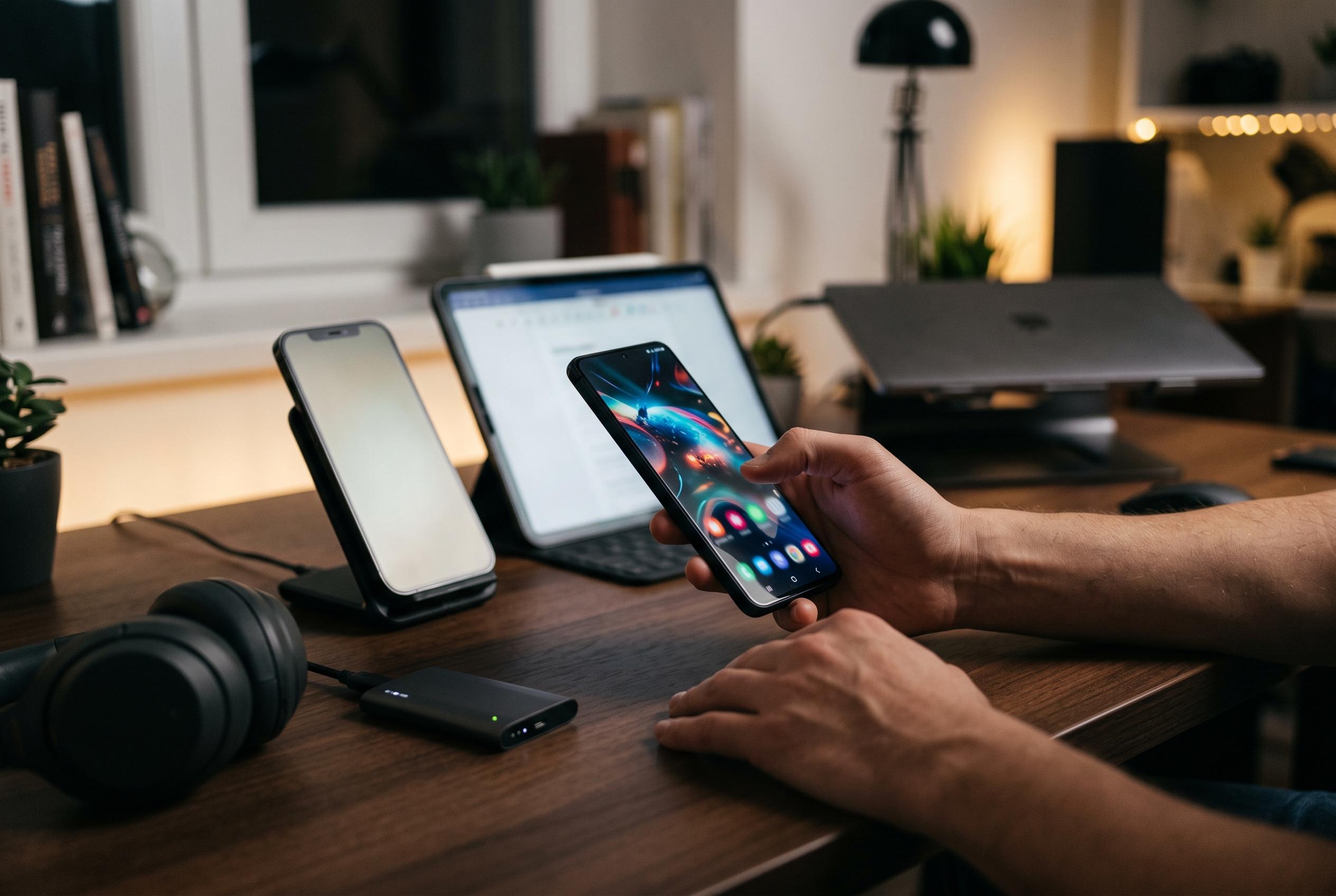

The latest benchmark tests reveal that Apple’s new A20 Pro chip leads in CPU speed and responsiveness, while Samsung’s Galaxy S26 Ultra offers superior graphics and multitasking performance, highlighting a decisive divide for power users.
Apple’s A20 Pro and Qualcomm’s Snapdragon 8 Elite Gen 5 set up a familiar contest: raw CPU speed against broader Android flexibility. In the comparison described by Geeky Gadgets and the wider benchmark reports, the iPhone 18 Pro Max appears strongest where processor throughput and software polish matter most, while the Galaxy S26 Ultra is more convincing in sustained gaming, graphics work and multitasking. MacRumors says Apple’s new 2nm A20 Pro brings a 6-core CPU, a redesigned GPU and improved thermal handling, while SamMobile reports that Samsung’s flagship gains from a faster NPU, stronger GPU performance and better efficiency.
The clearest early advantage for the iPhone is startup and interface responsiveness. The Apple device benefits from tighter hardware and software integration, which helps it reach the home screen quickly and keeps animations fluid once it is running. That same efficiency carries into short, CPU-heavy tasks, where the A20 Pro’s gains over the previous generation are significant. MacRumors reported that the chip delivers up to 20% faster CPU performance than its predecessor, while early benchmark coverage from PhoneArena points to roughly 21% to 23% better single-core results and 27% to 28% stronger multi-core scores.
Samsung’s handset narrows the gap in graphics and extended workloads. According to SamMobile, the Snapdragon 8 Elite Gen 5 for Galaxy offers better GPU performance than the prior generation and is tuned for cooler operation and improved battery efficiency. That matches the broader testing picture, in which the Galaxy S26 Ultra is described as particularly strong in gaming and sustained load handling. PhoneArena’s gaming coverage says the phone maintains smooth frame rates over longer sessions, suggesting that cooling and graphics optimisation are doing real work rather than merely improving peak numbers.
For creators and heavy multitaskers, the trade-off is sharper. The Galaxy is the faster device for 4K video rendering and for keeping more applications alive in the background, which makes it more suitable for people who edit video and jump between demanding apps throughout the day. The iPhone, however, remains better for high-resolution photo processing and for users who value a more polished interface. Taken together, the latest test results suggest a straightforward verdict: Apple leads in CPU speed, launch times and photo workflows, while Samsung offers the stronger case for gaming, graphics-heavy work and multitasking.
Disclaimer: This content is intended for informational purposes only. Readers are advised to exercise their own judgement, conduct due diligence, or consult a qualified expert before acting on any information provided.