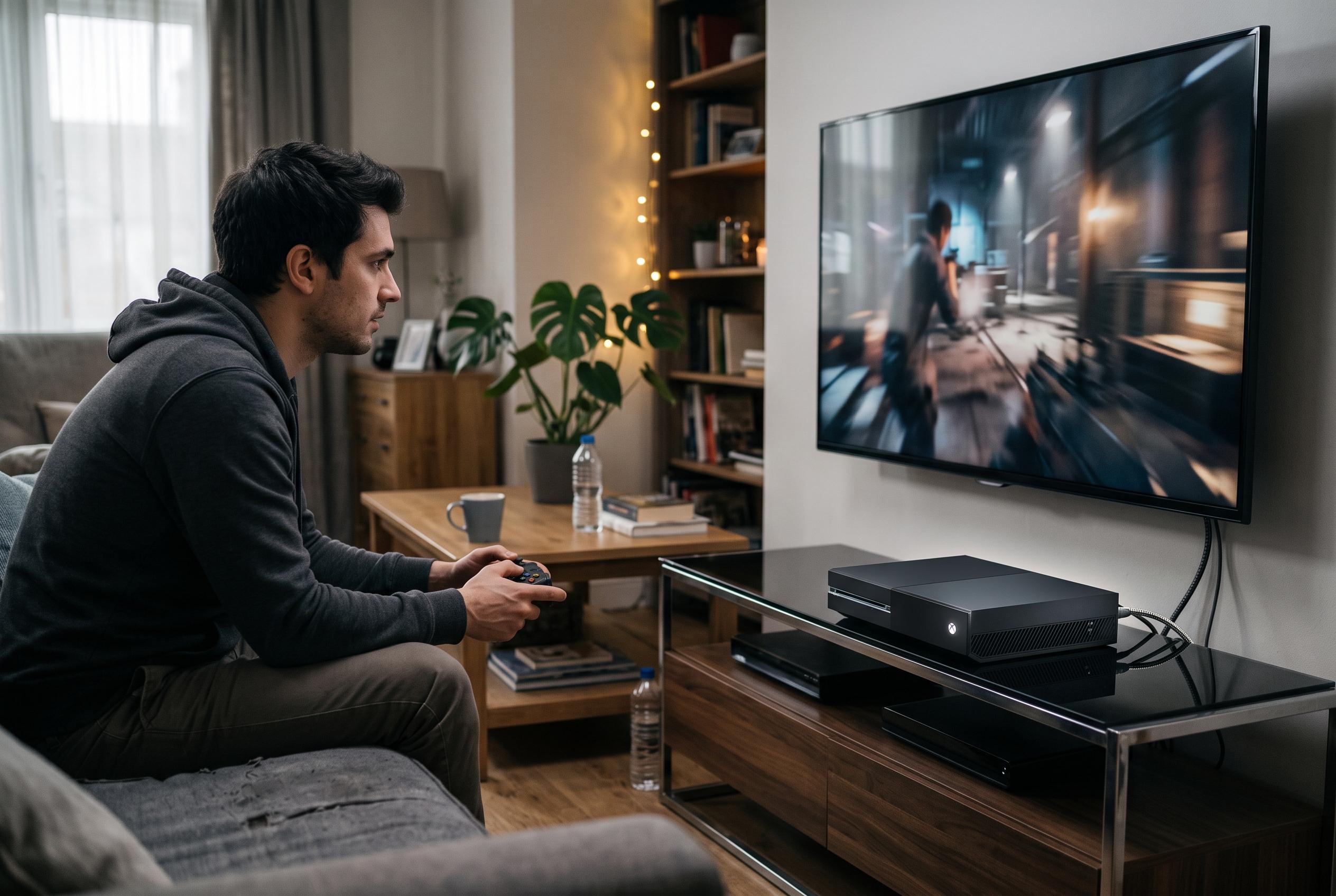

The latest generation of gaming consoles, including the Xbox Series X, PlayStation 5 and Switch 2, showcase significant upgrades. From high-performance 4K gaming and enhanced backwards compatibility to portable versatility and faster load times, these machines are set to shape the future of home and on-the-go gaming experiences, with TV display quality playing a crucial supporting role.
For players who want a traditional living-room console, the Xbox Series X remains a strong pick. Tom’s Hardware says it can deliver 4K gaming at up to 120 frames per second in supported titles, while Windows Central highlights its Game Pass integration and Quick Resume feature, which lets players jump between games without long reloads. The trade-off is size: it is a powerful machine, but not a subtle one. Still, for people who value disc support, fast performance and a large on-demand library, it remains one of the most capable boxes on the market.
Sony’s PlayStation 5 is still one of the clearest rivals, especially for players drawn to first-party exclusives. According to Sony, the console supports 4K gaming at up to 120 FPS, uses a high-speed SSD to shorten load times and includes backward compatibility with many PS4 games. Sony is also pushing the PS5 Pro as a higher-end model, with a 2TB SSD, Wi-Fi 7 support and enhanced performance for compatible titles. The catch is practical rather than technical: both PS5 models depend on the right display to show their best results.
Nintendo’s Switch 2 occupies a different part of the market because it is built for both handheld and docked play. Its larger screen, magnetic Joy-Con 2 controllers and built-in microphone give it a more polished feel than the original Switch, while 4K output in TV mode keeps it current for home use. The compromise is that the panel is LCD rather than OLED, so handheld image quality is not as striking as on the earlier premium model. Even so, its backwards compatibility with most older Switch games makes it a straightforward upgrade for existing Nintendo players.
For people who want flexibility above all else, the Steam Deck is still the most convincing portable option. Its strength is simple: it brings much of the PC gaming library into a handheld format, with enough control depth and screen quality to make it feel close to a console. That makes it particularly useful for commuting, travel or sofa gaming, especially if Steam is already your main platform. The main caveat is that some PC games need adjustment before they run smoothly, so it is best suited to players who do not mind a little tinkering.
The deciding factor for most buyers is less brand loyalty than use case. If you want the strongest all-round performance and disc support, the Xbox Series X is hard to argue against. If exclusives and Sony’s ecosystem matter more, the PS5 and PS5 Pro are the obvious route. If portability and hybrid play are the priority, the Switch 2 has the broadest appeal. And if you want a handheld that behaves like a compact gaming PC, the Steam Deck remains the most versatile choice. For any 4K, 120Hz setup, though, the console is only half the story: the TV matters too, and TechRadar’s recent guide to gaming displays underlines how much HDMI 2.1 support, input lag and panel quality affect the final experience.
Disclaimer: This content is intended for informational purposes only. Readers are advised to exercise their own judgement, conduct due diligence, or consult a qualified expert before acting on any information provided.