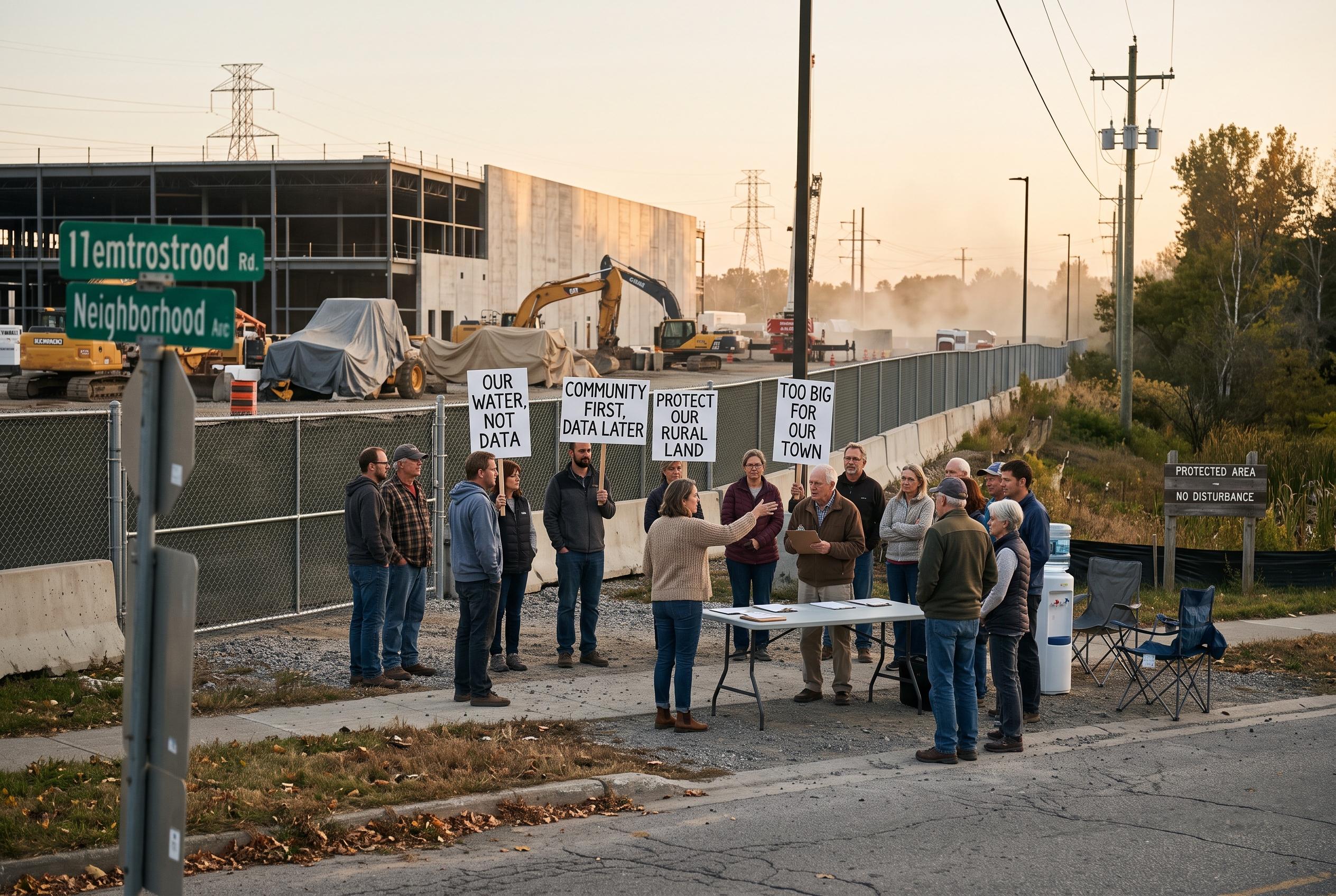

Communities across the US are increasingly resisting the rapid development of AI data centres, with nearly $200 billion worth of projects delayed or blocked in the first half of 2026, highlighting growing local, environmental, and political tensions.
Communities across the US are increasingly slowing the rapid build-out of artificial intelligence infrastructure, with new figures suggesting that nearly $200 billion in data centre projects were blocked or delayed in the first half of 2026. Bloomberg, citing Data Center Watch, reported that 45 projects worth almost $68 billion were disrupted between April and June, adding to 75 projects valued at about $130 billion that ran into trouble in the first quarter. The tracker, run by 10a Labs, follows local resistance to data centre development across the country.
The scale of that pushback has grown alongside the rush by Amazon, Microsoft, Meta and Google to spend heavily on the computing capacity needed to train and run AI systems. CNBC has reported that the major technology groups are expected to spend at least $700 billion this year on AI infrastructure and development. At the same time, public concern has hardened. A Gallup survey in March found that seven in ten Americans opposed building AI data centres in their area, including 48% who were strongly opposed, while environmental campaigner Erin Brockovich has also launched a crowdsourced map of community objections.
Resistance is also moving into government. Data Center Watch said more than 300 state-level bills were introduced in the first six weeks of 2026, including proposed moratoriums in 14 states, while 30 statehouses eventually considered legislation, resolutions or executive action on siting, electricity and water constraints, and cost-sharing. Reuters has separately reported on local pauses and bans, including a six-month halt approved by the Minneapolis City Council in June and a one-year moratorium on new hyperscale facilities announced in New York in July by Governor Kathy Hochul.
The backlash is no longer limited to politically liberal states. Reuters reported that Texas Governor Greg Abbott ordered a review in August of data centre projects seeking to connect to the ERCOT grid, an acknowledgement of the strain these facilities may place on power infrastructure in a state normally associated with business-friendly regulation. By contrast, President Donald Trump has continued to frame the expansion as strategically important, warning against what he described on Truth Social as “a SICK conspiracy going on against AI and Data Centers”, which he said would benefit China. The result is a widening clash between federal ambitions for AI growth and local pressure over water use, electricity costs and land use.
Disclaimer: This content is intended for informational purposes only. Readers are advised to exercise their own judgement, conduct due diligence, or consult a qualified expert before acting on any information provided.