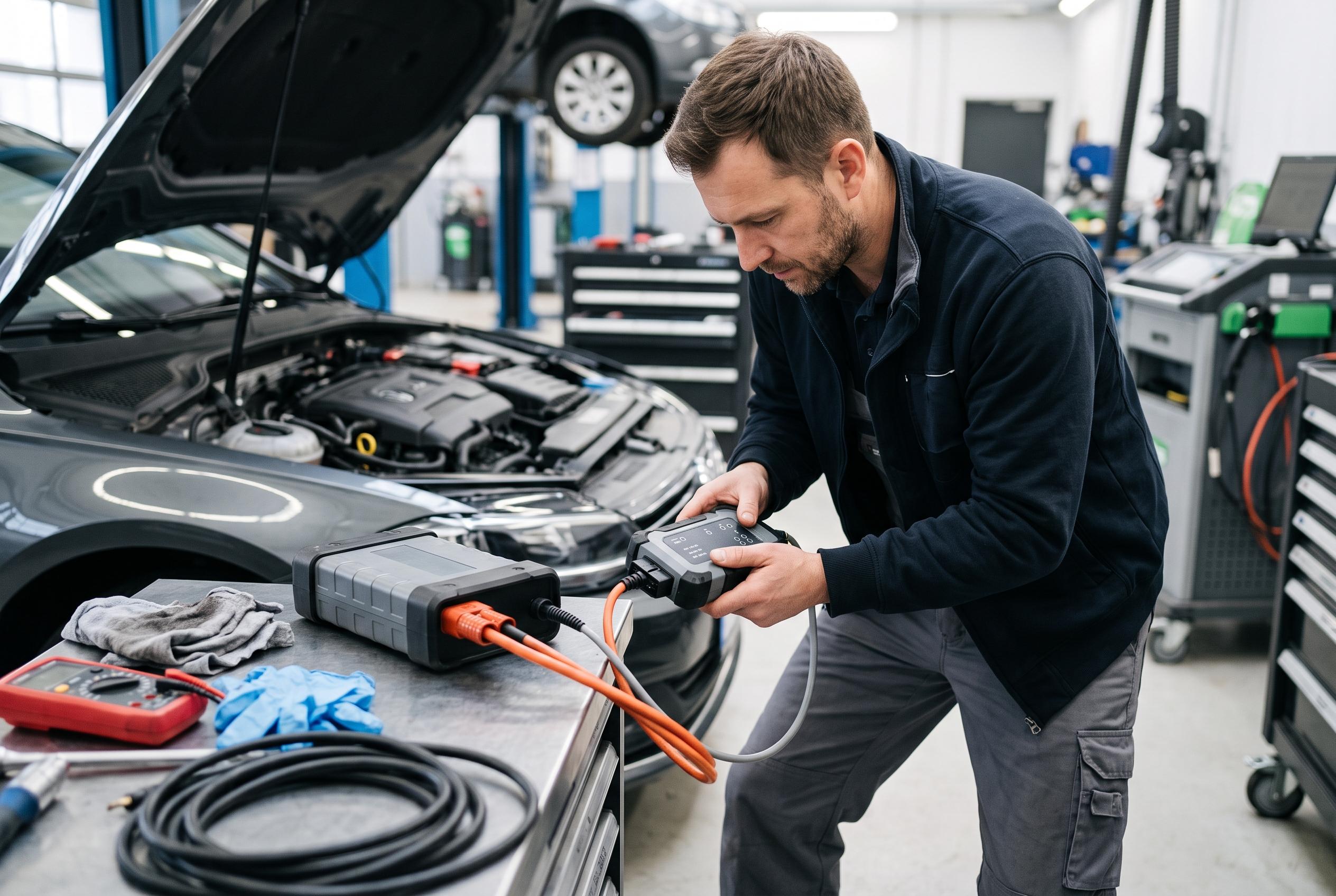

New generation of memory savers offers advanced features like built-in chargers, dual power inputs, and portability to streamline vehicle repairs and safeguard vital electronic settings.
When a car battery is disconnected, the loss is often more than an inconvenience. Radio presets, clock settings, security data and some ECU-related information can all be cleared, creating extra work after maintenance. A memory saver is designed to keep a small supply of power flowing while the main battery is removed, reducing the risk of losing those settings during a swap or repair.
According to the product details for the EZRED MS4000, it is aimed at drivers and home mechanics who want an all-in-one solution. The unit combines memory-saving functionality with a built-in charger, and it is described as protecting items such as radio codes, keyless entry settings, alarms, GPS memory and tyre pressure monitoring data. It also includes indicator lights to show connection status and battery condition, which should help users spot when it needs recharging.
For people working across several vehicles, the MRCARTOOL E60 is presented as a more flexible option. It supports dual power inputs, including a battery and a cigarette-lighter connection, making it better suited to field use and longer maintenance sessions. That flexibility matters because memory savers are only useful if they match the vehicle’s electrical setup and are connected correctly.
The VSTM OBD II ECU memory saver is pitched towards longer jobs where reach is important. Amazon’s product information describes it as a 12V emergency power cable with an alligator clip and cigarette-lighter input, plus copper wiring and extra length for use across different vehicle layouts. That makes it a more practical choice for workshops or roadside work where the battery and diagnostic port are not close together.
For quick battery changes and smaller cars, the 9V-powered memory saver offers a simpler approach. It is compact, easy to carry and intended for OBD II vehicles that need only short-term power support during a disconnect. The trade-off is clear: portability is useful, but 9V units are less suitable for longer maintenance windows or vehicles with more demanding electrical systems.
A second MRCARTOOL E60 listing and the alternative 9V backup option reinforce the same buying pattern. Longer cables, dual inputs and sturdier construction are better for frequent use and multiple vehicles, while smaller battery-powered units suit occasional jobs and glove-box storage. The main rule is to match the tool to the vehicle, check polarity before connection and verify compatibility before relying on it to protect memory data.
Disclaimer: This content is intended for informational purposes only. Readers are advised to exercise their own judgement, conduct due diligence, or consult a qualified expert before acting on any information provided.