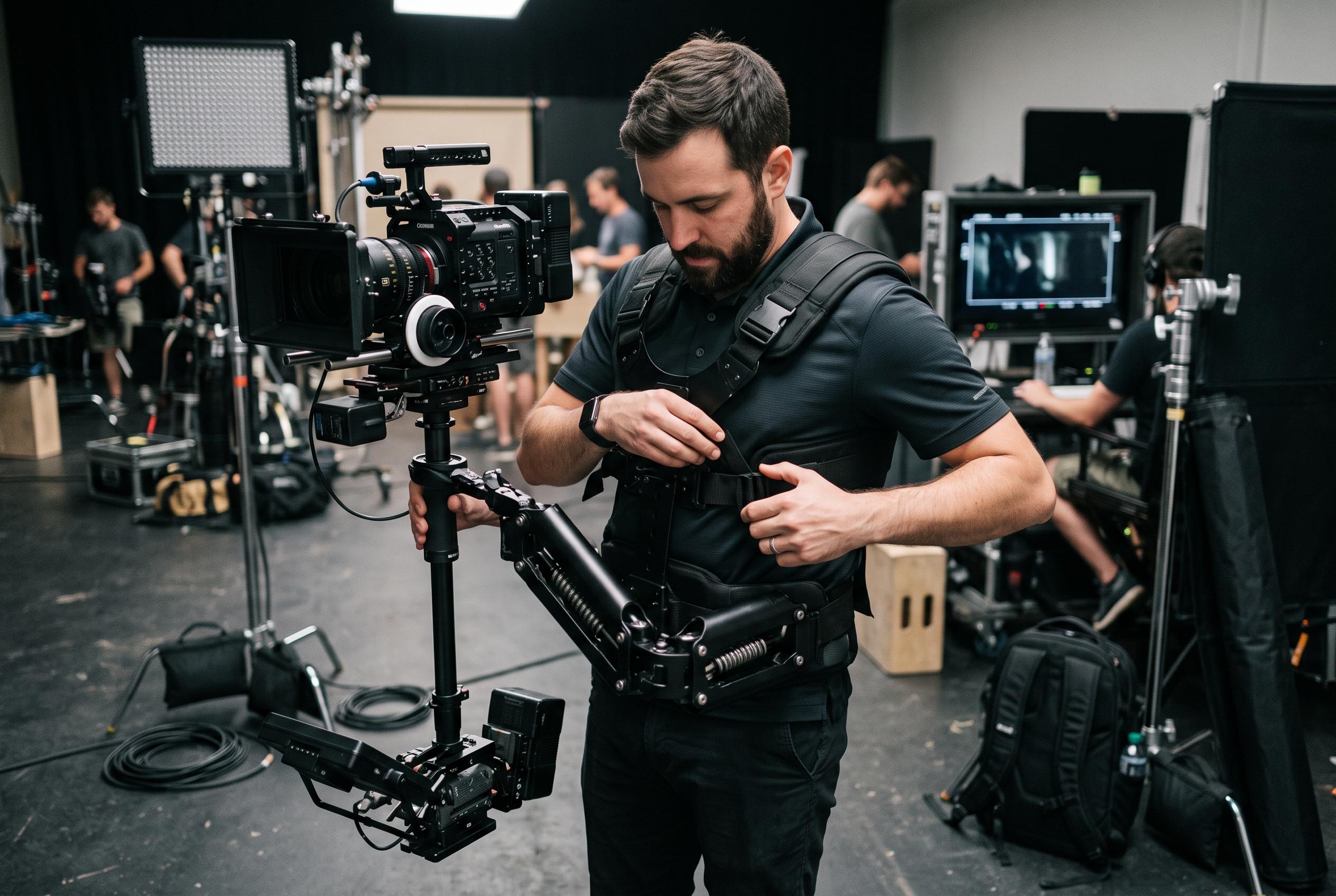

A new review for 2026 highlights the importance of compatibility, comfort, and workflow integration in choosing the right steadicam vest, with the FLYCAM Comfort Arm and Vest leading the recommendations for versatile filmmaking needs.
For filmmakers trying to cut fatigue without sacrificing movement, a steadicam vest remains one of the most practical upgrades in a camera kit. The guide from Short Film Central assesses eight options for 2026, spanning traditional sled-mounted systems and newer supports designed for handheld gimbals, and frames the choice around comfort, payload and compatibility rather than brand alone. Its testing notes and working-operator feedback point to a simple truth: the best vest is the one that matches both your rig and the way you shoot.
At the top of the list, the FLYCAM Comfort Arm and Vest is positioned as the most balanced choice for most filmmakers, chiefly because it combines broad size adjustment, a modest payload rating and straightforward operation. The guide contrasts it with the FLYCAM Galaxy Arm and Vest, which is better suited to heavier camera builds and offers dual-spring tuning, and with the Flycam 5000 kit, which packages the vest with a stabiliser for buyers starting from scratch. Taken together, those three options define the lower and middle tiers of the traditional sled market.
For gimbal users, the picture shifts. The DF DigitalFoto Thanos-SE Support Vest and Tilta Lightweight Gimbal Support Vest are presented as the most relevant choices for operators who want to offload arm strain while retaining the electronic stabilisation of a DJI RS or Zhiyun Crane system. The Short Film Central review highlights the Thanos-SE for broader compatibility and stronger vertical damping, while the Tilta vest is treated as the lighter, travel-friendly option for mirrorless rigs and shorter payloads.
The guide also distinguishes between foam-padded vests and more specialised load-transfer designs. The FLYCAM Flowline Master is described as a suspension-rig alternative rather than a conventional arm-and-vest system, aimed at longer takes where operators want the camera to float with less strain on the upper body. At the premium end, the DF DigitalFoto Thanos Pro II is positioned as the most advanced gimbal support in the roundup, with higher-end materials, a rotatable yoke and more precise counterweight balancing for professional use.
Compatibility is one of the article’s more useful themes. It notes that many sled-mounted systems still rely on the 16mm post standard shared across much of the market, which makes cross-brand use easier than many buyers expect. By contrast, some gimbal-focused vests are built around specific ecosystems, particularly DJI Ronin and Zhiyun models, so the safest purchase is usually the one that already aligns with the camera support you own. That distinction matters as much as payload, because a vest that does not mate cleanly with your rig is little more than dead weight.
The article’s wider buying advice is sensible and fairly conservative. It recommends choosing first by ecosystem, then by weight, then by body fit, and only after that by price. It also draws a clear line between short shoots, where softer foam construction may be acceptable, and longer days, where weight transfer through a more rigid structure becomes important. In other words, the right vest is not simply the one with the highest payload rating, but the one that keeps the operator stable and working for the duration of the shoot.
The guide’s final recommendation is the FLYCAM Comfort Arm and Vest, with the Galaxy as the next step up for heavier rigs and the Thanos and Tilta models better suited to gimbal workflows. That hierarchy is consistent with the testing notes throughout the piece, which favour proven comfort, clear compatibility and practical adjustment over specification chasing. For filmmakers choosing a vest in 2026, the article’s main message is straightforward: match the harness to the camera, the workflow and the length of the day, and the footage will usually improve as a result.
Disclaimer: This content is intended for informational purposes only. Readers are advised to exercise their own judgement, conduct due diligence, or consult a qualified expert before acting on any information provided.