
Google releases its fourth-generation foldable, the Pixel 11 Pro Fold, maintaining familiar design cues amid rising competition from Apple and Samsung, with modest updates and a premium price tag, focusing on camera improvements and durability.
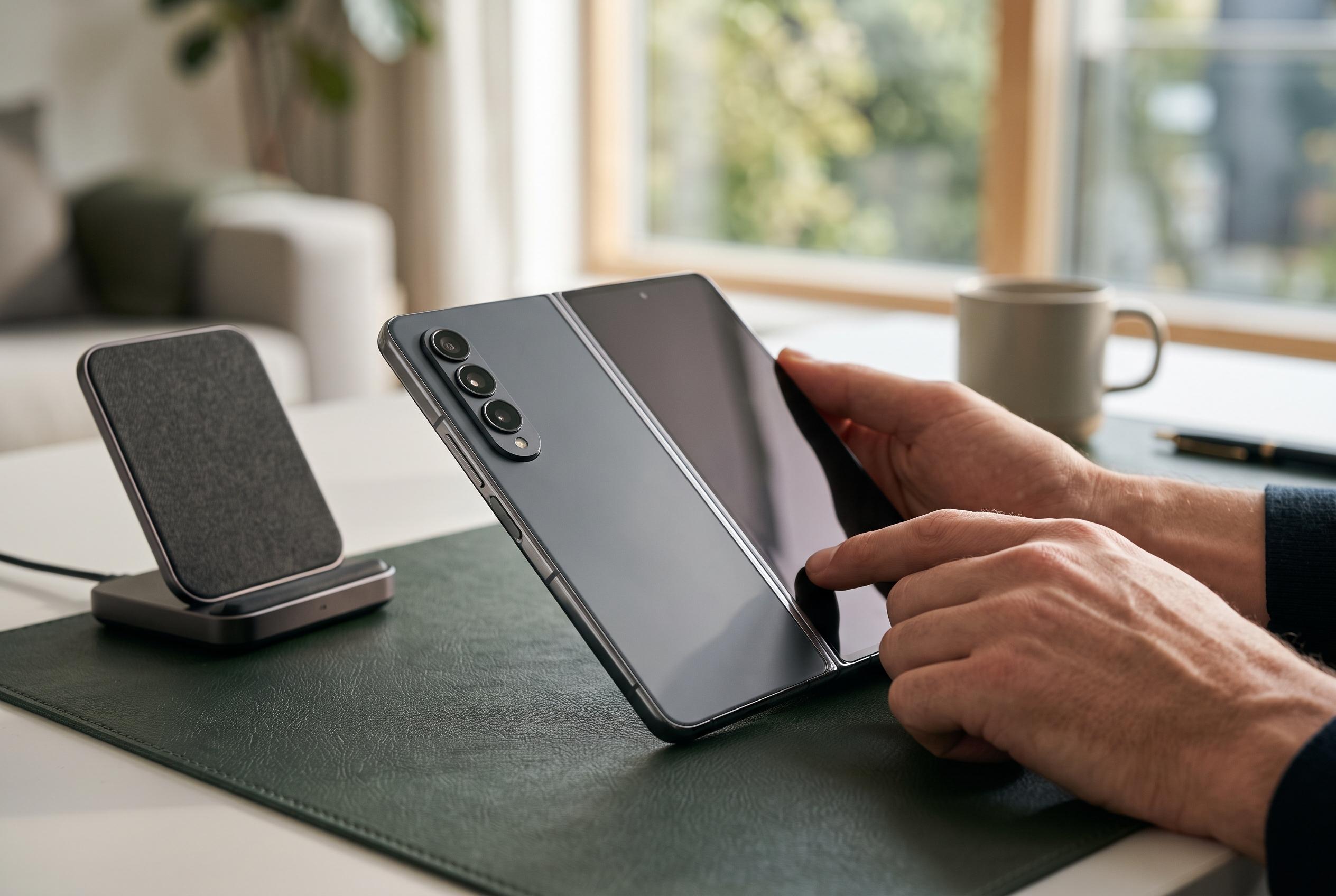
Google’s fourth-generation folding phone arrives as a careful evolution rather than a reinvention. According to The Guardian’s review, the Pixel 11 Pro Fold keeps the familiar approach of feeling like a normal Pixel when shut, while opening into a near-square mini-tablet. That formula now faces sharper competition, including Apple’s new compact foldable and Samsung’s slimmer Galaxy Z Fold line, but Google is still betting that consistency matters more than novelty. The price has also risen to £1,799, which places it firmly in the ultra-premium bracket.
The hardware changes are modest but useful. The handset is 19g lighter than before, fractionally thinner in every direction and fitted with a slightly larger outer display, which now measures 6.5in and behaves much like a standard Pixel screen when the phone is closed. Android Central’s coverage also notes a brighter panel with LTPO OLED technology and peak brightness up to 3,600 nits, while TechRadar says the redesigned hinge helps the device open more flatly and reduces the visibility of the crease. Even so, the fold line remains easier to see and feel than on the best rivals, and the inner screen is still a compromise for video because of its square shape.
Performance is strong for everyday use, if not class-leading. The phone uses Google’s Tensor G6 chip and 16GB of memory, which makes multitasking smooth and keeps the interface responsive even with several apps open. Google’s software changes for folding devices include a floating taskbar, improved split-screen behaviour and a revamped bubbles system that can now manage more apps at once. Android Central says these features make the large display more useful, although Samsung’s window management is still more flexible. The phone also ships with Android 17, Google’s Gemini tools and six months of Google AI Pro, and Google says it will support the device with operating system and security updates until August 2033.
Battery life and charging remain more mixed. The Guardian found that the phone lasts around 36 hours in mixed use, which is solid but slightly down on the previous model and not quite enough for the most demanding users to forget about nightly charging. Android Central and other reviewers report that the battery has actually shrunk a little compared with last year, despite the lighter body. Wired charging tops out at 30W, while Qi2.2 wireless charging is supported at 25W, but charging is still slower than some rivals and the power adaptor is not included.
Cameras are where Google makes its strongest argument. The Pixel 11 Pro Fold uses a new 48MP main sensor, plus a 10.5MP ultrawide and a 10.8MP 5x telephoto, alongside two 10MP selfie cameras. The Guardian says the main camera now captures better detail and performs significantly better in low light, while the telephoto brings a proper reach advantage and the software adds foldable-specific features such as Made You Look, which is designed to help photograph children, and camera modes that work well when the phone is propped open. Android Central is less enthusiastic, arguing that the cameras still trail the non-folding Pixel 11 models in dynamic range and portrait accuracy, but even critics generally agree that Google has built one of the better camera systems on a folding phone.
Google has also kept durability high by foldable standards. The Pixel 11 Pro Fold retains an IP68 rating, which is unusual in this category, and The Guardian notes that it is still one of the few foldables that comes close to the water and dust resistance expected of a conventional slab phone. It is also made with recycled materials, can be repaired by Google and third-party shops, and is due to gain self-repair support. The trade-off is that the device remains thick, expensive and more fragile than a normal phone, with a foldable display that still demands more care than hardened glass. For buyers who want a folding handset that behaves most like an ordinary Pixel when closed, Google’s latest model remains one of the most convincing options, even if it is still not the lightest, thinnest or most affordable choice.
Disclaimer: This content is intended for informational purposes only. Readers are advised to exercise their own judgement, conduct due diligence, or consult a qualified expert before acting on any information provided.