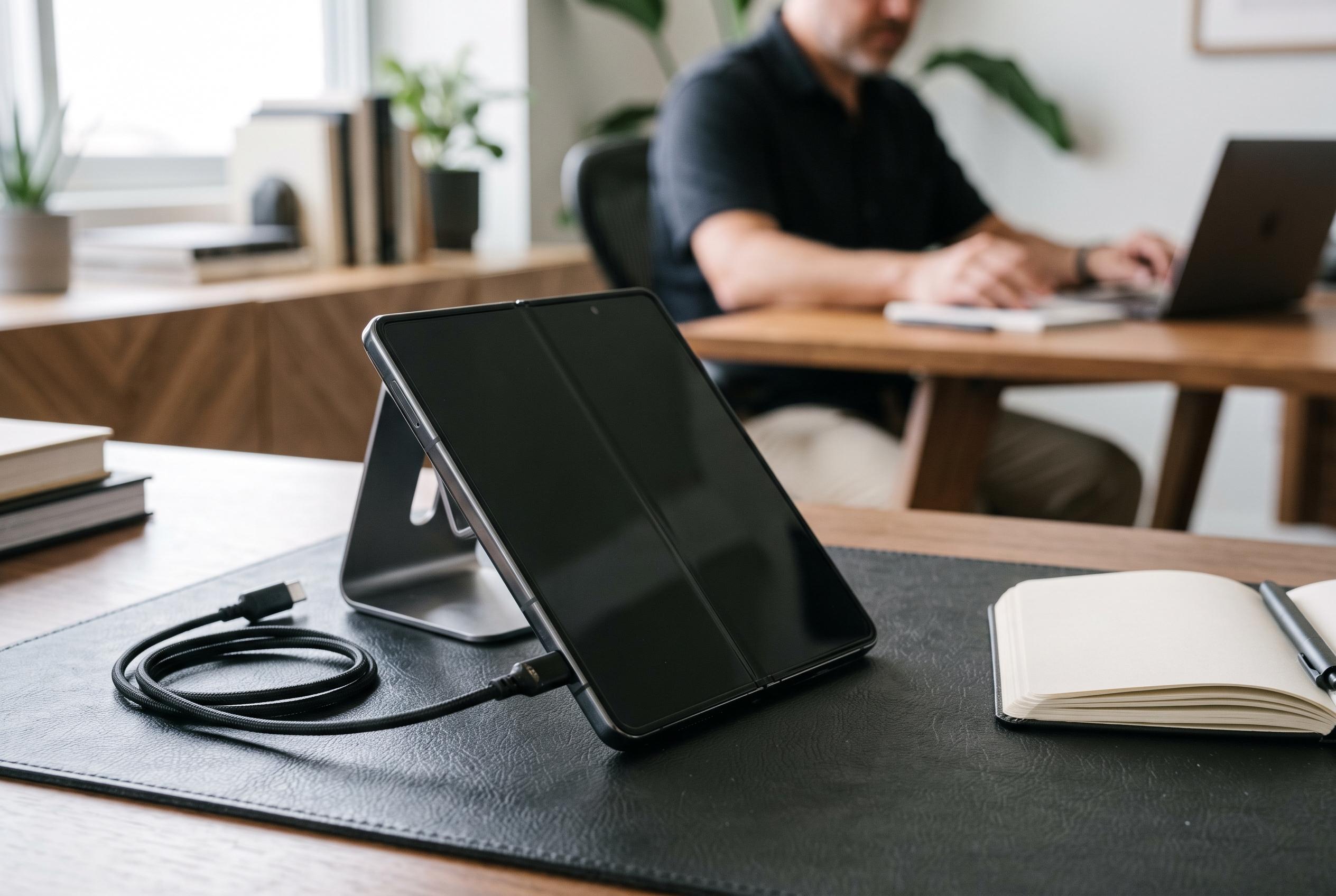

Samsung’s Galaxy Z Fold 8 emerges as a game-changer in the foldable phone market, with a practical design, enhanced durability, and improved screen real estate that prioritise everyday usability over specifications.
Samsung’s Galaxy Z Fold 8 is a reminder that foldables are no longer defined only by specifications. What matters most now is whether the format changes day-to-day use in a meaningful way, and this device appears to do exactly that. Across the reviews, the consistent view is that Samsung has finally arrived at a shape that feels practical rather than experimental: compact enough to carry comfortably, but wide enough when opened to behave like a small tablet rather than an oversized phone. Android Central and SamMobile both describe it as lighter, more pocketable and more usable than previous generations, while TechRadar says the wider inner panel makes it more effective for content and productivity than the tall foldables that came before.
That judgement is helped by Samsung’s redesign of the chassis and hinge. The company’s Flex Titanium construction uses a titanium-alloy film and reinforced plate to slim the device while preserving durability, and the result is a foldable that feels more refined in the hand. Reviewers note that the opening action is easier than on the previous model, the crease is less obvious, and the whole mechanism feels more controlled. At 201g, it is also notably light for a large-screen foldable. The trade-off is that Samsung has removed the half-open stance offered by the Fold 7, but most testers appear to regard that as a minor loss rather than a serious omission.
The displays are central to the Fold 8’s appeal. The 5.5-inch outer screen is large enough for routine tasks such as messaging and social media, but the 7.6-inch inner display is the real draw. Its 4:3 aspect ratio is repeatedly praised as one of the Fold 8’s most important improvements, because it wastes less space when watching video and gives users more room for split-screen work. Android Central says the crease is almost imperceptible, and TechRadar and PhoneArena both point to the combination of the wide panel and strong performance as the reason the device stands out in everyday use. Samsung also claims the new anti-reflective coating on the inner screen cuts glare significantly, and that seems to bear out in practical conditions such as bright studio lighting.
There are, however, some clear omissions. The rear camera system relies on dual 50-megapixel sensors, one wide and one ultra-wide, with 10-megapixel selfie cameras on both displays. What the Fold 8 does not include is a dedicated telephoto lens, so Samsung leans on sensor cropping for zoomed shots. That is one of the most frequently cited weaknesses in the reviews, and it matters more because this is an expensive device. SamMobile and TechRadar both flag the missing telephoto as a compromise, while Android Central says it is one reason the Fold 8 still does not feel like a complete all-rounder.
Samsung’s own positioning makes the choice more complicated. The Fold 8 sits alongside the Fold 8 Ultra, which keeps a more conventional tall-fold design but adds a 200-megapixel main sensor, a 3x optical telephoto camera, 8K video capture through Samsung’s APV codec and Cine LUT colour grading in the camera app. The Ultra also uses a 5,000mAh battery and the same Snapdragon 8 Elite Gen 5 for Galaxy platform, while the standard Fold 8 has a 4,800mAh battery and 45W wired charging. In other words, Samsung has split the range between a model that is arguably better suited to content consumption and productivity, and one that is more clearly aimed at camera buyers.
Even so, the standard Fold 8 seems to be the version that best resolves the everyday puzzle of a folding phone. Reviewers across the board praise its balance, and the strongest criticism is not that it fails at its purpose, but that it costs a great deal to achieve it. Android Central calls it the foldable most people should consider, and that conclusion captures the broader view: Samsung has made a foldable that finally feels like a normal device with an extra capability, rather than a novelty built around compromise. The remaining question is whether users will accept the high asking price in exchange for a design that is now substantially more convincing.
Disclaimer: This content is intended for informational purposes only. Readers are advised to exercise their own judgement, conduct due diligence, or consult a qualified expert before acting on any information provided.