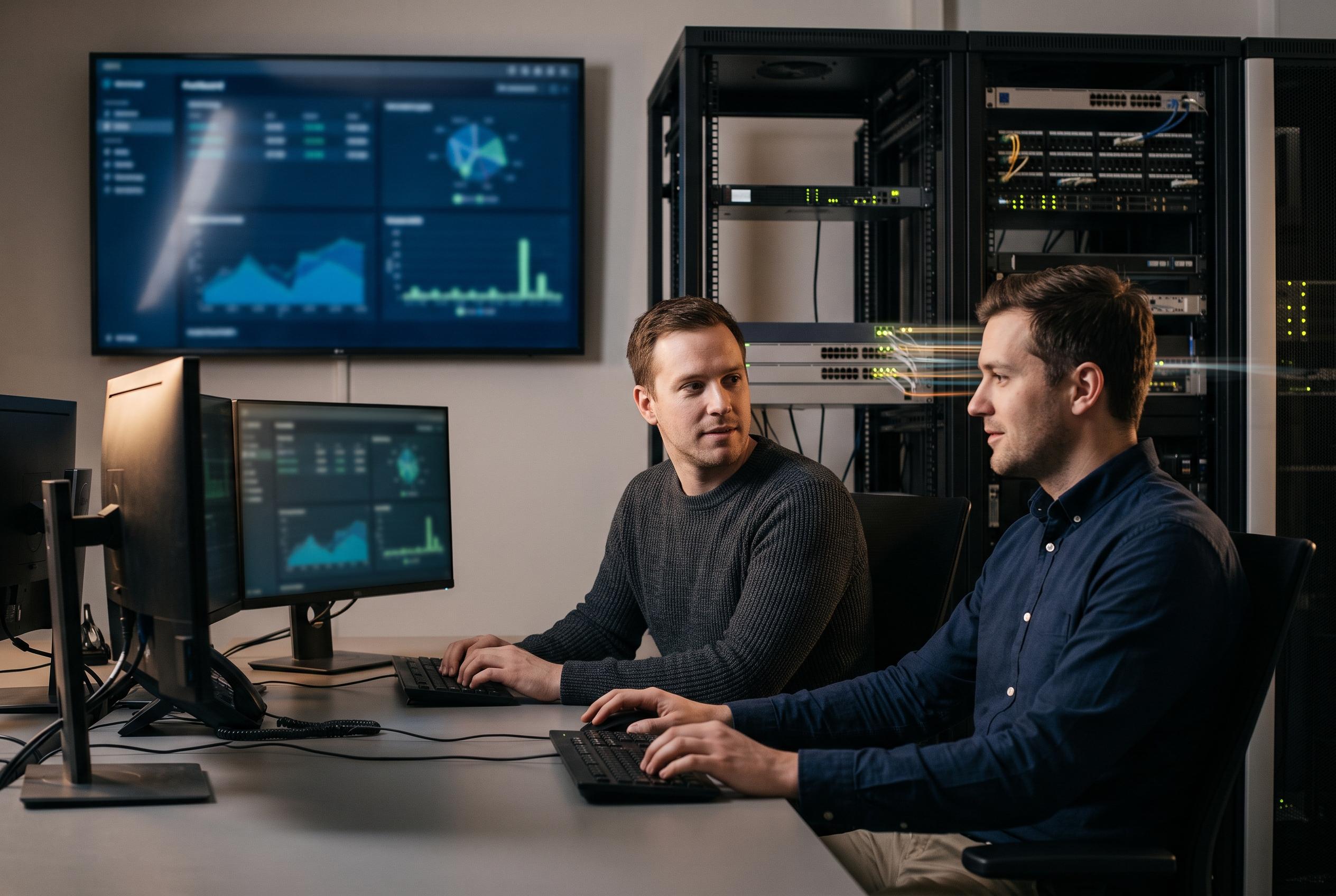

Leading security providers are enhancing detection and response capabilities to address the rapidly shrinking window for mitigating cyber threats as attackers move laterally across networks in record time, with innovations focusing on automation and cloud-native strategies.
Security teams are being forced to work within a shrinking margin for error. ReliaQuest’s 2026 Annual Threat Report says attackers can now move laterally across a network in as little as four minutes, while the average time has fallen to 34 minutes from 48 minutes a year earlier. That speed matters because once an intruder has initial access, every additional minute increases the chance they can expand their foothold, escalate privileges and reach more valuable systems before defenders can intervene.
That is why the strongest detection and response platforms are increasingly judged on how well they connect discovery, investigation and containment in one flow. Wiz has positioned its Wiz Defend product around that model, using a security graph to correlate signals from networks, identities, data and workloads so that analysts can see the likely blast radius of an incident and act on it quickly. Wiz says the Blue Agent can investigate new threats automatically, turn disparate alerts into a readable attack timeline and trigger actions such as virtual machine isolation, process termination or credential revocation.
The cloud focus is significant because many older endpoint-led tools were designed for static, on-premises estates rather than elastic environments built on APIs, managed services and ephemeral assets. As the article notes, cloud identities have become a central security boundary, while host-based systems often miss cross-account permissions, audit trails and control-plane changes. Wiz has also argued that many cloud incidents still stem from basic operational mistakes rather than exotic exploits, including misconfigurations, weak credential handling and exposed secrets, which makes context-rich detection more important than raw alert volume.
Palo Alto Networks’ Cortex XSIAM takes a broader SOC platform approach, combining SIEM, XDR and SOAR so that high-volume telemetry from endpoints, networks and clouds can be grouped and scored automatically. Vectra AI focuses more narrowly on hybrid attack detection across identity, cloud and network layers, using attack-behaviour models and agentless deployment to accelerate coverage. Trend Micro’s Vision One similarly spans endpoints, email, networks and cloud, and is notable for offering a fully managed service for organisations that do not run a large internal security operations team.
CrowdStrike Falcon is built around continuous event streaming, which the company says avoids the delay associated with batch log ingestion and helps close the gap between detection and the narrow lateral-movement window highlighted by ReliaQuest. The platform correlates signals across cloud infrastructure, identities, containers and virtual machines, then uses Falcon Fusion SOAR to automate containment steps such as host isolation and process termination. In practical terms, the market leaders are converging on the same requirement: not merely spotting an incident, but understanding it fast enough to stop it before it spreads. That urgency is likely to shape buying decisions well beyond 2026, especially as attackers increasingly use AI and automation to compress their own timelines.
Disclaimer: This content is intended for informational purposes only. Readers are advised to exercise their own judgement, conduct due diligence, or consult a qualified expert before acting on any information provided.