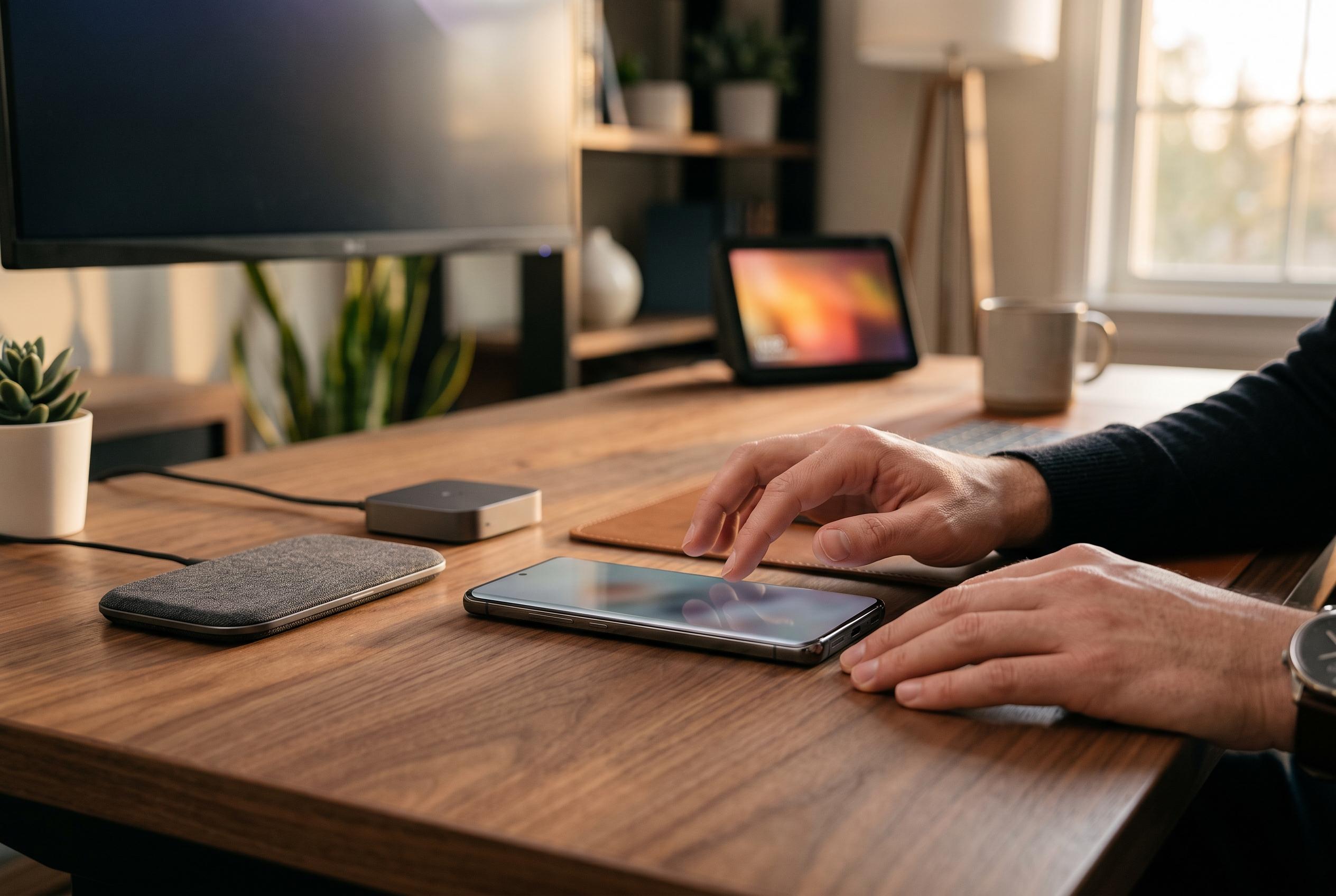

Google’s latest flagship, the Pixel 11 Pro XL, adopts a cautious approach with a focus on software enhancements like Gemini-powered AI, rather than radical hardware changes, aiming to redefine user experience in 2026.
Google’s Pixel 11 Pro XL is less a reinvention than a careful refinement of the formula it has spent years building. The company is making a clear bet that Gemini-powered software, rather than spec-sheet theatre, is what will define its premium phones in 2026. That strategy is visible from the boot screen onwards, where the Gemini branding is no longer treated as a flourish but as part of the device’s identity. It is also reflected in the hardware: the 6.8-inch Super Actua display returns, the camera bar remains central to the design, and the Tensor G6 keeps Google focused on efficiency and on-device AI rather than chasing benchmark bragging rights. Official specifications from Google confirm the phone’s 5115mAh battery, 45W wired charging, 25W Pixelsnap wireless charging and memory options that start at 12GB of RAM on the base model, with 16GB reserved for the higher-tier variants.
The strongest case for the Pixel 11 Pro XL is the software layer. Google’s headline features, including Magic Capture, Instant Night Sight, Live Translate for Media and the new Rambler voice-typing tool, are intended to make the phone feel more useful rather than merely more advanced. In practice, that ambition is clearest in the camera and transcription tools. Magic Capture is designed to pull stills from background video and select the best moment automatically, while Rambler aims to turn rough speech into cleaner text with live grammar correction and editing commands. Reviewers at Android Central and Notebookcheck both singled out the camera and Gemini-driven additions as the most persuasive parts of the package, even if some features remain more impressive in concept than in daily use.
Not every AI feature lands with the same force. HiLight, the illuminated strip built into the camera bar, is visually striking but functionally limited, working only in specific situations and offering little customisation. Similarly, Gemini’s more proactive suggestions, which are meant to surface useful information inside chats and at a glance, remain inconsistent enough that they do not yet feel essential. That is an important distinction, because Google is increasingly presenting AI as the reason to buy a Pixel rather than an accessory to the experience. The broader software promise is still substantial, especially with seven years of OS and security updates, but the most convincing features are the ones that solve obvious tasks, not the ones that advertise intelligence most loudly.
The hardware story is more conservative. Google has kept the familiar Pixel silhouette, albeit with a slightly lighter frame and a cleaner-looking glass treatment across the rear camera bar. The phone remains IP68-rated and uses Gorilla Glass Victus 2 on both front and back. The display, according to Google and independent reviews, is one of the better panels in the class: bright, sharp and well suited to outdoor use, with a 120Hz LTPO refresh rate and a claimed peak brightness of 3,600 nits. There are caveats, though. The bezels are still thicker than those on some rival flagships, and Google’s low PWM dimming rate may be a concern for users who are sensitive to display flicker.
Performance is good in the ways that matter most to typical users, even if the Tensor G6 does not compete with the very fastest chips on paper. Notebookcheck’s testing and Google’s own positioning both point to the same conclusion: this is a phone built for smooth day-to-day use, not synthetic glory. Heat management has improved, and that appears to help with sustained responsiveness and battery behaviour. Google also continues to trail the best Snapdragon and Apple silicon in gaming, a weakness that remains difficult to ignore for users who play demanding titles. For calls, connectivity and general use, however, the phone appears well judged, and its stereo speakers, haptics and modem performance contribute to a premium feel that extends beyond raw processing power.
The camera system remains the Pixel’s most compelling reason to exist. Google’s triple-camera setup uses a 50-megapixel main sensor, a 48-megapixel ultrawide and a 48-megapixel telephoto, with the long lens now stretched to a claimed 120x Pro Zoom. Reviews from Android Central and others suggest that the real gains are less about headline zoom and more about how the phone handles portraits, low light and fine detail. Night shots are now closer to instant capture than the slow, careful exposures associated with older Pixels, while portrait rendering is cleaner and less processed. The zoom system is still best treated as a novelty at its extremes, but the overall imaging pipeline is more mature, with Google’s colour science continuing to favour a natural, slightly filmic look over the more saturated style seen on some rivals.
Battery life is another area where the Pixel 11 Pro XL sounds modest on paper but turns out better in practice. Google’s own figures suggest more than 30 hours of use, and the company says the phone can reach 75 per cent in about 30 minutes with a 45W USB-C PPS charger. Tech Advisor’s testing found that the handset can last one to two days depending on use, while Google’s specification page and other reviews confirm support for 25W Qi2.2-certified wireless charging. That makes the battery story more competitive than the raw capacity increase, or rather decrease from the larger figure some expected, might imply. The practical result is a flagship that is unlikely to lead its class outright, but should comfortably get through a full day without anxiety for most users.
The Pixel 11 Pro XL therefore succeeds as a polished, highly distinctive Android flagship, not as a dramatic leap forward. It is most convincing for buyers who value Google’s software approach, clean Android, dependable camera results and long update support. It is a harder recommendation for current Pixel 10 Pro XL owners, who will notice the incremental nature of the upgrades and the reduced RAM on the entry configuration. For everyone else, especially those moving from an older Pixel or a worn-out premium phone, this is one of the clearest expressions yet of what Google wants a modern Pixel to be: less about raw specification drama, more about integrated, everyday usefulness.
Disclaimer: This content is intended for informational purposes only. Readers are advised to exercise their own judgement, conduct due diligence, or consult a qualified expert before acting on any information provided.