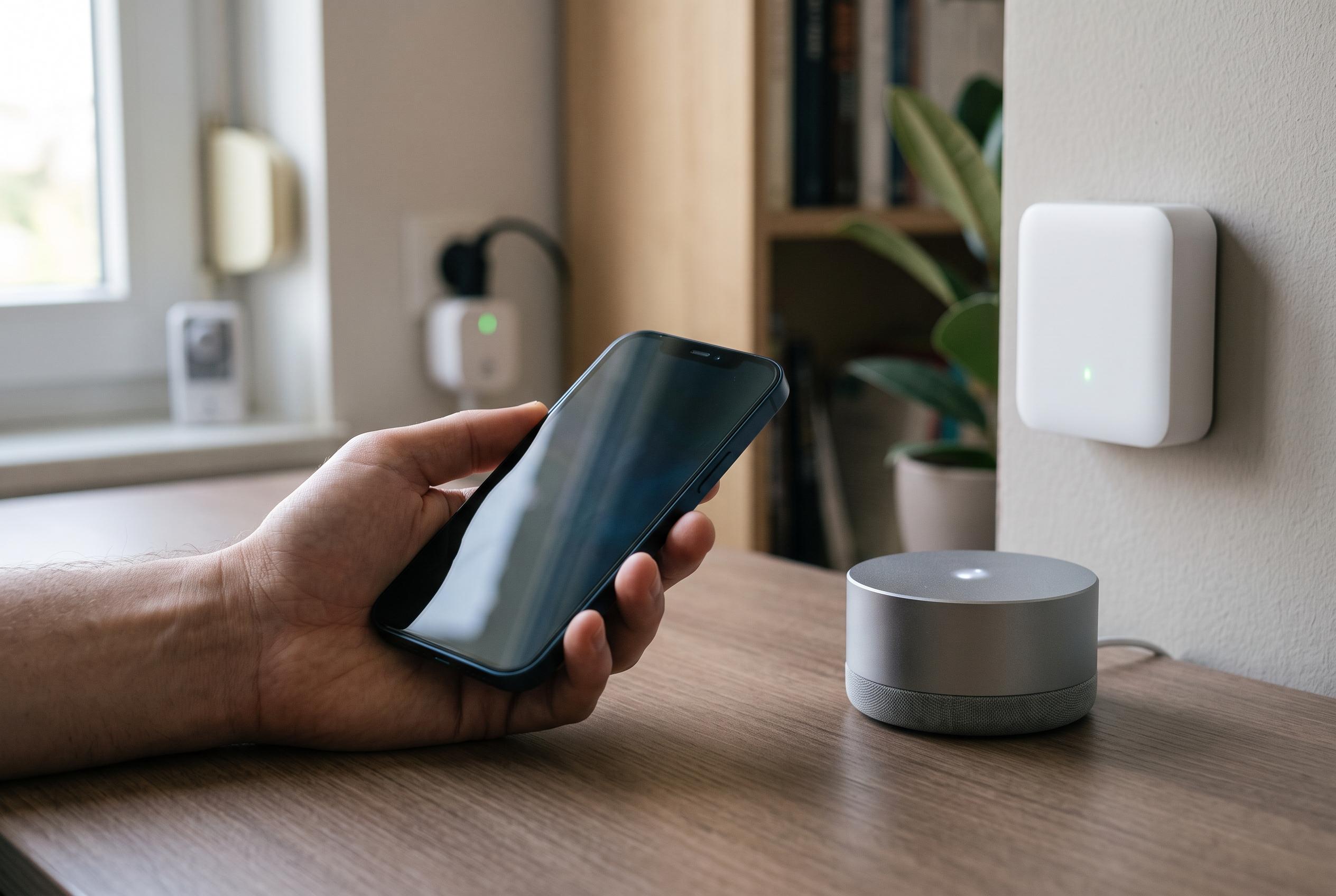

A new experiment showcases how smartphones, combined with specialised software and hardware, can perform local speech processing to control physical devices, highlighting a disruptive shift towards decentralised, immediate, and secure AI applications.
The appeal of the project is its simplicity. A phone, some software and a small piece of hardware are enough to test a bigger idea: whether spoken instructions can be turned into physical action without relying on a distant server. In the experiment described here, the phone is not treated as a passive screen but as an edge device that can hear, interpret and help trigger hardware responses.
At a technical level, the chain is straightforward but demanding. Speech first has to be captured, then transcribed, then mapped to intent, and finally converted into a command that a device can execute. The difference between a natural sentence and a machine instruction matters. A phrase such as “turn the relay on” has to be reduced to a defined structure, such as a specific device and a specific state, so the system behaves predictably rather than guessing.
That focus on local execution reflects a wider trend in edge AI. Companies behind products such as CleverHub, Pluto, HELIOX OS, RunEdge, KULVEX and Talos are all promoting variants of the same promise: run voice understanding, orchestration or smart-home control directly on hardware rather than in the cloud. Their claims vary, but the common thread is reduced dependence on internet access, lower latency and tighter control over data. The phone-based experiment sits in the same design space, even if on a much smaller and more improvised scale.
There is also a practical engineering reason to keep processing near the device. Cloud systems can be powerful, but they add a network dependency that may not suit unreliable connections or remote environments. Local processing can make a command feel more immediate and can keep some functions available when connectivity drops. That does not remove the value of the cloud; it simply changes which tasks need to travel and which can remain on the device itself.
The harder part is reliability. A live demo may succeed when everything goes right, but actual hardware control has to cope with misheard speech, unrecognised phrases, missing components, ambiguous instructions and devices already in the wrong state. The author’s emphasis on validation, error handling and low-voltage hardware is important. Once software can influence the physical world, safety and determinism stop being optional extras.
For now, the project is less about finishing a product than about learning how different layers of computing fit together. Speech recognition, intent parsing, embedded systems and edge processing all become part of the same workflow. The central question is not simply whether a phone can control a relay, but how much intelligence can be pushed closer to the device itself, and how useful that becomes when hardware needs to act locally and quickly.
Disclaimer: This content is intended for informational purposes only. Readers are advised to exercise their own judgement, conduct due diligence, or consult a qualified expert before acting on any information provided.