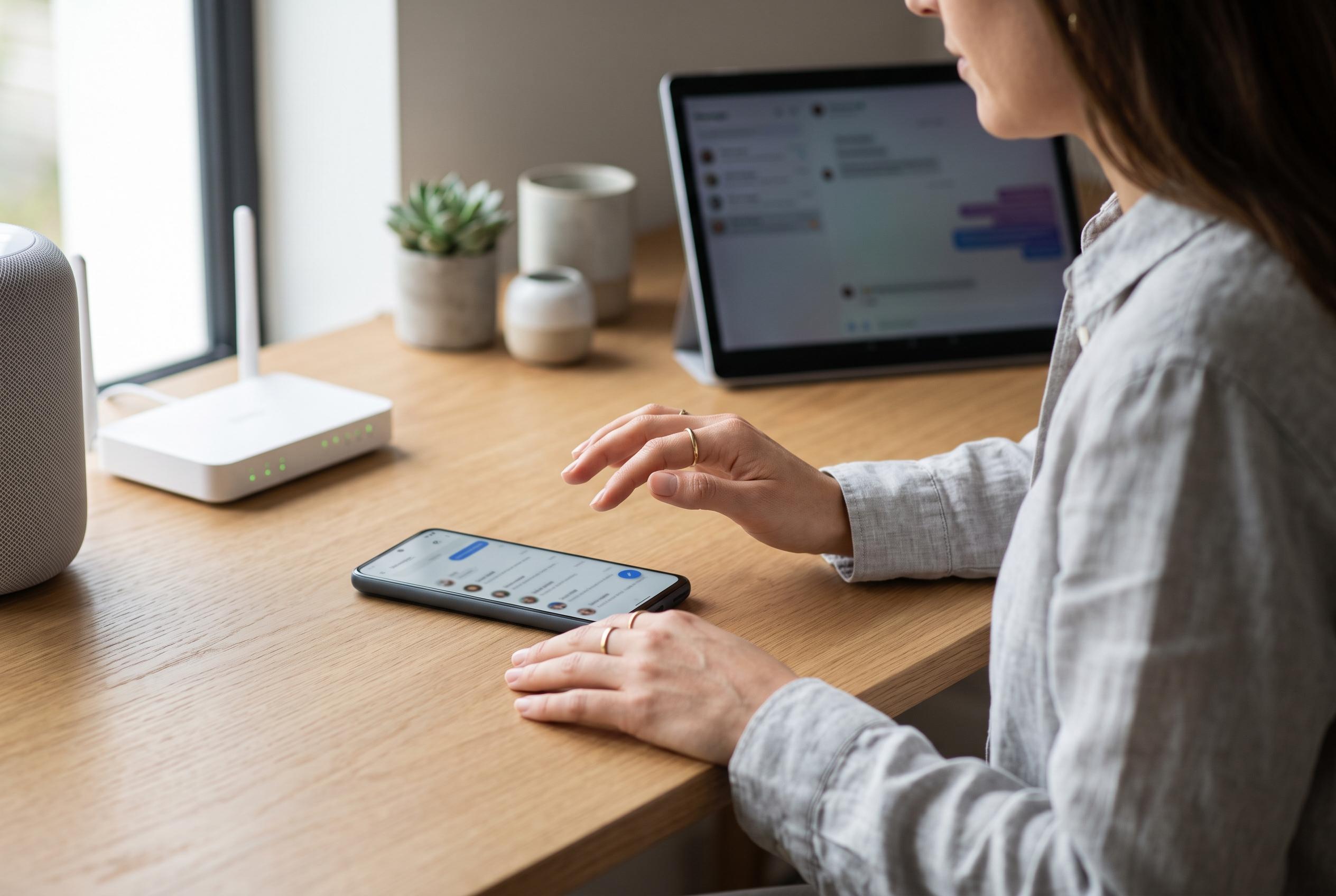

Google is transforming its Messages app in 2026 with interface redesigns, productivity integrations, and broader RCS adoption, signalling a shift towards a more secure and feature-rich communication platform on Android and across platforms.
Google Messages is becoming far more than a basic SMS client. Across 2026, Google has been reshaping the app with interface changes, new gesture controls, productivity tools and deeper RCS support, in a sign that Messages is being positioned as a more central part of the Android experience. The latest changes also show a clear effort to narrow the gap between Google’s messaging app and the richer chat features long associated with modern messengers.
One of the most visible changes is the way message details are now handled. According to 9to5Google, Google is rolling out a redesigned read-receipt layout, with status indicators appearing in a small circle on the lower-right of message bubbles and images. Instead of crowding every conversation with extra labels, users can swipe left to see the time a message was sent and its encryption status. Swiping right now triggers a quick reply, reducing the number of taps needed to respond in busy chats.
The app is also moving towards a more compact and practical selection menu. Long-pressing a message now brings up a floating panel closer to the item being acted on, rather than pushing tools to the top of the screen. That layout makes common actions such as reply, forward, copy, star and delete easier to reach, particularly on larger phones. Google has also improved text selection so users can copy only part of a message, which is more useful when dealing with codes, numbers, addresses or links.
Productivity is becoming a more prominent part of the app as well. In September 2026, Google began adding Google Keep integration to Messages, according to 9to5Google and Android Central. The feature, available through the plus menu inside a conversation, lets people create and share notes or lists without leaving the chat. That makes it easier to coordinate shopping lists, trip planning or shared tasks, and it also allows other participants to edit the same note. Google has said the shared content is stored in Keep, rather than inside the messaging thread itself.
Google is also changing how Messages for the web is paired. As 9to5Google reported on 27 September 2026, the service is shifting away from QR-code pairing in favour of signing in with a Google Account, at least in some regions. Google’s own documentation says QR-based pairing is no longer available in the United States. The new method ties the web session directly to the account already used on the phone, which simplifies setup, though users on shared computers still need to be careful about ending access when they are finished.
The most consequential changes, however, are taking place in RCS. In May 2026, Google and Apple began rolling out end-to-end encrypted RCS messaging between Android and iPhone users, with a lock icon marking protected chats. That matters because it brings stronger privacy to cross-platform conversations while keeping the richer features of RCS intact. Google has also been improving the experience of mixed-device chats with embedded replies and better emoji reactions to photos, making exchanges between Android and iPhone behave more like modern messaging apps rather than upgraded SMS threads.
Taken together, these updates show a clear strategy. Google is refining the interface to make Messages faster to use, adding collaborative tools to increase its usefulness beyond one-to-one conversation, and pushing RCS towards a more secure and consistent standard across platforms. Some features are still being introduced gradually, and availability will depend on app version, device and region. Even so, the direction is unmistakable: Google Messages is evolving into a more complete communication platform, not merely a text inbox.
Disclaimer: This content is intended for informational purposes only. Readers are advised to exercise their own judgement, conduct due diligence, or consult a qualified expert before acting on any information provided.