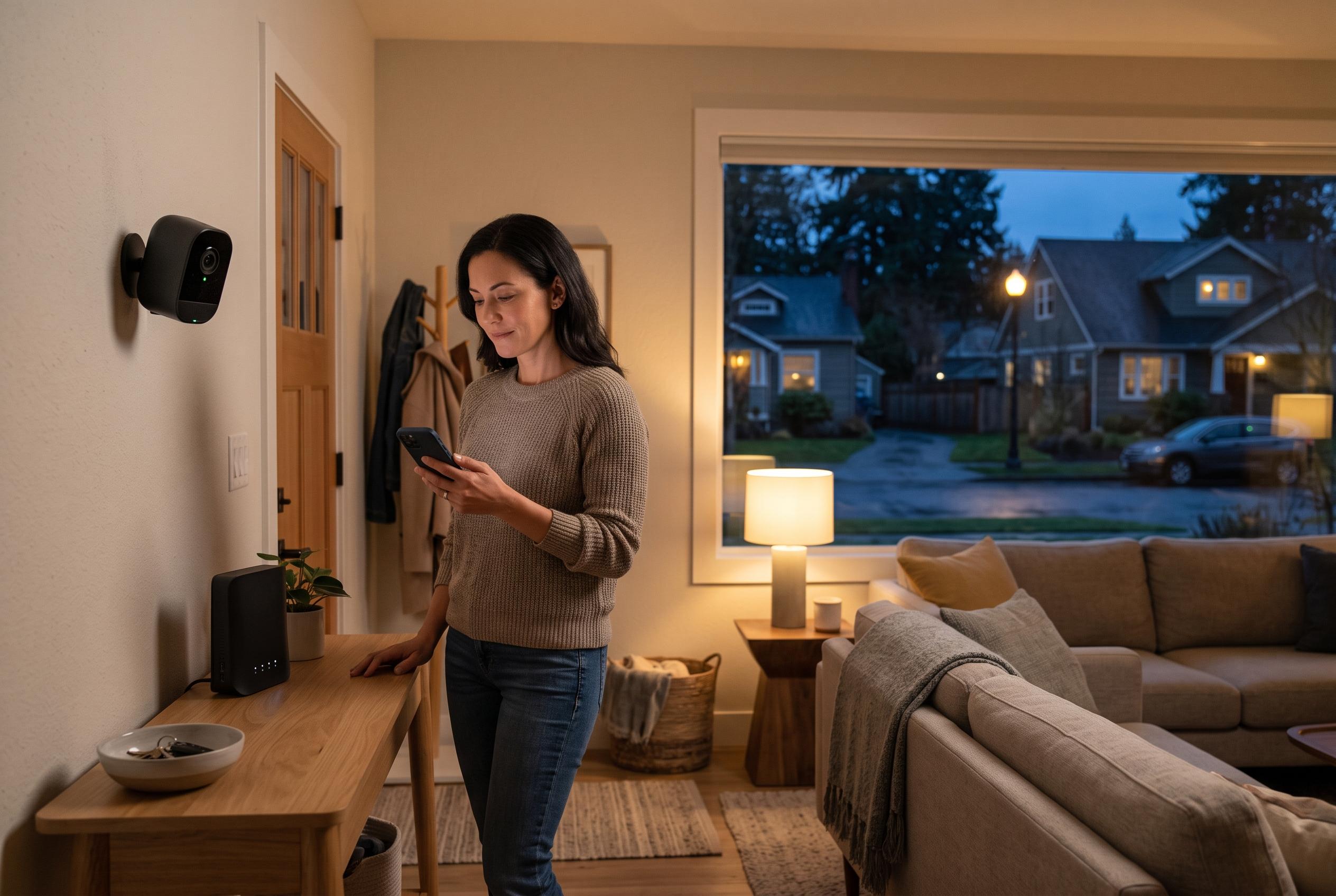

As the market for security cameras broadens, consumers face new choices driven by software advancements and price competitiveness, transforming home security into a personalised, smarter experience.
Home security cameras have become a practical way to monitor doors, deliveries, pets and activity around the property without being physically present. They can also act as a deterrent, since visible cameras often make opportunistic intruders look elsewhere. The market is now broad enough to suit almost any home, but buyers still face a familiar trade-off: stronger features usually mean higher upfront prices, more dependence on subscriptions, or both. The main question is no longer whether to buy a camera, but which type of camera fits the home, the household and the budget.
The first distinction is between indoor and outdoor models. Indoor cameras are typically smaller, simpler and easier to place near entrances, living rooms or nurseries, often with privacy shutters for times when recording should stop. Outdoor cameras need weather protection, better night performance and a wider viewing angle, and many now add spotlights or sirens. According to TechRadar and PCWorld, the strongest modern systems are increasingly defined by useful software as much as by optics, with person detection, smart alerts and local storage now central to buying decisions rather than optional extras.
For most homeowners, the best place to start is with a camera that matches the wider smart-home environment already in use. Google households will usually get the most from the Nest Cam Indoor, which offers 2K video, broad coverage and strong integration with Google Home. Amazon users are more likely to prefer Ring, particularly where doorbells and Alexa devices are already in place. Those looking for a premium wireless outdoor option still have the Arlo Pro 5S as a benchmark, with 2K HDR video, colour night vision and flexible power choices. PCWorld and CNET both placed the Arlo Pro 5S near the top of their lists, citing its image quality, spotlight and wide field of view.
Price, however, remains a decisive factor. Wyze continues to stand out for buyers who want useful features without paying premium rates. The Wyze Cam v4 is notable for 2.5K recording, colour night vision and support for local microSD storage, which reduces reliance on cloud subscriptions. The Wyze Floodlight Pro extends that approach outdoors with a bright 3,000-lumen light and the same 2.5K class video. For budget-conscious households, that combination is difficult to match. TechRadar also points to low-cost models such as the Blink Mini 2K+ and local-storage-focused options as evidence that entry-level cameras are now more capable than they were only a few years ago.
Battery life and installation flexibility matter just as much as image quality in many homes. Blink Outdoor 4 remains attractive for renters and anyone who wants a camera that can be installed quickly and moved later, with the appeal of long battery life and minimal wiring. eufy’s Indoor Cam C120 is another practical choice for privacy-conscious users, because local storage can remove the need for a monthly plan. For larger properties or awkward angles, pan-and-tilt designs such as the Lorex 2K Outdoor Camera can cover more ground than a fixed lens, which makes them better suited to driveways, side gates and wide gardens.
Subscriptions continue to shape the real cost of ownership. Ring, Arlo, Nest and Blink all push users towards paid plans for cloud recording or advanced detection features, while SimpliSafe is built around monitoring as part of a broader alarm system. That makes the total cost of a setup more important than the sticker price of a single camera. Buyers who want to avoid recurring fees often do better with brands that support local storage, such as Wyze, eufy and Lorex. The trade-off is that footage stored only on a device can be lost if the camera or storage medium is stolen.
Placement is just as important as product choice. The front door remains the most important viewing point because it is both a common entry route and the place where parcels are most likely to disappear. Back doors, side gates, driveways and garage access points are also high-value locations, especially where they are less visible from the street. Outdoor cameras should usually be mounted high enough to avoid tampering, but low enough to capture faces rather than the tops of heads. That balance matters more than simply buying the highest resolution available.
The rise in working from home has changed what households need from a camera system. Many people now sit for long periods with their attention on a laptop rather than the front door, which makes package theft and unannounced visitors easier to miss. At the same time, home offices often contain expensive equipment, from monitors and microphones to laptops and backup drives. That is one reason video alerts, two-way audio and doorbell integration are now so useful. They let people verify activity without leaving their desk, while also reducing the number of unnecessary interruptions during the day.
Some homes may need more than cameras alone. A full security system adds sensors, alarms and, in some cases, professional monitoring that can escalate an incident beyond simple recording. SimpliSafe remains a strong example of that model, with camera access tied to live response and broader alarm coverage. CCTVFirmware’s review also underscores how different systems are judged differently: some are valued for ease of use, others for ecosystem integration, while others are chosen mainly for local storage or person detection. In practice, the best choice depends on whether the buyer wants evidence after an event or active intervention during one.
Privacy, legality and cyber security also deserve attention. Many jurisdictions allow recording of driveways and front gardens, but audio capture can be more restricted, and cameras should never be aimed into neighbouring windows or private outdoor spaces. Indoors, it is sensible to tell visitors, cleaners or nannies that cameras are in use. On the technical side, users should enable two-factor authentication, choose strong passwords, keep firmware up to date and use secure Wi-Fi. These steps are basic, but they remain essential because a camera that cannot be trusted on the network is not a security device at all.
In the end, the best security camera is the one that fits the home rather than the one with the longest specification sheet. Arlo is a strong fit for buyers who want premium hardware and wide compatibility. Nest works well for Google households. Ring suits Amazon-centric homes. Wyze and eufy appeal to households that want useful features and lower running costs. Blink is particularly practical for renters. For people who want broader protection, a camera system may be best paired with a full alarm platform. The right answer is usually not one camera everywhere, but the right mix for the front door, the driveway and the spaces that matter most.
Disclaimer: This content is intended for informational purposes only. Readers are advised to exercise their own judgement, conduct due diligence, or consult a qualified expert before acting on any information provided.