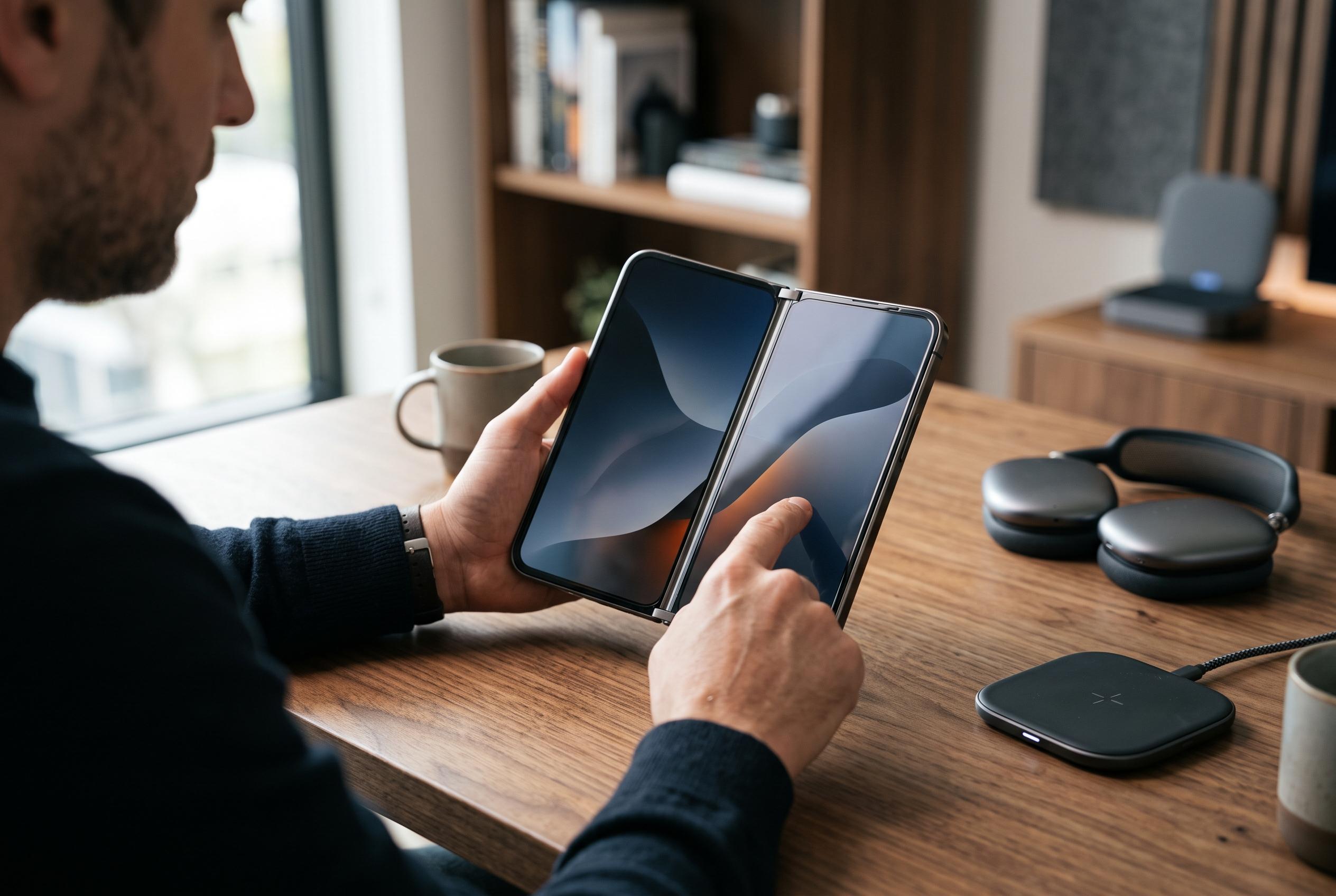

Apple’s latest iPhone lineup introduces the iPhone Duo, a transformative foldable device that offers a novel design and versatile functionality, but at a significant premium over the conventional iPhone 18 Pro series.
Apple’s latest iPhone range presents buyers with a straightforward but expensive choice: stay with the familiar slab-style iPhone 18 Pro models, or move to the company’s first book-style foldable, the iPhone Duo. PCMag’s comparison frames the decision less around raw performance, which is broadly similar across the line-up, and more around design, software and how much money a buyer is willing to spend for novelty and screen flexibility.
The pricing gap is substantial. According to Apple’s announcement, the iPhone 18 Pro starts at $1,199 for 256GB, while the iPhone 18 Pro Max begins at $1,299. Storage climbs to 2TB on both models, with the top-end Pro Max reaching $2,499. The iPhone Duo sits far above them, starting at $1,999 for 256GB and rising to $3,199 for 2TB. That places Apple’s foldable at an $800 premium over the regular iPhone 18 Pro at every storage tier, a gap that has drawn particular attention from MacRumors and other reviewers tracking the launch.
Design is where the line-up diverges most sharply. The Pro and Pro Max continue Apple’s conventional handset formula, albeit with new Burgundy and Glacier finishes and only modest changes to size and weight. The 6.3-inch Pro remains the more compact option, while the 6.9-inch Pro Max is the largest and heaviest of the traditional models. By contrast, the iPhone Duo introduces a titanium hinge and two distinct modes of use: a closed phone form and an opened, tablet-like screen. iDownloadBlog reported that Apple is offering the Duo in Star White and Night Sky, reinforcing that the foldable is positioned as a premium, style-led device rather than a simple specification exercise.
Display technology is similarly split between familiarity and flexibility. The Pro models use standard Super Retina XDR OLED panels with 120Hz ProMotion, Always-On display support and peak outdoor brightness of 3,000 nits. The Duo uses a 5.4-inch outer screen and a 7.6-inch inner folding panel, with a nano-textured finish intended to reduce glare and make the crease less obvious. In practice, that means the Pro and Pro Max offer the safer and more established display experience, while the Duo offers a wider range of use cases if the buyer wants a device that can behave more like both a phone and a compact tablet.
Under the bonnet, the three devices are closer than their shapes suggest. PCMag says all are powered by Apple’s A20 Pro chip, with the same broad mix of CPU, graphics and neural processing hardware, and all support Apple’s newer wireless and satellite features. The main practical difference is thermal design and, in the case of the Pro Max, the modem choice. That suggests Apple is using software and industrial design to separate the products, rather than creating a clear performance tiering across the range.
Battery life is one area where size still matters. PCMag’s testing found the iPhone 18 Pro lasting nearly 24 hours, while the Pro Max stretched to more than 34 hours and earned the publication’s battery award for endurance. Apple’s own figures point to strong video playback times across the range, and the Duo’s dual-battery arrangement is designed around its folding architecture. Even so, the conventional large-screen model appears to remain the safest choice for users who care most about longevity. Cameras provide another clear divider: the Pro and Pro Max carry a triple-48MP system with telephoto zoom, variable aperture and professional video formats, while the Duo drops the telephoto lens and uses a simpler dual-camera layout. The software story is the most important distinction. The Pro models run standard iOS 27 features, but the Duo adds split-screen multitasking, fold-aware layouts and Apple Pencil support on the inner display. For buyers who want the most flexible experience, that may be the decisive feature; for everyone else, the iPhone 18 Pro and Pro Max remain the more conventional, and in many cases the more practical, choices.
Disclaimer: This content is intended for informational purposes only. Readers are advised to exercise their own judgement, conduct due diligence, or consult a qualified expert before acting on any information provided.