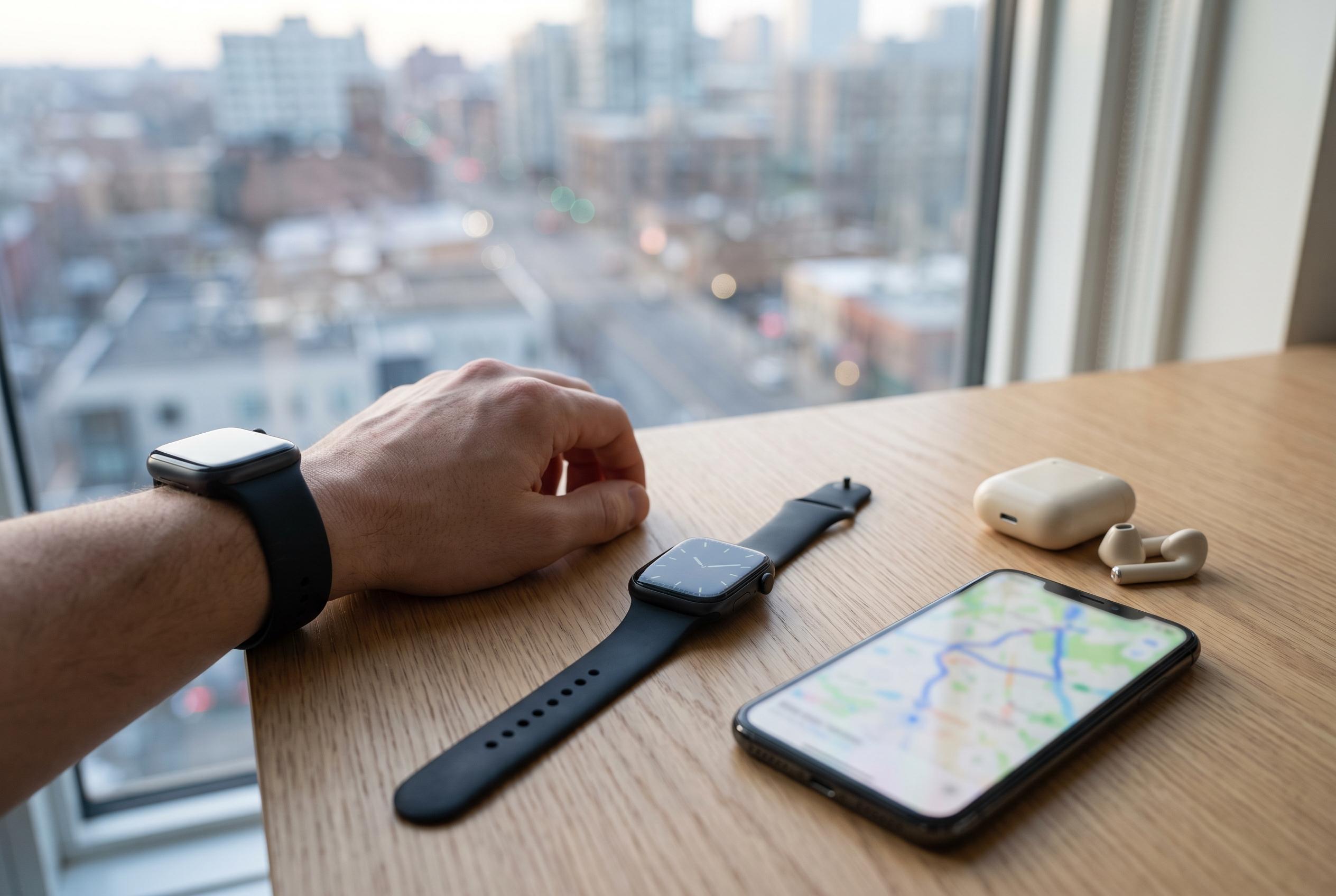

The Haylou Watch Hyper demonstrates how advanced features like dual-band GPS, offline maps, and a large AMOLED display are now accessible in budget smartwatches, redefining expectations at an affordable price point.
The Haylou Watch Hyper arrives as a telling example of how much smartwatch hardware has filtered down into the budget segment. In the original review, the device is framed as a low-cost model that combines dual-band GPS, offline maps, an AMOLED display and a broad exercise suite. Haylou’s own launch material presents the same idea from a product strategy angle, positioning the watch for urban navigation, outdoor activity and everyday use. That combination matters because, at this price level, features once associated with far more expensive devices are still uncommon. According to Notebookcheck and other hands-on reviews, the Watch Hyper is trying to bridge that gap rather than merely offer a basic fitness tracker.
Its physical design is large, but not unwieldy. The 1.97-inch display dominates the front, yet the casing is described as light enough to remain comfortable over long wear, including overnight use. That is significant for a watch aimed at all-day monitoring. The silicone strap is presented as flexible and breathable, while the pair of side buttons, including a rotating crown, improve navigation. MundoWatch and CHIP.pl both note that the device looks more refined than one might expect in this category, with a restrained rectangular form that avoids appearing bulky or cheap.
The screen is one of the Watch Hyper’s clearest strengths. Haylou specifies a 1.97-inch AMOLED panel with 390 x 450 resolution and peak brightness up to 1,500 nits, while Notebookcheck highlights adaptive brightness for better visibility in different light conditions. In practical use, that should make a real difference for notification reading, workout data and map viewing. The original review also stresses the benefit of the larger canvas: metrics are easier to scan, colours appear vivid, and the black levels typical of AMOLED panels help the interface look sharper than many rivals in the same price band.
The headline feature is the dual-band GPS system using L1 and L5 signals. Haylou’s announcement says this is intended to improve positioning accuracy in dense city environments and other difficult locations, while the review says the watch acquires a signal quickly and tracks consistently during outdoor exercise. That is an important distinction because many inexpensive smartwatches still rely on weaker location hardware. In real-world terms, the value is not just faster lock-on, but greater stability when buildings, trees or other obstacles interfere with the signal. The watch is not presented as flawless, but it appears to be meaningfully better equipped than typical entry-level models.
Offline maps extend that advantage. Haylou says the Watch Hyper stores full-colour maps locally, allowing navigation without mobile coverage. The review describes the feature as more useful than expected, especially for walking, running or cycling in unfamiliar areas. It does, however, come with a setup process that is less intuitive than it should be, requiring map downloads through the Haylou Fun app and initial synchronisation with the watch. Once configured, the feature adds a layer of independence that many competing budget watches do not provide, even if it remains less comprehensive than a smartphone mapping app.
Fitness and health tracking are also broad rather than narrow. The watch offers more than 170 sport modes, including the usual activities such as running, walking, cycling, swimming, yoga and gym workouts. The review suggests that the sheer number is less important than the way common activities are made easy to access. It also notes that exercise data such as distance, time, pace, calories and heart rate appear consistent with comparisons against other watches. On the wellbeing side, the device monitors heart rate, blood oxygen, stress and sleep, including naps, which makes it more useful for general trend tracking than for medical assessment.
Haylou has also included Bluetooth calling, a microphone and a speaker, though these appear to be functional rather than exceptional. The original review says call quality is acceptable in quiet settings but less convincing in noisy surroundings, and the watch still depends on a paired phone rather than having its own cellular connection. The system itself is simple and closed, with no app store and no Wear OS. That limits customisation, but it also keeps the interface straightforward. Haylou Fun acts as the main control centre for watch faces, notifications, exercise history and map management, although the reviewer found the app heavier than necessary in the background.
Battery life is the other area where expectations need to be kept realistic. Haylou’s launch material refers to up to 18 days, while the review notes that advertised figures depend heavily on usage patterns. Continuous GPS, route tracking and frequent health monitoring will shorten runtime noticeably. In everyday use, the watch appears capable of lasting well over a week, and sometimes close to two, before needing its magnetic charger. That is respectable, even if it falls short of the boldest claims. For a watch that offers a large AMOLED screen, detailed navigation tools and dual-band GPS at an affordable price, that balance is likely to matter more than chasing a marketing maximum.
Disclaimer: This content is intended for informational purposes only. Readers are advised to exercise their own judgement, conduct due diligence, or consult a qualified expert before acting on any information provided.